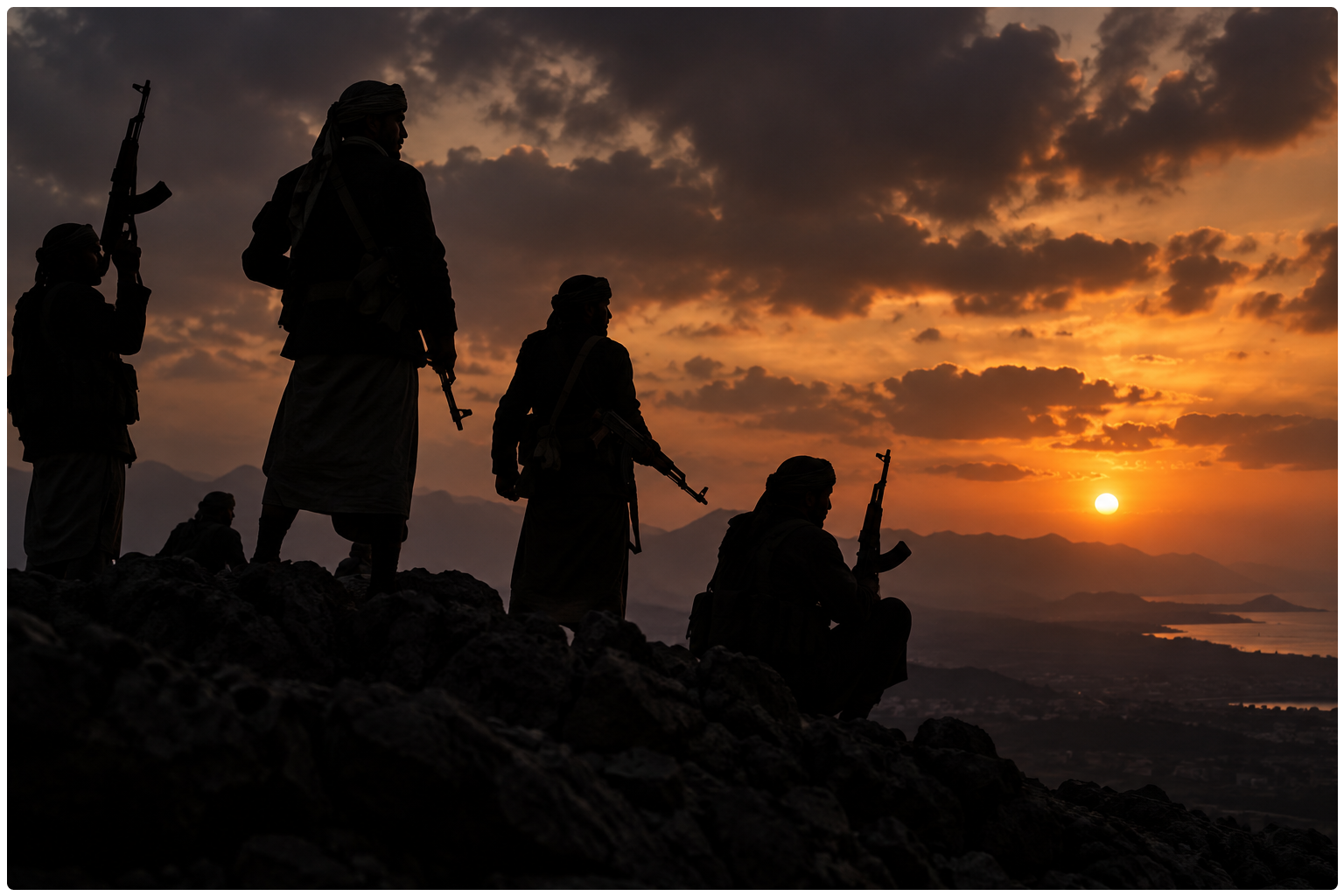
Newly recruited Yemeni soldiers were preparing for training at a military camp in Shabwa province when Houthi ballistic missiles struck on Monday, October 19, killing at least 53 personnel and wounding more than 200. The attack on Al-Alam camp, north of the provincial capital Ataq, was among the deadliest single assaults on government forces since Yemen's civil war returned to full-scale fighting.
The missiles hit the camp in Jardan district while recruits were assembling for a training exercise, according to local authorities. Initial reports described three ballistic missiles striking the facility, leaving casualties across the training area as emergency teams worked to evacuate the wounded.
The death toll subsequently rose to 58, according to Shabwa Governor Awadh bin al-Wazir, who also reported 14 people missing. The figures remain provisional, with the number of fatalities liable to change as authorities account for those injured or unaccounted for.
DEADLY HOUTHI STRIKE At least 20 Yemeni government soldiers were killed and 24 others wounded in a Houthi missile attack on a military camp in southern Yemen on Monday, two Yemeni military officials said. The Iranian-backed rebels fired ballistic missiles at the al-Alam military camp in Shabwa province, the officials said. #Yemen #Houthis #MiddleEast #BreakingNews #Iran #WorldNews https://t.co/4dd3OF9VEP
— Diganta Guha (@diganta_guha) October 19, 2026
The Houthis acknowledged attacking the camp but disputed the government's description of the target. Military spokesman Yahya Saree claimed Al-Alam was being operated by Saudi officers and housed forces preparing to fight alongside the Saudi-led coalition. His statement, published by the Houthi-controlled Saba News Agency, asserted that Saudi personnel were among the casualties. No independent evidence has established the presence or deaths of Saudi officers.
Officials from Yemen's internationally recognised government described the site as a training centre for new recruits rather than a formation actively engaged in combat. The location was nevertheless a military installation, and the opposing accounts have not established the precise activities taking place when the missiles struck.
President Rashad al-Alimi ordered medical assistance for the wounded and support for the families of those killed. In an official statement following his conversation with the Shabwa governor, he also instructed the authorities to regularise the recruits' employment status, arrange their salaries and prepare a response to the attack.
Shabwa has become an important rear area for government forces seeking to recover territory from the Houthis. The province contains energy infrastructure and transport routes connecting southern Yemen with Marib, where government-held positions have faced repeated military pressure.
The renewed campaign began after Houthi advances along Yemen's western coast in September. Government forces, supported by Saudi Arabia, subsequently launched an offensive that reportedly recovered territory around the Bab el-Mandeb Strait. Fighting has continued across several fronts, with missile strikes increasingly reaching positions away from the immediate battlefield.
On October 9, United Nations Special Envoy Hans Grundberg warned the Security Council that Yemen had returned to full-scale war. He reported fighting near Taiz and Lahj, alongside renewed hostilities in Marib, al-Jawf and Hajjah, and urged the parties to return to negotiations.
For the Yemeni government, the losses at Al-Alam threaten personnel being prepared for future operations. The Houthis have demonstrated their ability to strike a government military installation deep inside Shabwa, even as coalition-backed forces attempt to maintain pressure along the western front.
With dozens of recruits dead and hundreds wounded, the attack has also created an immediate challenge for Shabwa's medical services and military leadership. The government's promised response has yet to be detailed.