Ukraine has launched what Russian authorities describe as the largest drone attack yet on Moscow, sending hundreds of unmanned aircraft toward the capital and surrounding region in a strike that killed at least two people, damaged residential buildings and hit a major oil refinery.
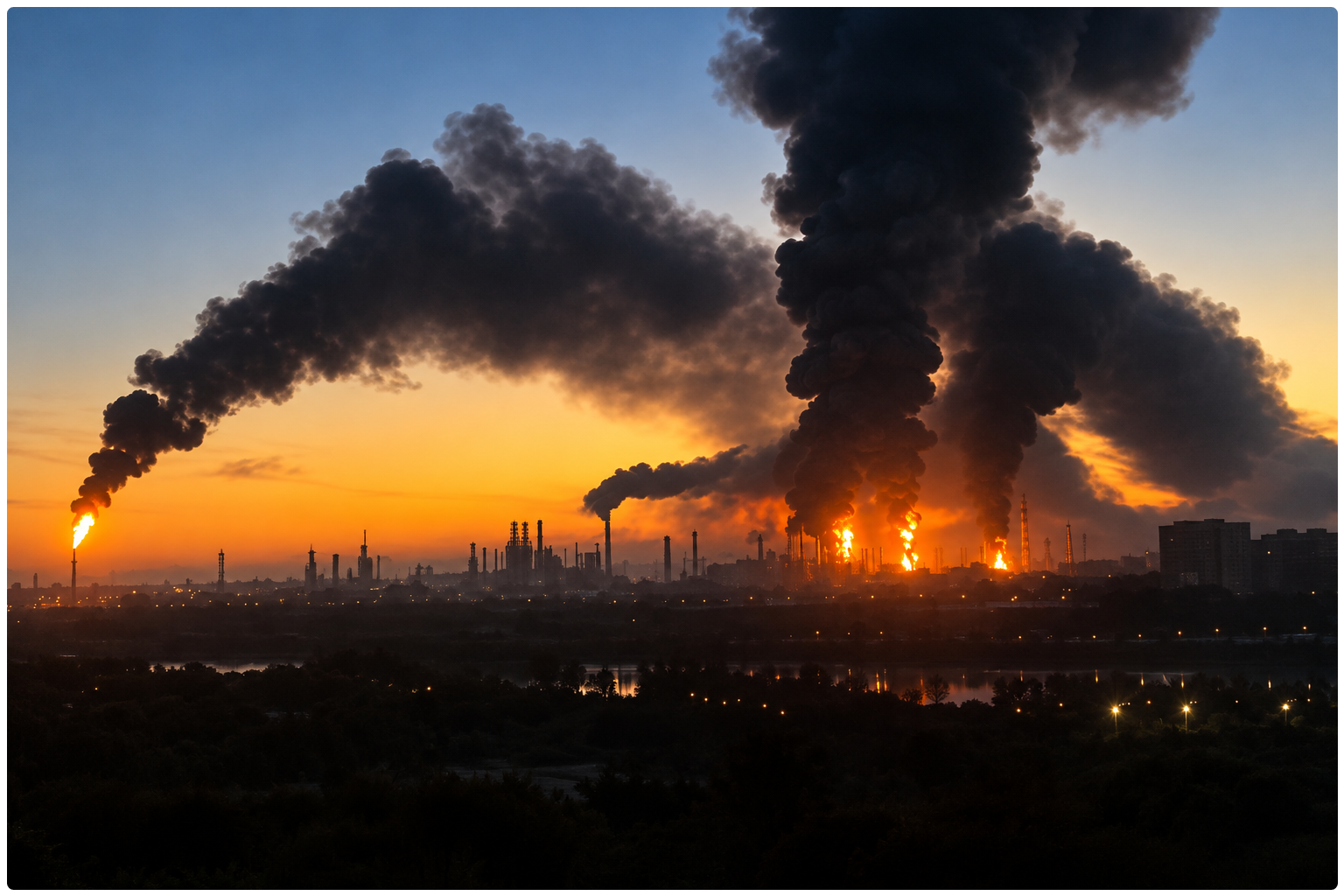
Moscow Mayor Sergei Sobyanin said Russian forces had intercepted more than 1,600 drones nationwide since Saturday, including around 450 headed toward Moscow. He called the assault “unprecedented” and said several drones reached the grounds of the Moscow oil refinery, while another struck a residential building. People witnesses reported hearing explosions in the capital and seeing smoke rising from the refinery complex.
The two reported deaths occurred in the wider Moscow region rather than inside the city itself. Governor Andrei Vorobyov said a 21-storey apartment building in Ramenskoye was damaged, forcing the evacuation of around 400 residents, including 70 children. Several other homes were also affected. The full scale of damage was still being assessed on Sunday.
🇷🇺 Another view from the Moscow region tonight.
— The Tectonic (@thetect0nic) September 20, 2026
A major fire has also been reported at the Sofyino logistics complex as waves of Ukrainian drones continue to arrive.
Moscow Mayor Sergei Sobyanin claims 151 drones have already been intercepted on the approaches to the capital…
Ukraine has confirmed that its forces struck the Moscow oil refinery and other logistics infrastructure. President Volodymyr Zelenskyy said Ukrainian forces had targeted what he described as key facilities supporting Russia’s war effort, while Ukrainian military sources said long-range drones and domestically developed missiles were used in the broader operation.
The Moscow refinery is an important target. It processed about 11.6 million metric tonnes of crude in 2024 and produced roughly 2.9 million tonnes of gasoline and 3.2 million tonnes of diesel, according to sources. Ukrainian strikes on Russian refineries have intensified in recent months and have contributed to fuel shortages and price increases in several regions.
The attack also came on the final day of Russia’s parliamentary election. Sobyanin accused Ukraine of trying to disrupt the vote, saying the operation had failed to stop polling. Kyiv has not said the election itself was the purpose of the strike. The Kremlin has repeatedly accused Ukraine of using long-range attacks to interfere in Russian domestic affairs, while Ukraine says its targets are military, logistical and energy assets supporting Moscow’s invasion.
The assault marks another major escalation in the drone war between the two countries. Russia has repeatedly launched large waves of drones and missiles against Ukrainian cities, while Ukraine has steadily expanded its ability to strike hundreds of kilometres inside Russian territory.
The latest attack shows how dramatically that capability has grown. Moscow, once largely insulated from the direct effects of the war, is now increasingly within range of sustained Ukrainian long-distance strikes.
It also highlights the changing nature of the conflict: drones are no longer being used only for battlefield reconnaissance or tactical attacks. They are becoming strategic weapons capable of threatening refineries, logistics hubs and major cities deep inside enemy territory.