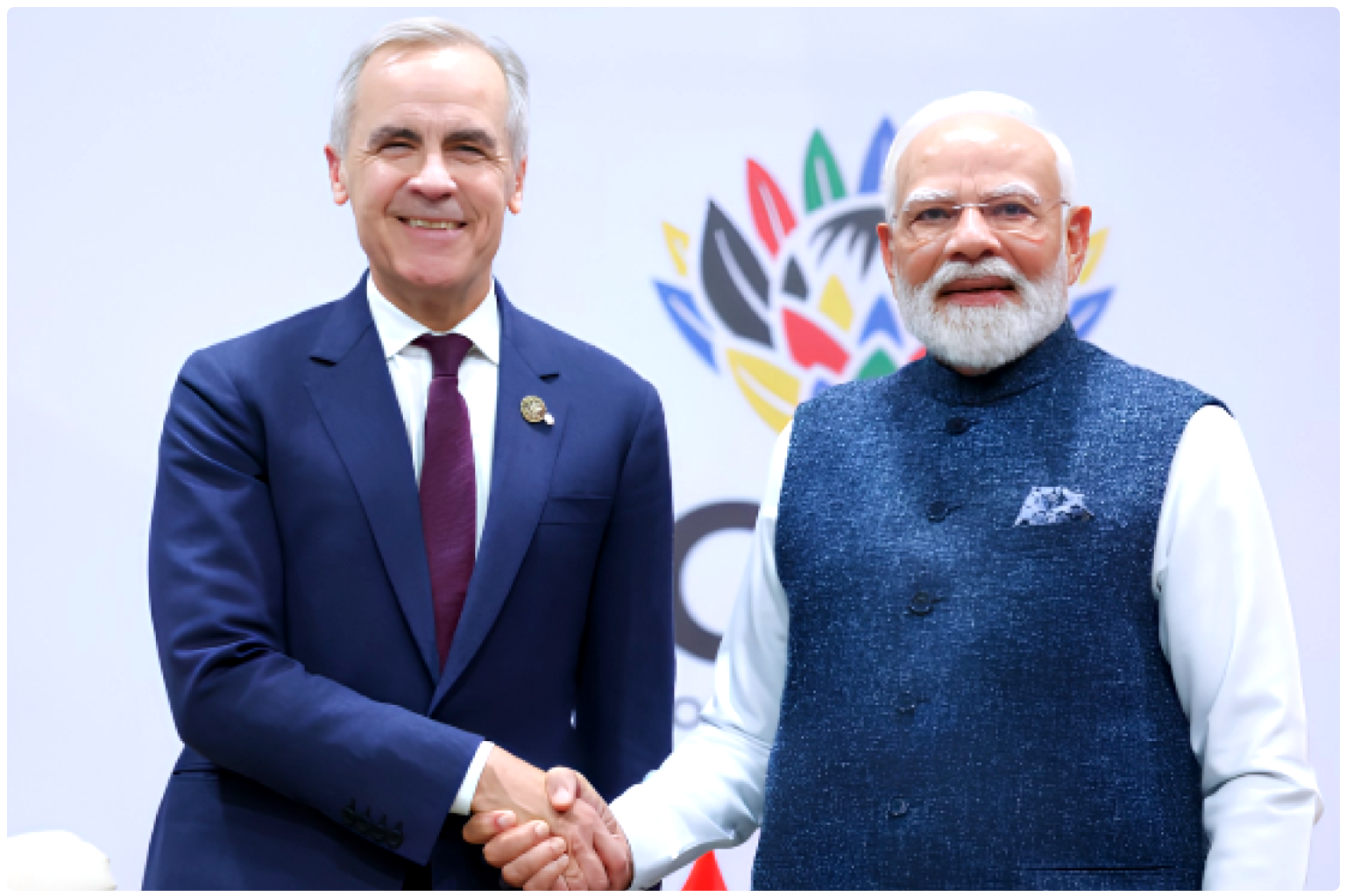
India and Canada are pushing to conclude negotiations on a comprehensive trade agreement by the end of 2026, marking one of the clearest signs yet that economic ties between the two countries are recovering after years of diplomatic strain.
Canadian International Trade Minister Maninder Sidhu said on Saturday that Ottawa was optimistic about completing negotiations on the Comprehensive Economic Partnership Agreement, or CEPA, before the end of the year. His comments came after the fourth round of talks concluded in New Delhi this week, with Indian negotiators expected to travel to Canada next month for the next phase.
The year-end target was formally set earlier this year when Prime Ministers Narendra Modi and Mark Carney agreed to restart and accelerate CEPA negotiations during Carney’s visit to India. The two leaders also set an ambition of increasing bilateral trade to C$70 billion, or roughly ₹4.65 lakh crore, by 2030.
The agreement is expected to cover trade in goods and services, investment, rules of origin, technical standards, intellectual property and other market-access issues. According to reporting on the latest round, two chapters have already been completed. Both sides have said they want the final pact to be broad enough to create a more predictable framework for businesses operating across the two countries.
Energy is emerging as one of the most important parts of the negotiations. Canada is looking to expand exports of LNG, LPG and uranium to India, while Indian companies are exploring investment opportunities in Canadian energy and critical-mineral projects. Sidhu said firms including Reliance Industries, Mahindra & Mahindra and JSW Group were among those discussing potential investments.
The two countries already have a substantial commercial relationship. Canada says bilateral goods and services trade reached C$30.4 billion in 2025, including C$13.6 billion in merchandise trade. Ottawa now wants to more than double that figure by 2030 as part of a wider effort to diversify trade beyond the United States.
For Canada, that diversification has become more urgent as relations with Washington have become more unpredictable. India, meanwhile, has been expanding its own network of trade agreements as global tariffs, supply-chain disruptions and geopolitical tensions reshape international commerce.
The current negotiations are especially notable because earlier India-Canada trade talks repeatedly stalled. The relationship deteriorated sharply in 2023 after then-prime minister Justin Trudeau said Canadian authorities were investigating allegations linking Indian agents to the killing of Hardeep Singh Nijjar. India rejected the allegations, and trade negotiations were effectively frozen.
The political environment is now very different. Foreign-office consultations earlier this month again reaffirmed the shared commitment to finish CEPA talks before year-end, while a new bilateral financial dialogue has also been established.
Difficult negotiations remain, particularly around agriculture, tariffs, services, investment protections and sensitive domestic industries. But both governments are now publicly working toward the same deadline.
If they succeed, CEPA would represent more than another trade agreement. It would provide a formal economic anchor for a bilateral relationship that only a few years ago appeared to be heading in the opposite direction.