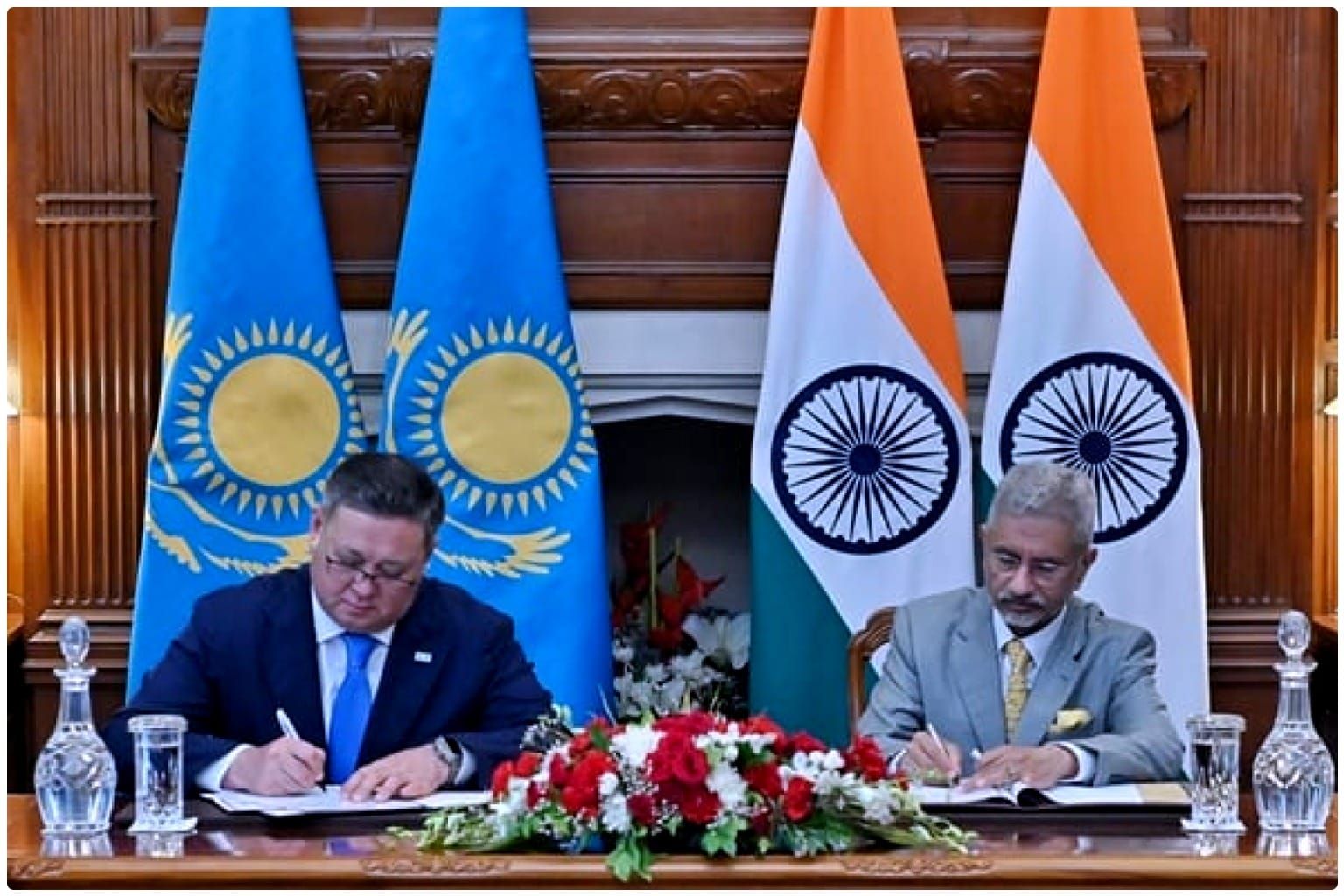
Kazakhstan has signed new uranium supply contracts with major Indian energy companies, strengthening a longstanding nuclear fuel partnership as India prepares to expand its atomic power capacity over the coming decades.
The agreements were disclosed on November 3 during a meeting between Kazakh President Kassym-Jomart Tokayev and Meirzhan Yussupov, chief executive of state-owned uranium producer Kazatomprom. According to the Kazakh presidency's official announcement, the company concluded new natural uranium supply contracts with customers in India and China during 2026.
Kazakhstan is the world's largest uranium-producing country, making it an important source of nuclear fuel for nations expanding their electricity generation capacity. Kazatomprom alone accounted for approximately 20% of global primary uranium production in 2025, while its wider operations in Kazakhstan represented about 39% of worldwide output.
India's latest procurement arrangements build on an established relationship with the Kazakh producer. In April, Kazatomprom shareholders approved a long-term contract to supply natural uranium concentrates to the Directorate of Purchase and Stores under India's Department of Atomic Energy.
The agreement covers physical delivery of uranium oxide concentrate, commonly known as U3O8, which undergoes further processing before it can be used to manufacture nuclear reactor fuel.
The latest announcement did not identify the Indian companies involved or disclose contract values, quantities and delivery schedules. It also did not establish whether the agreements announced in November were separate from the long-term contract approved earlier this year.
India is expanding its nuclear power programme to meet rising electricity demand while increasing the share of reliable, low-carbon generation in its energy mix.
Under the government's Nuclear Energy Mission for Viksit Bharat, the country aims to reach 100 gigawatts of nuclear power capacity by 2047. The programme includes the development of indigenous reactor technologies, greater industrial participation and research into small modular reactors.
At the International Atomic Energy Agency's 2025 General Conference, India's Department of Atomic Energy said the country's nuclear power stations had generated 50 billion units of electricity during 2024-25, with a plant load factor of 87%.
Reliable uranium procurement forms part of the supply arrangements needed to support the expansion. Overseas contracts complement India's domestic uranium production and allow nuclear operators to plan fuel requirements over longer periods.
Kazatomprom is simultaneously developing its resource base. The company is conducting geological exploration across six sites covering more than 1,000 square kilometres and plans further exploration at the 124-square-kilometre Kyzyltu site.
The Kazakh government is also examining a strategic uranium reserve intended to support its own future nuclear power requirements.
For India, the renewed commercial relationship provides an additional foundation for its long-term nuclear programme. The agreements establish a contractual basis for future supplies, although the actual contribution to India's fuel inventory will become clear only when delivery quantities and schedules are confirmed.