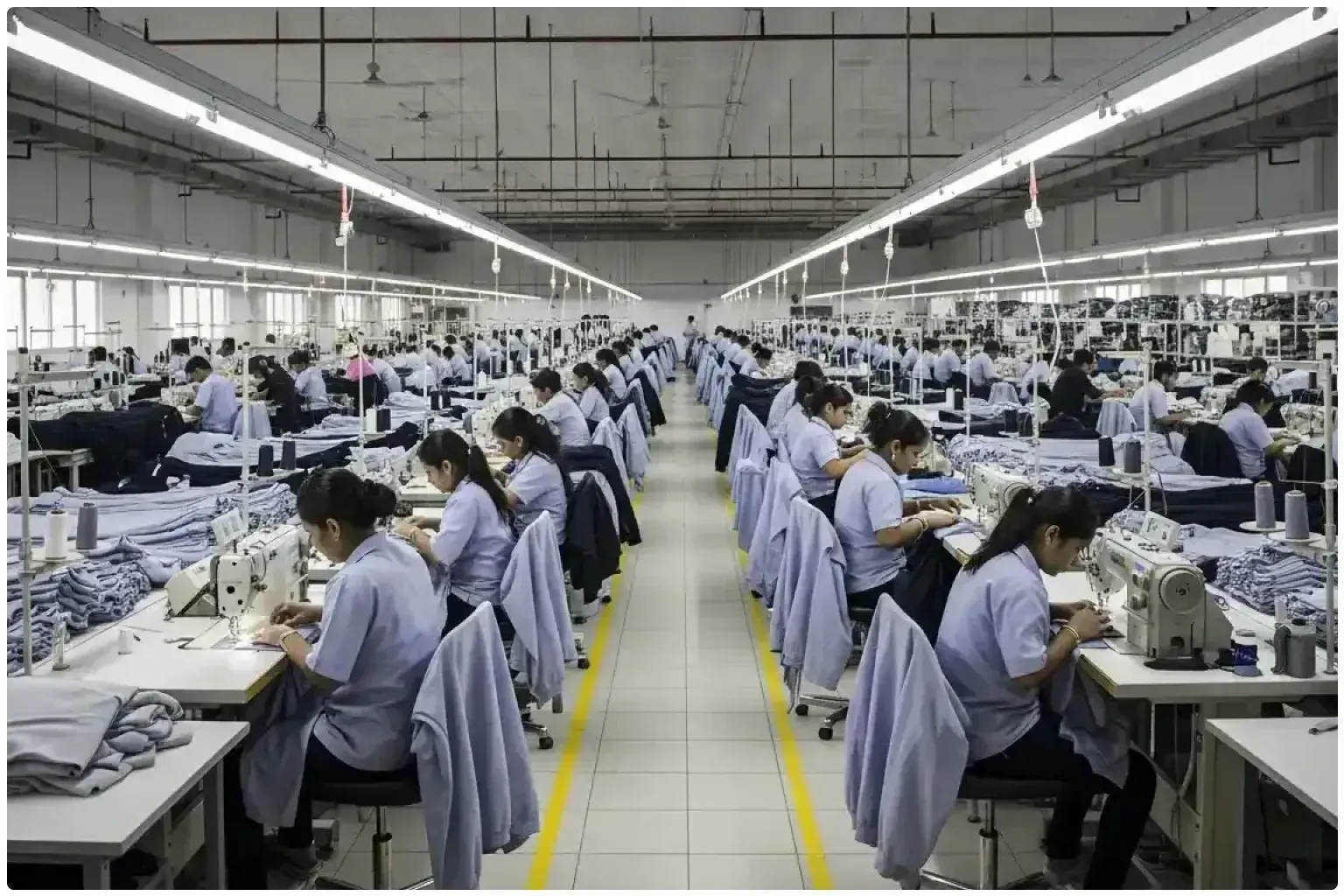
Indian garment manufacturers are expanding their presence in Europe, Britain and other international markets, reducing their reliance on American buyers after a year of tariff changes and disrupted orders. What began as an adjustment to US trade policy is increasingly shaping how Indian exporters choose customers, plan production and invest in new factories.
Orient Craft offers one of the clearest examples. The apparel manufacturer, which supplies international retailers including Marks & Spencer and Next, has reduced the United States' share of its sales from 84% to less than 10%, according to its founder, Sudhir Dhingra. Britain, continental Europe and India's domestic market now account for a larger proportion of its business.
Larger manufacturers are pursuing similar changes. Gokaldas Exports, one of India's leading apparel exporters, intends to increase Europe's contribution to its revenue from approximately 15–16% to 25–30% over the next three to five years. The company also plans to reduce its exposure to the US, although American retailers will remain important customers.
The shift was already taking shape in the company's earlier financial disclosures. Its 2025–26 annual report shows Europe's share of sales increasing from 8.9% in the previous year to 12.2%, while the proportion from North America remained comparatively high at 77.9%.
For Indian exporters, the United Kingdom has become a particularly attractive destination. The India–UK Comprehensive Economic and Trade Agreement, which entered into force on July 15, provides zero-duty access across 1,143 textile tariff lines, covering products ranging from cotton shirts and dresses to knitted garments and home textiles.
The agreement improves the price competitiveness of Indian clothing in Britain, where exporters previously faced tariff disadvantages against several competing manufacturing countries. Access to a large established retail market also makes it easier for manufacturers to diversify without abandoning their existing production strengths.
India's garment industry is pursuing these opportunities from an extensive manufacturing base. According to the Ministry of Textiles, textile and apparel exports, including handicrafts, reached ₹3.25 lakh crore in 2025–26, with shipments originating from 548 districts.
Companies are also expanding production in locations offering competitive operating costs. Ranchi, in Jharkhand, has attracted garment manufacturers seeking greater capacity, workforce availability and improvements in manufacturing efficiency. Gokaldas is planning another factory in the city, with the potential to create up to 4,600 jobs.
The diversification comes as India's trade negotiations with Washington continue. New Delhi has sought tariff terms that improve the position of Indian exporters relative to competing Asian manufacturers, particularly in labour-intensive industries such as textiles and apparel.
American demand remains commercially important, and exporters are continuing to serve established US customers. However, a broader distribution of sales across Europe, Britain, the Middle East and India gives manufacturers more flexibility when tariffs, purchasing patterns or trading conditions change in any single market.
For India's garment industry, the emerging strategy is to compete across more markets while continuing to build production capacity at home.