India’s industrial production grew 8% year-on-year in August, exceeding market expectations and extending a run of strong manufacturing growth. This comes after the real GDP grew by 7.8% in Q1 2026-27.
The Index of Industrial Production rose to 123.3 from 114.2 in August 2025, according to provisional data released by the Ministry of Statistics and Programme Implementation. Growth accelerated from a revised 7.4% in July and came in well above economists’ forecast of approximately 6.5%.
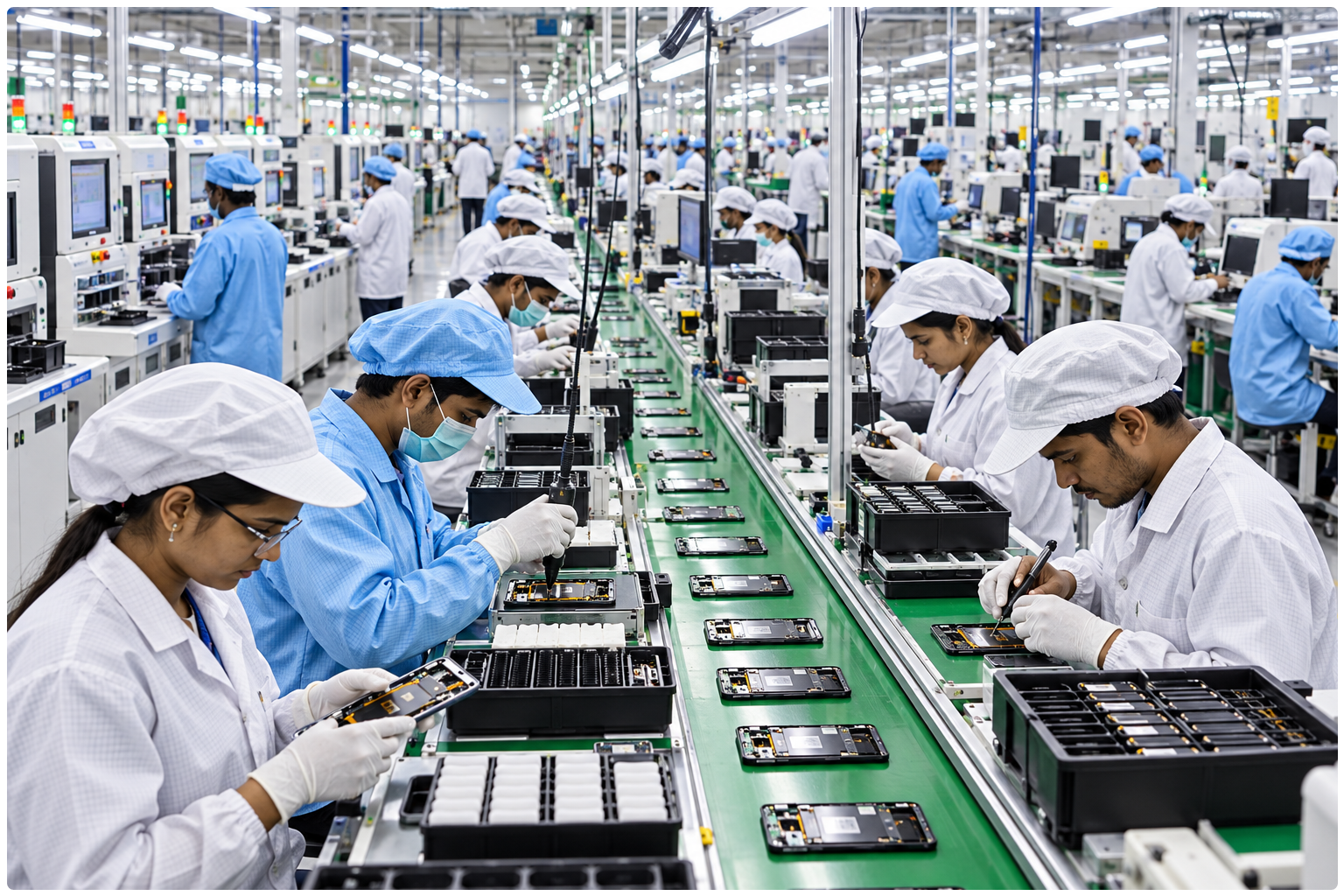
Manufacturing, which carries the largest weight in the industrial index, expanded by 9% from a year earlier. This followed growth of 8.2% in July and marked the third consecutive month in which manufacturing output increased by at least 8%.
The expansion was relatively broad, with 18 of the 23 manufacturing industry groups recording higher production. Electrical equipment output rose 30.9%, while other transport equipment grew 25.3%. Production of motor vehicles, trailers and semi-trailers increased by 25.2%, supported by passenger cars, commercial vehicles and automobile components.
Electricity and gas supply recorded even faster growth of 12.3%, accelerating from 8.7% in July. Water supply, sewerage and waste-management output increased by 6.3%.
Mining and quarrying remained the major weak point. Output declined 5.6% from a year earlier, compared with a contraction of 0.9% in July. The decline was particularly significant because mining had expanded 15.8% in August 2025.
The use-based classification also indicated continued investment activity. Capital-goods production, which includes machinery and equipment used to expand industrial capacity, grew 16.9%. Although this was slightly below the 19% expansion recorded in July, it remained one of the strongest components of the index.
Intermediate-goods output increased by 13.7%, while consumer-durables production rose 11.1%. The latter category includes products such as cars, mobile phones, televisions and household appliances and is often viewed as an indicator of discretionary household demand.
Consumer non-durables presented a more subdued picture. Production increased by only 2.1%, although this represented an improvement from the revised 0.8% decline in July. The category includes frequently purchased products such as food, clothing, medicines and toiletries, making its comparatively weak growth a concern ahead of India’s festive consumption season.
Between April and August, industrial production increased by 6.7%, compared with 4.2% during the corresponding period last year. Manufacturing output grew 7.4% during the five months, while electricity and gas supply expanded 9.5%. Mining declined 2%.
The August figures are the fifth monthly release under the revised industrial-production series introduced in June. The updated index uses 2022-23 as its base year, expands sectoral coverage and includes a revised basket and weighting system intended to reflect the present structure of Indian industry more accurately.
A favourable statistical base contributed to the size of the August increase, as industrial output had grown by a more modest 4.7% in the same month last year. Even so, the expansion in manufacturing, power and capital goods suggests that industrial momentum remained firm during the second quarter of the financial year.
Risks remain from rising oil and input costs, with India’s wholesale inflation reaching 9.92% in August. Higher prices for fuel, metals, electronic components and freight could raise production costs and weaken consumer demand. The contraction in mining and slow growth in everyday consumer goods also show that the industrial expansion is not evenly distributed.