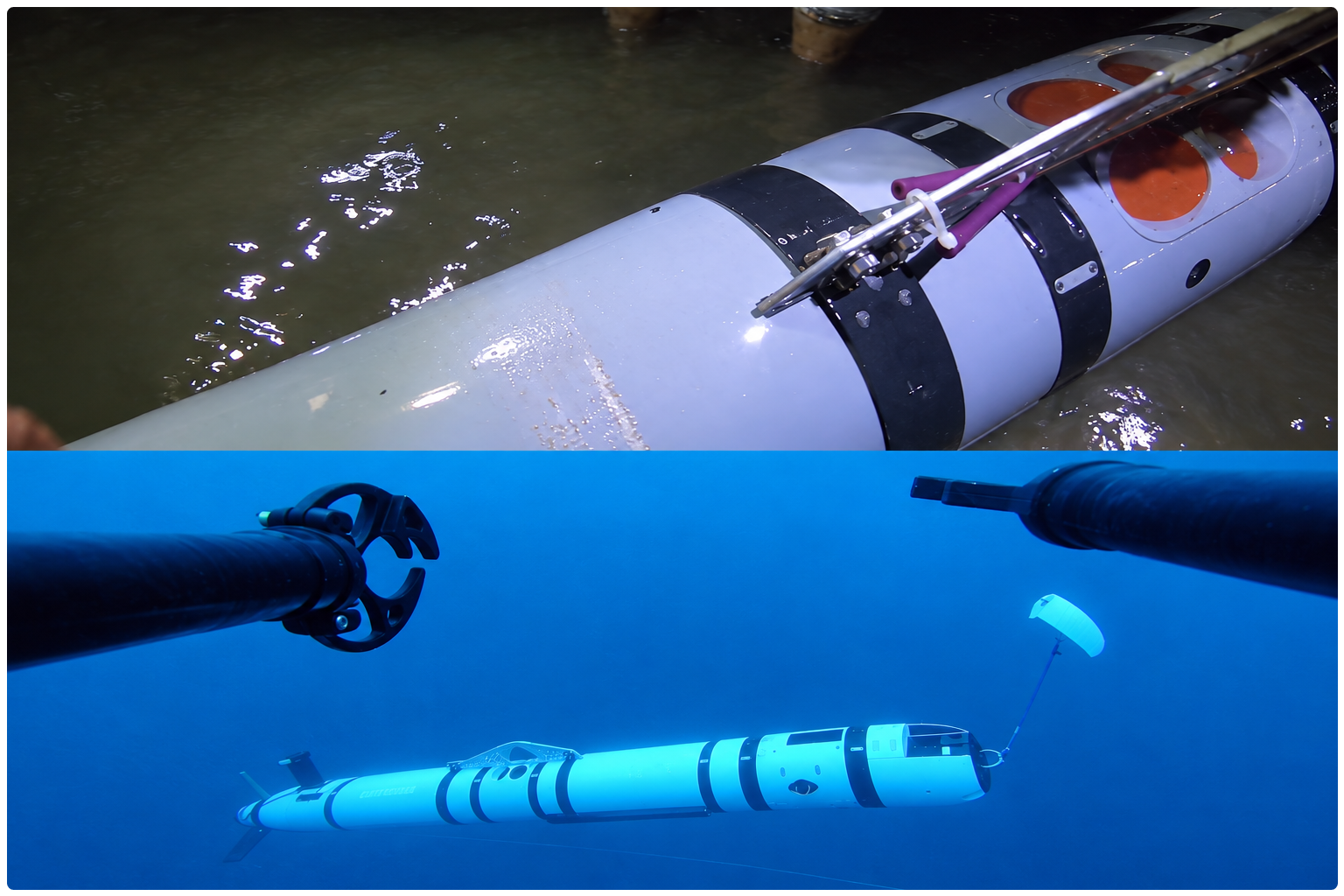
Iran has seized an American military underwater drone near the entrance to the Strait of Hormuz, giving Tehran access to a sophisticated autonomous vehicle used by the US Navy for surveillance and seabed operations.
The Islamic Revolutionary Guard Corps announced that its naval forces had recovered the unmanned submersible during what it described as a complex intelligence and operational mission. Iranian authorities identified the vehicle as a Dive-LD and released images showing it being removed from the water.
The Pentagon confirmed that an American underwater drone had fallen into Iranian hands but rejected Tehran’s description of the incident as an intelligence operation. A US military spokesperson said the vehicle had malfunctioned more than a day before it was recovered and had been left “dead in the water”.
Washington said the captured drone was an older model that carried no classified sonar, radar equipment or sensitive data. It had been surveying regional waters in support of American operations when the technical failure occurred.
The Dive-LD is a 5.8-metre autonomous underwater vehicle developed for long-range missions with limited human supervision. It can be configured for mine detection, seabed mapping, intelligence gathering and the inspection of underwater cables, pipelines and other critical infrastructure.
The vehicle can reportedly remain underwater for up to 10 days and descend to depths of approximately 6,000 metres. Its modular design allows different sensors and payloads to be installed depending on the mission. Each unit is estimated to cost about $2.5 million.
The manufacturer described the drone as an “attritable” system, meaning it was designed for missions where the loss of the vehicle was considered an acceptable operational risk. However, Iran’s possession of an intact model could still provide its engineers with useful information about the drone’s propulsion, hull construction, navigation systems and modular architecture.
Recovering the hardware does not necessarily give Tehran access to its software. Modern military drones commonly contain encryption, protected processors and safeguards intended to prevent adversaries from extracting mission data or reproducing the complete operating system.
Iran nevertheless has a history of studying and attempting to reproduce captured American technology. In 2011, Iranian forces recovered an RQ-170 Sentinel stealth reconnaissance aircraft that came down inside the country. Tehran later displayed several drones apparently influenced by its design.
The latest seizure therefore represents both a potential technological gain and a propaganda victory for Iran, even if the American account that the vehicle carried no classified equipment is accurate.
It also exposes the growing military importance of autonomous vessels in the Strait of Hormuz. The narrow waterway connects the Persian Gulf with the Gulf of Oman and remains one of the world’s most important energy corridors. American forces have increasingly deployed uncrewed surface and underwater vessels to monitor shipping, detect mines and conduct surveillance without placing sailors directly in danger.
The incident occurred amid a wider struggle between Washington and Tehran over control of the strait. Shipping through the passage has remained disrupted by the ongoing conflict, while both sides have expanded military patrols and accused the other of threatening commercial traffic.
Iran’s recovery of the Dive-LD may not have delivered the classified intelligence Tehran has claimed. But it has placed an American military system inside an Iranian laboratory and demonstrated that unmanned vehicles intended to reduce human risk can create a different vulnerability when they malfunction in contested waters.