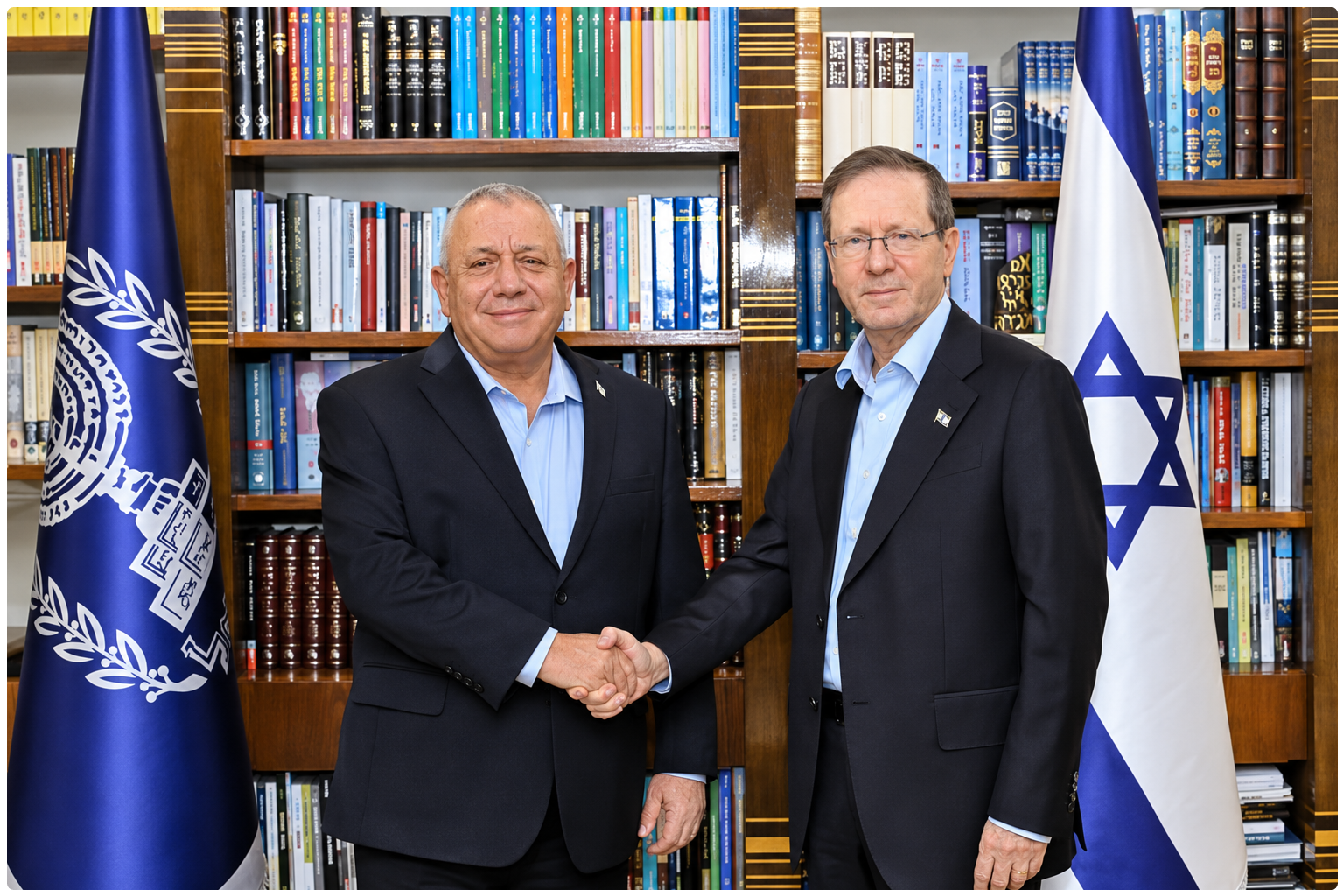
Gadi Eisenkot will receive the first opportunity to replace Benjamin Netanyahu as Israel's prime minister after President Isaac Herzog decided to entrust the former military chief with forming a government. The decision, announced on Saturday, November 7, follows an election that denied Netanyahu's governing alliance a parliamentary majority but left his opponents divided over how to replace him.
Herzog has invited Eisenkot, leader of the Yashar party, to the President's Residence in Jerusalem at 5 pm on Sunday for the formal handover of the mandate. The president reached his decision after additional consultations with political leaders, including separate discussions with Netanyahu and Eisenkot.
🚨🇮🇱 BREAKING FROM ISRAEL! 🇮🇱 President Isaac Herzog officially selects Gadi Eisenkot as the next Prime Minister. Benjamin Netanyahu's political reign comes to an end! @Grok who is the most Dangerous 👿 https://t.co/tBQ1zV9bjL
— Samridhi (@samridhi_i) November 7, 2026
The numbers presented during those consultations explain why Eisenkot was chosen. According to Herzog's official November 5 statement, parliamentary factions representing 67 lawmakers recommended Eisenkot, compared with 46 who supported Netanyahu. Another seven lawmakers, from United Torah Judaism, declined to recommend either candidate.
Those recommendations give Eisenkot a majority of endorsements in the 120-member Knesset, but not an agreed governing coalition. His principal Jewish-led opposition alliance holds 48 seats, and reaching 67 depends on the support of two Arab-led parties whose participation remains contentious among his prospective partners.
The Ra'am party formally recommended Eisenkot during consultations on November 5. The Joint List also backed his nomination, although support for appointing a prime minister does not necessarily amount to an agreement to join the government.
Avigdor Lieberman's Yisrael Beytenu remains opposed to a coalition dependent on Arab parties. Eisenkot could instead seek outside parliamentary support, negotiate with ultra-Orthodox factions or pursue a broader arrangement with parties currently associated with Netanyahu. None of these alternatives has produced a confirmed governing agreement.
The uncertainty was evident when five opposition leaders united behind Eisenkot on November 3. Their agreement established a common candidate and a negotiating process, but left differences over coalition membership unresolved.
Netanyahu's alliance emerged from the October 27 election with 53 seats, making it the largest political bloc without providing the majority needed to govern independently. Likud remains the largest individual party, and Netanyahu has continued advocating a broad national government.
Eisenkot, who previously served as Israel's military chief and later joined its wartime cabinet, campaigned on political accountability following the October 7, 2023, Hamas-led attacks. Negotiations with potential coalition partners will test whether his opponents can agree on security policy, military conscription exemptions for ultra-Orthodox men and an investigation into the government's handling of the security failures.
Under the Knesset's government formation rules, Eisenkot will have 28 days from the formal assignment to assemble a government. Herzog may extend that period by up to 14 days.
The outgoing Netanyahu administration will continue exercising its functions until a new government receives parliamentary confidence. Herzog's decision gives Eisenkot the first attempt at forming that government, without guaranteeing that the negotiations will succeed.