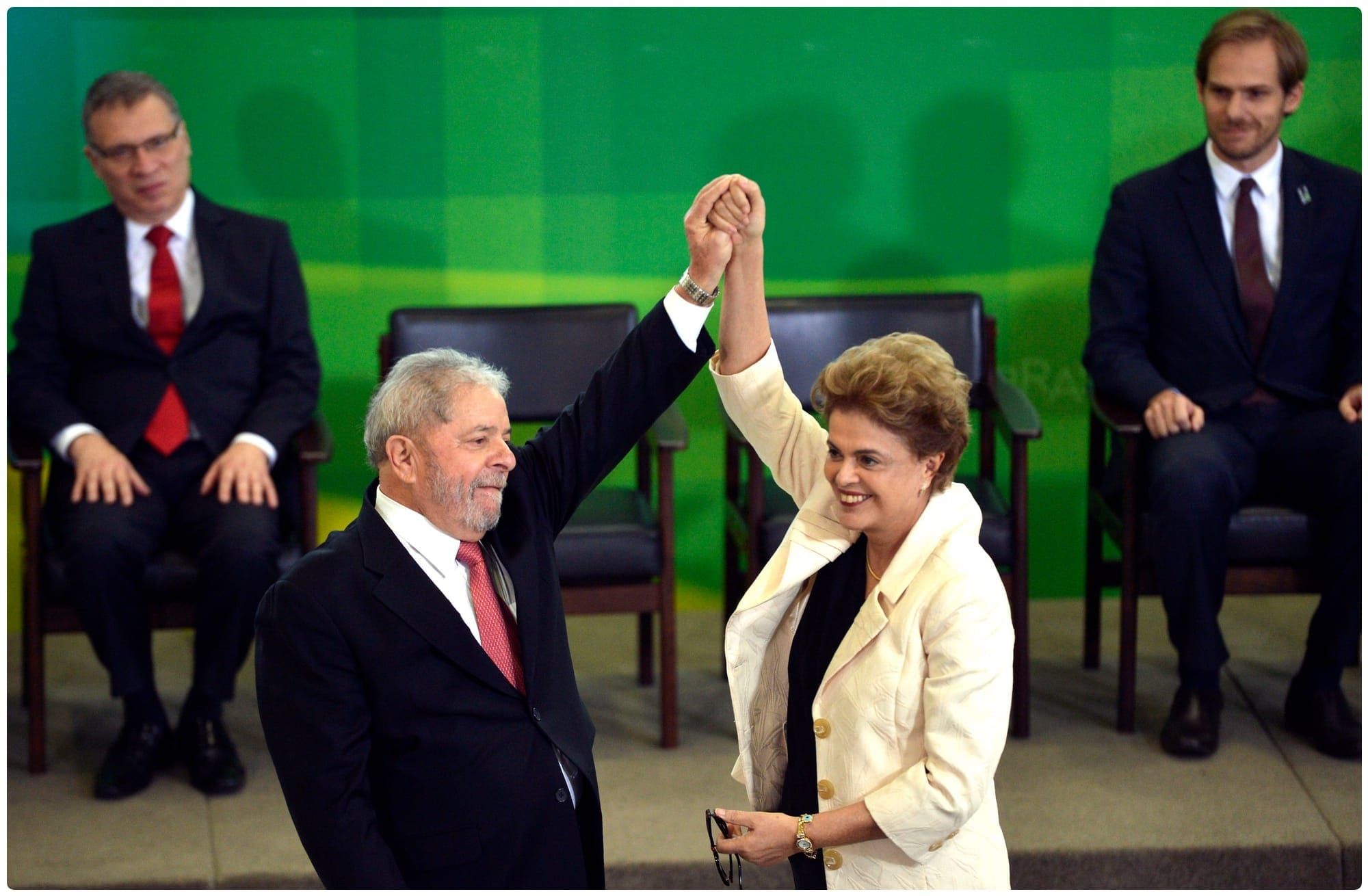
Brazilian President Luiz Inácio Lula da Silva holds a narrow three-point lead over Senator Flávio Bolsonaro in a potential presidential runoff, according to a new poll released days before the country votes in the first round of its election.
The Datafolha survey placed Lula at 48% and Bolsonaro at 45% in a direct second-round contest. Blank and invalid votes accounted for 6%, while 1% of respondents remained undecided.
The poll questioned 2,506 voters between September 28 and October 1 and has a margin of error of two percentage points in either direction. That means the candidates remain statistically tied despite Lula’s numerical advantage.
Lula’s support increased by one point from the previous survey, when he led Bolsonaro by 47% to 45%. In the first-round calculation, Lula received 42% of total voting intentions against 38% for Bolsonaro. When only valid votes were considered, the figures rose to 45% and 40% respectively.
Brazil will hold the first round on October 4. A candidate must receive more than half of all valid votes to win outright. If no one reaches that threshold, the two leading candidates will advance to a runoff on October 25.
Other surveys confirm that the second round remains extremely difficult to predict. One recent poll placed Lula and Bolsonaro level at 42%, while another gave Bolsonaro 47.7% against Lula’s 47.6%. A separate survey showed Bolsonaro leading by 45% to 44%.
The variation demonstrates how little separates the two candidates. It also suggests that Lula’s stronger first-round position may not automatically translate into a comfortable runoff victory once supporters of eliminated candidates choose between the final two.
Lula is seeking a fourth non-consecutive presidential term. His campaign has emphasised employment, welfare programmes and falling inequality, but frustration over food prices and the broader cost of living has limited his ability to establish a decisive lead.
Crime has also become a central election issue. Organised criminal groups exercise considerable influence in parts of Brazil, particularly around Rio de Janeiro. Lula has proposed greater federal coordination against criminal networks, while Bolsonaro has promised tougher sentencing, expanded imprisonment and the classification of major gangs as terrorist organisations.
Flávio Bolsonaro, a senator from Rio de Janeiro, has consolidated much of the conservative movement built by his father, former president Jair Bolsonaro. His campaign combines hard-line security policies with proposals to reduce the size of the state, revive privatisation and impose tighter controls on public spending.
Jair Bolsonaro is not contesting the election after Brazil’s electoral court declared him ineligible for eight years from the 2022 election. Flávio has consequently emerged as the leading representative of the political movement associated with his father.
The younger Bolsonaro has also benefited from the former president’s continued popularity among evangelical Christians, conservative middle-class voters and people dissatisfied with Lula’s economic management. Lula remains strongest among poorer voters, people with lower levels of formal education and residents of Brazil’s northeast.
Both leading candidates withdrew from the final planned televised debate, depriving voters of a direct confrontation over their programmes. Lula has avoided every debate during the campaign, while Bolsonaro said he was interested only in debating the president.
With only a small number of voters still undecided, Brazil appears headed towards another intensely polarised contest. Lula enters the final days with a numerical advantage, but the combined polling evidence shows that neither side can claim control of a potential runoff.