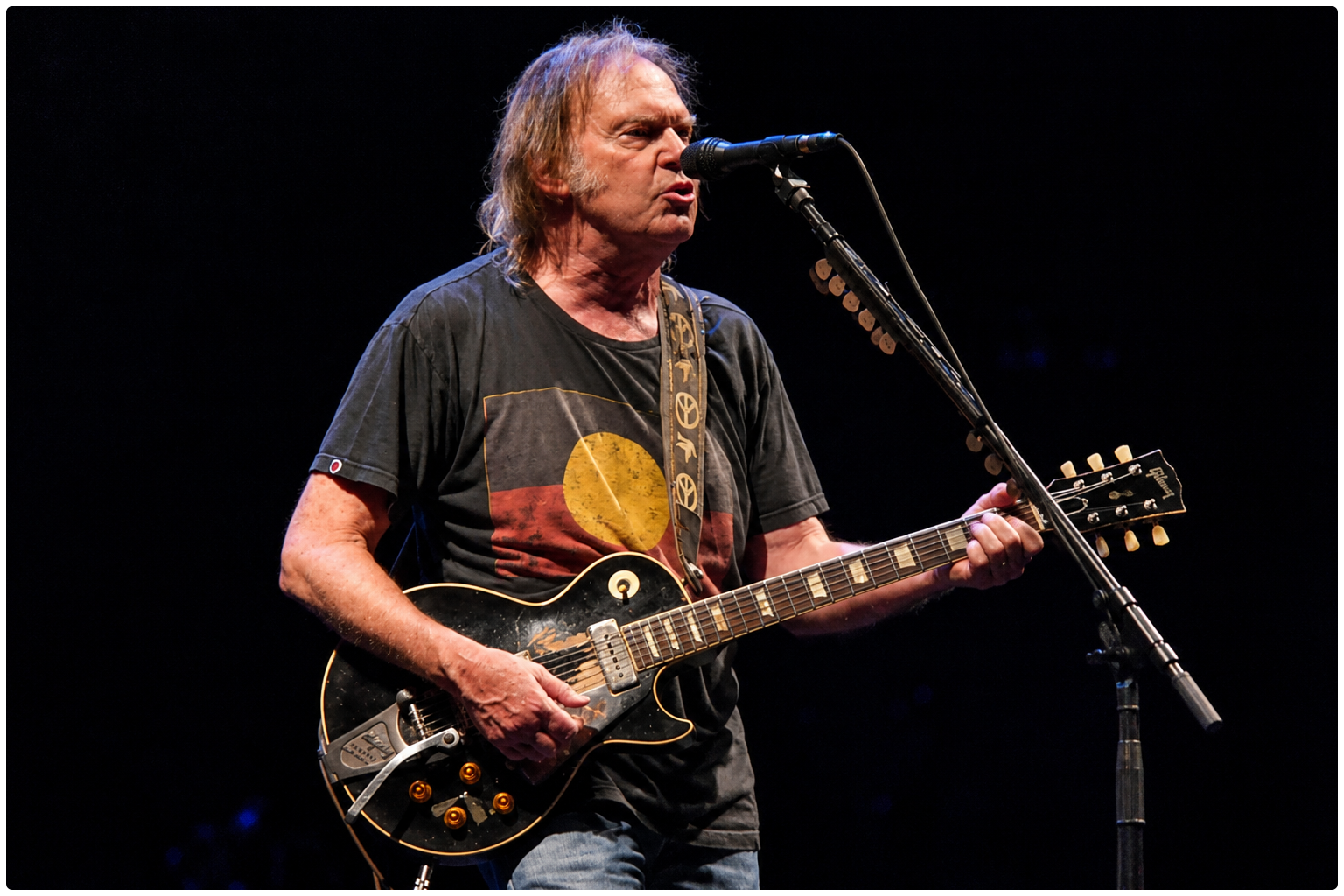
Neil Young has spent more than a decade objecting to Donald Trump's use of Rockin' in the Free World. He took the dispute to court in 2020, and his latest lawsuit alleges that Trump's political operation agreed to stop playing the song without permission. Six years later, the musician is back in federal court, this time seeking $10 million.
The Canadian-American singer-songwriter filed a copyright infringement complaint on October 26 against Trump 47 Committee Inc., a fundraising organisation associated with the US president. The lawsuit alleges that the committee played Young's 1989 song shortly before Trump took the stage at an October 12 political rally in Youngstown, Ohio.
Trump himself is not named as a defendant. The case, filed in the US District Court for the Eastern District of Virginia, also names five unidentified defendants whose identities Young intends to establish during proceedings.
According to the complaint, the committee lacked the necessary licence and played the song despite knowing that Young had repeatedly refused permission. His lawyers also allege that the recording was used at other rallies supporting Republican candidates ahead of the November 3 midterm elections.
The disagreement has a long history. Young first objected when Trump used Rockin' in the Free World during his presidential campaign announcement in June 2015. In August 2020, he sued Trump's re-election campaign over the unauthorised use of that song and Devil's Sidewalk, including at a rally in Tulsa, Oklahoma.
The earlier lawsuit was dismissed with prejudice in December 2020. Young's new complaint says the parties reached a settlement under which Trump's campaign promised not to use Rockin' in the Free World again without a licence and Young's permission. The terms of that alleged agreement have not been publicly disclosed in full.
The choice of song is central to Young's objections. Released in 1989 on his album Freedom, Rockin' in the Free World is frequently recognised for its forceful guitar-driven chorus. Its verses, however, address homelessness, poverty, drug addiction and the distance between American political promises and everyday hardship.
Young's lawyers argue that the song criticises the very political outlook associated with Trump. They also allege that playing it at presidential rallies creates a misleading impression of the musician's support, damaging his reputation.
Young is seeking more than financial compensation. The complaint asks the court to prohibit the committee from publicly performing Rockin' in the Free World or other compositions Young owns, alongside legal costs and attorney's fees.
The requested $10 million is considerably higher than the usual statutory damages available for copyright infringement. Under Section 504 of US copyright law, statutory damages for wilful infringement can reach $150,000 per work. Copyright owners may alternatively pursue actual damages and attributable profits. Young's five-page complaint does not explain how the $10 million figure was calculated.
The dispute also raises a practical question for political campaigns. Playing a commercially released recording at a public event can require a performance licence, even when organisers have legally purchased the music. A musician's political objections alone do not automatically establish copyright infringement, making the existence and scope of any applicable licence important to the case.
Other artists, including the White Stripes and the estate of Isaac Hayes, have challenged the use of their music at Trump events. Young's dispute is unusual because his complaint alleges that a previous legal settlement had already addressed the same song.
The latest lawsuit leaves the court to determine whether the committee had permission to play it, whether any infringement was deliberate and what compensation, if any, Young should receive.