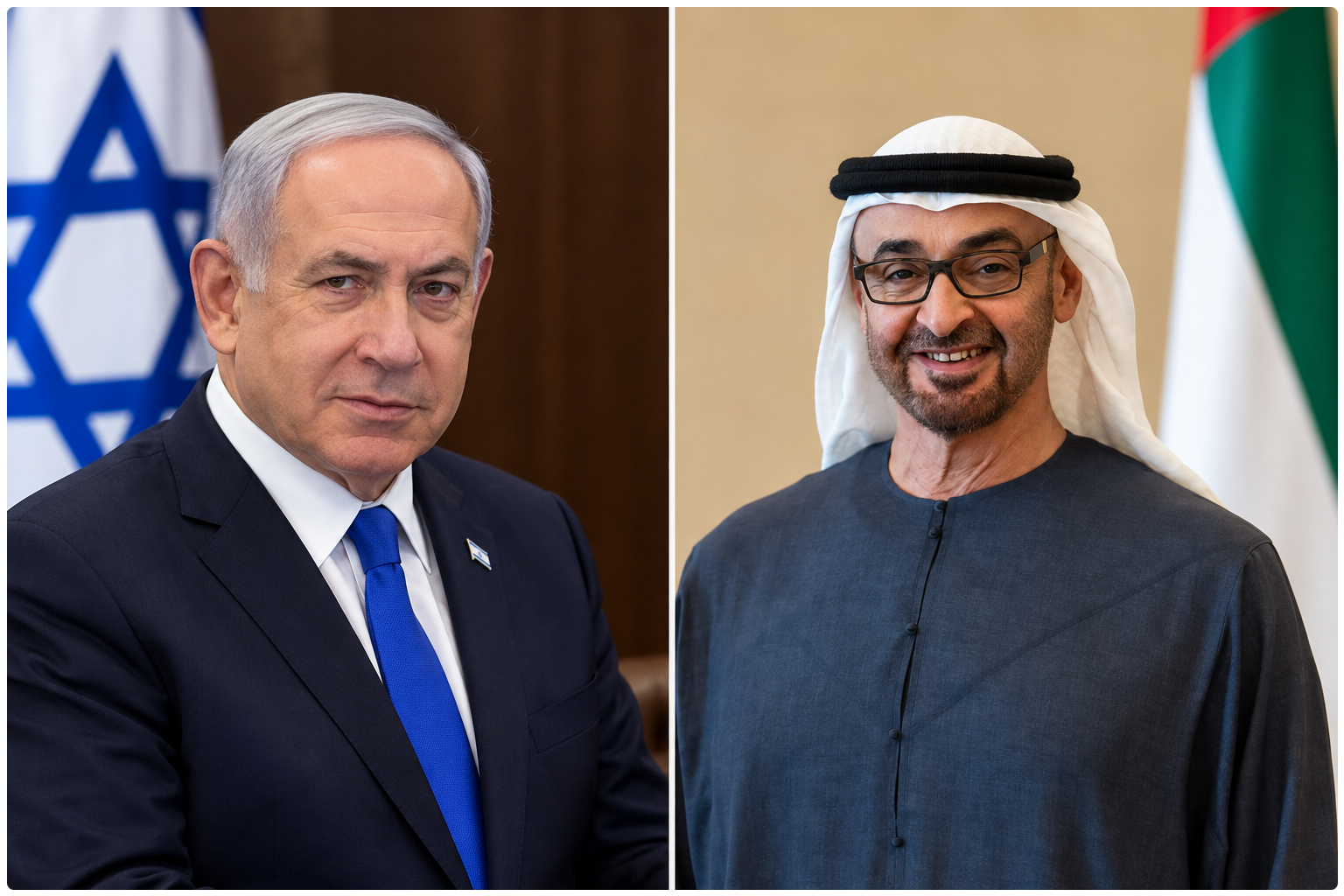
Israeli Prime Minister Benjamin Netanyahu made an unannounced visit to Abu Dhabi on Sunday for talks with United Arab Emirates President Sheikh Mohamed bin Zayed Al Nahyan, according to a senior Israeli official.
Netanyahu reportedly travelled aboard a private aircraft and spent several hours in the Emirati capital before returning to Israel. Neither his office nor the UAE government announced the visit in advance, released photographs of the meeting or disclosed what the two leaders discussed.
The absence of an official statement makes the purpose of the visit unclear. However, the meeting occurred at a sensitive moment for both countries, with regional security, Iran and military cooperation likely to feature in any high-level talks between the two governments.
Israel and the UAE established formal diplomatic relations under the Abraham Accords in 2020. The agreement led to direct flights, expanding trade and cooperation in technology, energy, intelligence and defence. Relations have continued despite disagreements over the war in Gaza and mounting criticism of Israeli policies towards the Palestinians.
Security cooperation deepened during the war involving Israel, the United States and Iran earlier this year. The UAE was struck by Iranian missiles and drones, while Israel reportedly sent an Iron Dome air-defence battery and personnel to assist in protecting Emirati territory.
The latest visit also comes amid renewed controversy in Israel over whether Mohamed bin Zayed warned Netanyahu before the Hamas-led attack of October 7, 2023.
Recent accounts claim the Emirati president spoke to Netanyahu approximately a week and a half before the attack and conveyed information suggesting that Hamas was preparing a major operation. According to those accounts, the warning was not passed to Israel’s senior security officials and was not mentioned during a subsequent meeting about Gaza.
Netanyahu has rejected the allegation as an “absolute lie”. His office said that no such warning was received and maintained that any relevant information would have been transferred through intelligence channels between the two countries. The UAE has not publicly confirmed the alleged conversation.
The issue has become politically explosive ahead of Israel’s October election. Opposition leaders have demanded to know whether Netanyahu received advance information, what detail it contained and whether he acted upon it. His government has continued to resist demands for an independent state commission of inquiry into the failures surrounding the attack.
Sunday’s journey is not the first disputed account of Netanyahu travelling to the Emirates. His office said in May that he had secretly visited the UAE during the war with Iran and met Mohamed bin Zayed in Al Ain on March 26. It described the meeting as producing a major advance in relations.
The UAE publicly denied that the March visit or meeting had occurred, insisting that its relationship with Israel was conducted openly under the Abraham Accords and was not based on undisclosed arrangements.
That earlier denial gives the latest journey additional diplomatic significance. A senior Israeli official has confirmed that Netanyahu travelled to Abu Dhabi, but the Emirati government has yet to acknowledge the meeting. Until either side releases an agenda or official account, the substance of the talks remains concealed.
The visit nevertheless demonstrates that communication between Israel and the UAE continues at the highest level. It also exposes the political sensitivity surrounding that relationship, which has expanded considerably in security and defence while often remaining far less visible in public.