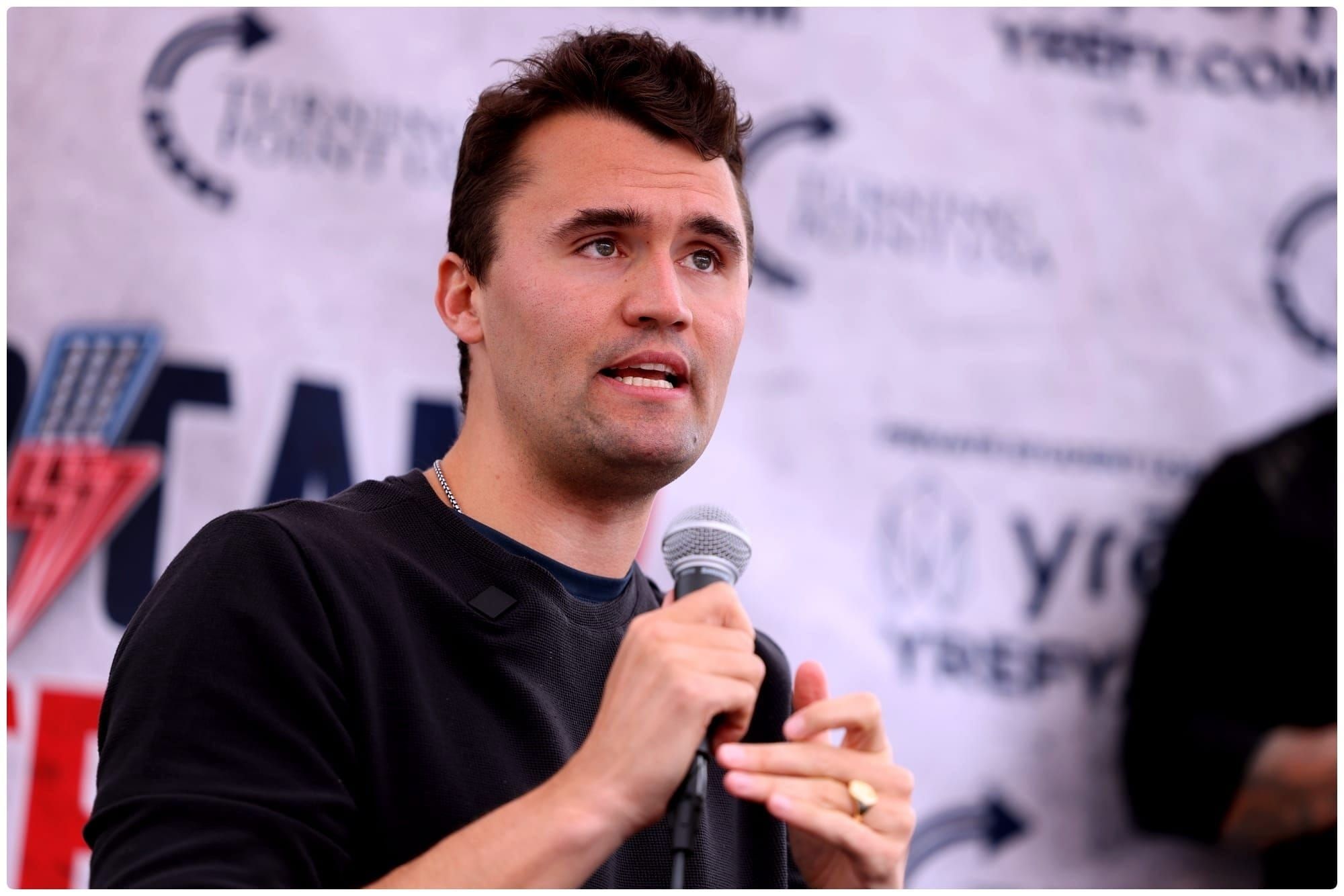
One year since Charlie's assassination Turning Point USA now has more than 3,500 high-school chapters and more than 1,500 college chapters across the United States, increase of roughly 180% and 60% respectively. His image remains ubiquitous at conservative gatherings.
At the Republican Party’s first midterm convention in Dallas this month, a five-minute memorial video was played before an arena that broke into chants of “Charlie, Charlie.” Vice President JD Vance spoke directly to Kirk’s children and urged Republicans to settle their differences the way their father once tried to do.
Outside those memorials, however, the differences Vance was referring to have become increasingly difficult to contain.
The Republican coalition Kirk helped build is now divided over several major issues, including the Iran war, Israel, the Epstein files, immigration, the economy and even the meaning of “America First.” Some conservative figures who once stood firmly behind Trump are now criticising him and each other. At the same time, Kirk’s own legacy has become part of the dispute, with different factions claiming that he would have supported their side if he were still alive.
Charlie was not just a popular conservative voice; he also had connections across different parts of the movement. He could speak to evangelical Christians, young populists, Republican politicians, donors, pro-Israel conservatives, anti-establishment commentators and younger voters who were becoming more sceptical of foreign wars.
Only months after his death, that connection is broken beyond repair.