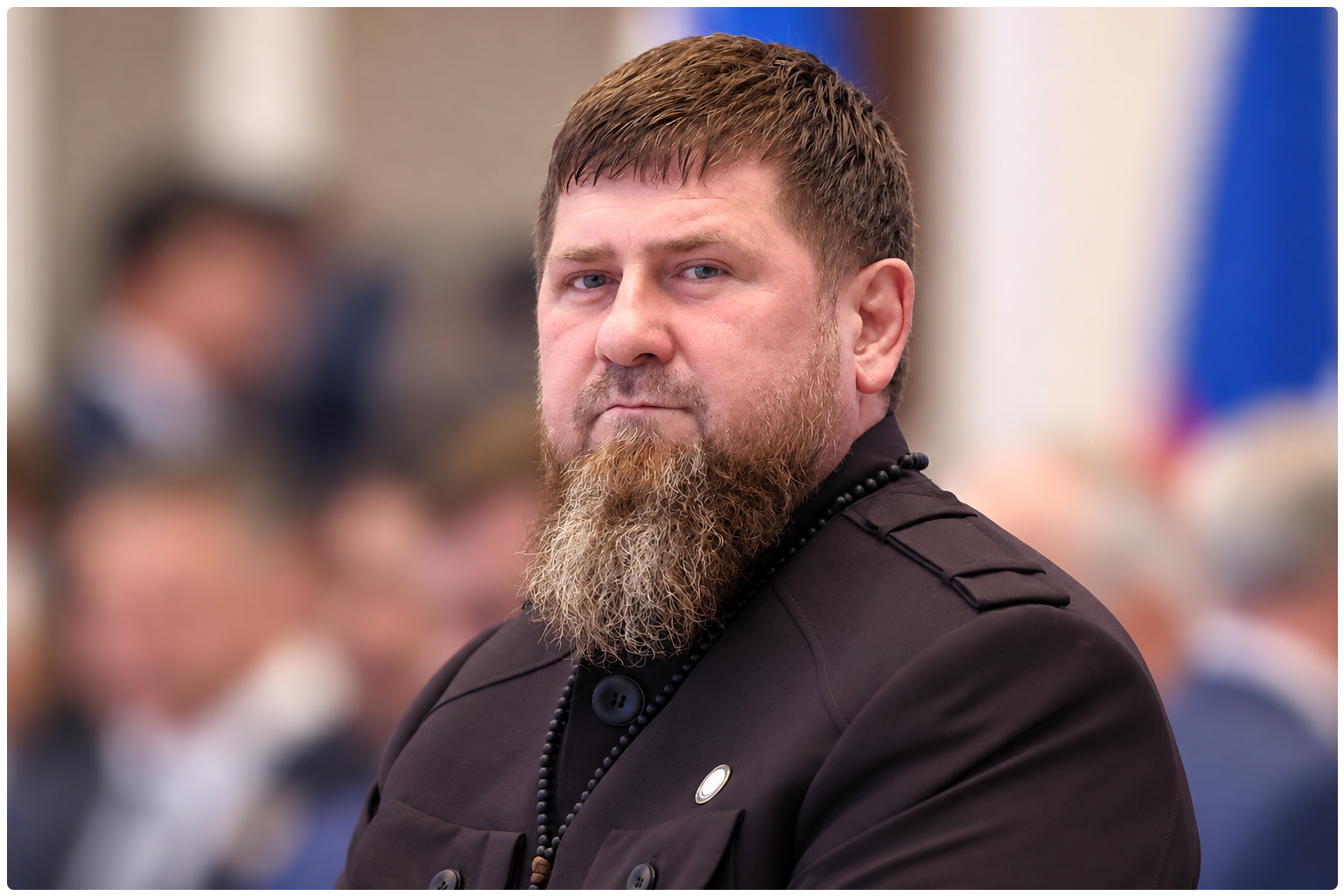
Ramzan Kadyrov has been re-elected as the leader of Chechnya with 99.85 per cent of the vote, according to Russia’s Central Election Commission, securing a fifth term in the predominantly Muslim republic he has ruled for nearly two decades.
The official result was slightly higher than the 99.73 per cent Kadyrov received in the 2021 election. The near-unanimous vote extends the rule of one of Russian President Vladimir Putin’s closest regional allies and provides Kadyrov with another mandate to lead the republic.
The Chechen election was held alongside voting for Russia’s national parliament, regional legislatures and governors. Kremlin-supported parties and candidates recorded strong victories across the country, while Kadyrov’s result reflected the continuing political dominance of his administration in Chechnya.
Kadyrov has governed the republic since 2007, when Putin appointed him regional president. His rise followed the assassination of his father, Akhmat Kadyrov, in a bombing at a Grozny stadium in 2004.
The Kadyrov family had initially fought against Russia during the first Chechen war but changed sides during the second conflict. Akhmat Kadyrov subsequently became the Kremlin-backed leader of the republic, while his son built a powerful security apparatus that became central to Moscow’s strategy for controlling the region.
Under the arrangement that emerged, Kadyrov received substantial federal funding and considerable freedom to govern Chechnya in return for suppressing the insurgency. The result transformed Grozny from a city devastated by war into a heavily reconstructed regional capital.
Supporters credit him with restoring stability after two wars and years of separatist and Islamist violence. His government has promoted infrastructure development, public order and a conservative interpretation of Islam alongside a strong Chechen identity within the Russian Federation.
Critics, argue that stability has been maintained through intimidation and collective punishment. Human rights groups have accused Chechen authorities of enforced disappearances, torture, extrajudicial killings and persecution of journalists, activists. Kadyrov has consistently denied such allegations and describes international criticism as an attempt to weaken Russia and undermine his government.
His loyalty to Putin has become particularly visible during the war in Ukraine. Kadyrov has promoted Chechen forces as some of Russia’s most committed combat units and has repeatedly supported a hard military approach. He has also opposed negotiations that would end the conflict without what Moscow considers a decisive outcome.
The election comes amid continuing discussion about the long-term political future of Chechnya. Several members of Kadyrov’s family have received increasingly prominent positions. His son Adam was appointed secretary of Chechnya’s Security Council, indicating the family’s growing role in the republic’s public administration.
The official 99.85 per cent result reinforces Kadyrov’s position as Chechnya’s dominant political figure and ensures continuity in the republic’s relationship with Moscow. His fifth term is likely to preserve the governing arrangement that has shaped Chechnya for almost two decades, combining regional autonomy, federal support and personal loyalty to Putin.