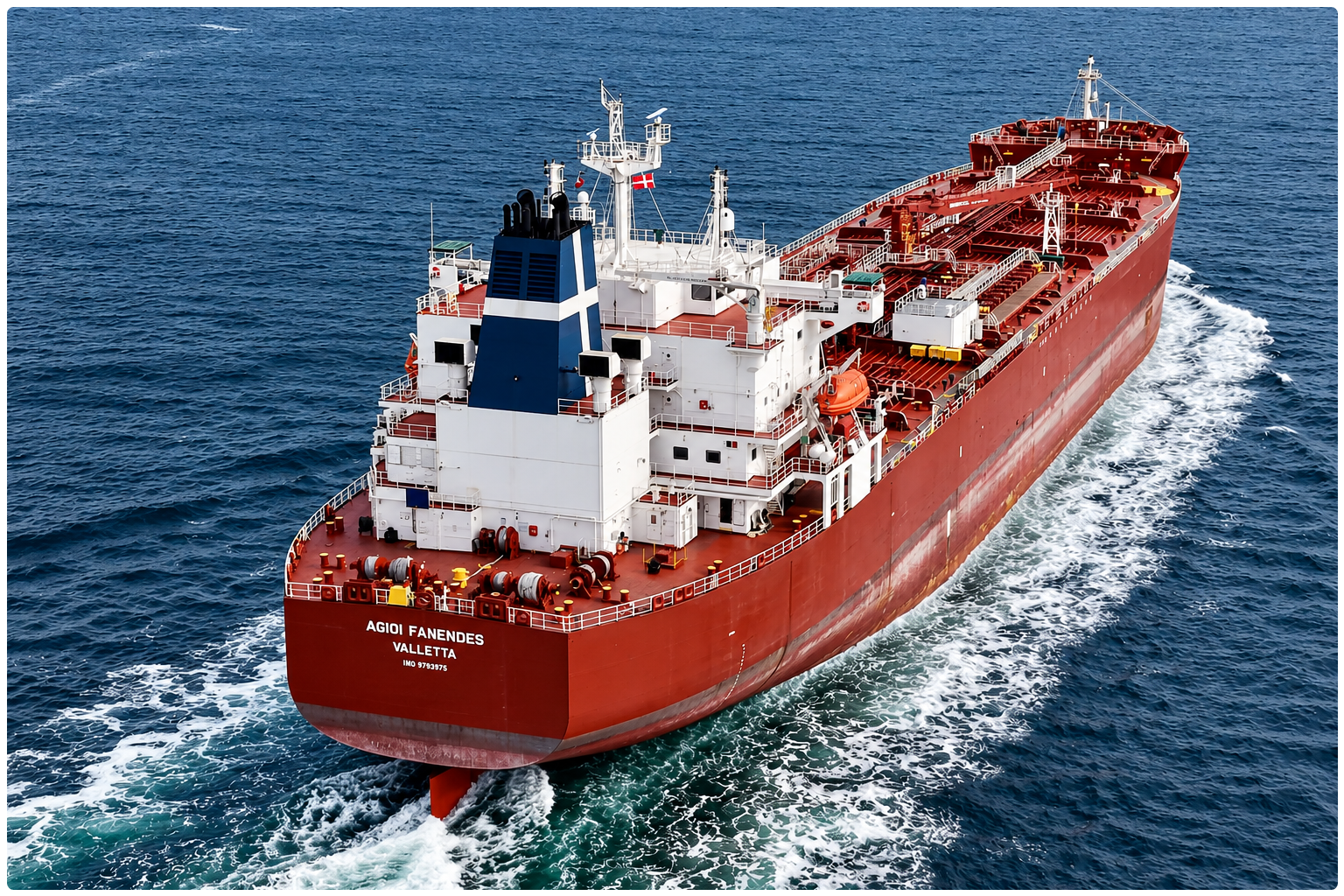
A tanker carrying approximately 40,000 tonnes of Russian diesel is heading towards New York, marking the first shipment under an agreement between Presidents Donald Trump and Vladimir Putin to resume fuel deliveries to the United States.
The Malta-flagged Agioi Fanendes loaded ultra-low-sulphur diesel at Russia's Baltic port of Primorsk on October 22 and departed the following day. Shipping data from LSEG and maritime intelligence firm Kpler show the vessel signalling New York as its destination, with an expected arrival on November 7.
The shipment marks an unusual reversal in American energy policy. Washington spent more than four years restricting Russian petroleum imports following Moscow's invasion of Ukraine, but rising fuel prices have prompted the Trump administration to reopen a channel for diesel supplies.
On October 9, the US Treasury's Office of Foreign Assets Control issued General License 135, authorising transactions involving the sale, delivery and importation of Russian-origin diesel. The authorisation created a legal route for purchases that had previously faced American restrictions.
Russia subsequently lifted its own diesel export ban, introduced to protect domestic supplies after Ukrainian drone attacks damaged refining infrastructure. Moscow agreed to release additional fuel into international markets, including the United States.
Trump announced an initial commitment of 300,000 tonnes, followed by 500,000 tonnes in November and another one million tonnes thereafter. The cargo now crossing the Atlantic represents only a fraction of those announced volumes, and further deliveries will depend on the availability of Russian fuel and commercial arrangements between buyers and sellers.
The economic pressure behind Washington's decision is substantial. The US Energy Information Administration's weekly figures show that average retail diesel prices reached $6.276 per gallon on October 19, compared with $3.530 in the week of January 19.
Higher diesel costs affect freight transport, agriculture and construction, raising operating expenses for businesses that depend on heavy vehicles and machinery.
Washington has already taken domestic measures to relieve that pressure. An October 5 executive order provided for temporary tax relief and expanded the permitted use of off-road diesel on American highways.
The Russian agreement adds another potential source of supply. It also follows the administration's decision to waive new sanctions and punitive tariffs targeting Russian energy trade, reversing part of the economic pressure Washington had been preparing to impose on Moscow and countries purchasing its oil.
For Russia, the reopening offers an opportunity to expand fuel exports beyond markets such as Brazil and Turkey, which became more important after European restrictions redirected Russian petroleum products away from traditional buyers.
The first tanker is expected to reach New York four days after the November 3 US midterm elections. Its arrival would establish that Russian diesel is once again entering the American market, although a single shipment of roughly 300,000 barrels is unlikely to produce a substantial nationwide reduction in fuel prices.