Iran has vowed to withstand mounting pressure from the United States as Washington widens sanctions intended to isolate the country, restrict its international trade and cut its access to the dollar-based financial system.
The Iranian government said it would pursue diplomacy and national defence as complementary parts of its strategy, presenting negotiations and military preparedness as equally necessary for protecting the country’s sovereignty. Tehran has also accused Washington of using economic coercion to force foreign governments and businesses to sever lawful commercial relations with Iran.
The latest American campaign, named Operation Economic Outcast, expands the range of Iranian economic activity exposed to secondary sanctions. The measures cover the technology, digital-assets, gold, aviation and shipping sectors. Nearly 60 individuals, companies and vessels were also sanctioned over alleged involvement in oil sales, cyber operations, weapons procurement and Iran’s nuclear and missile programmes.
Secondary sanctions allow Washington to penalise non-American businesses for transactions involving Iran, including by restricting their access to US banks and dollar-clearing systems. American officials have warned foreign governments that they will be given defined periods to close identified Iranian trade channels, although no comprehensive timetable or list of targeted countries has been publicly released.
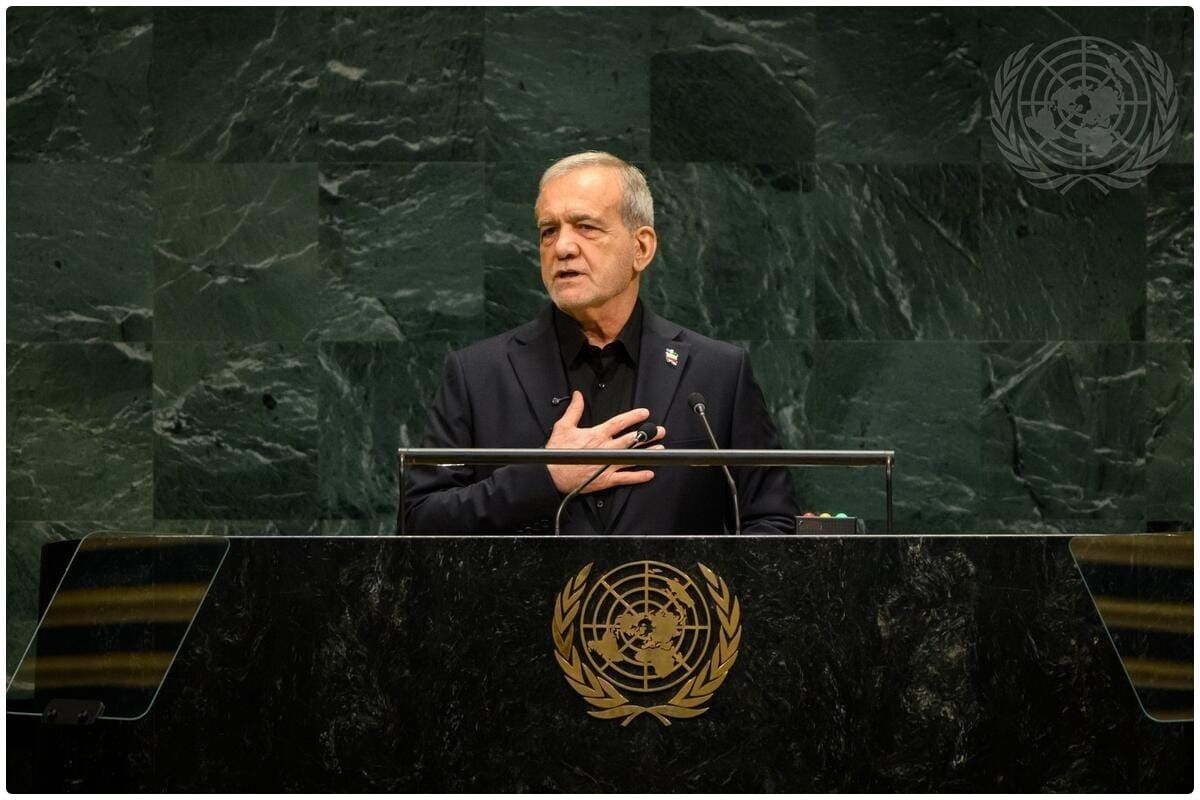
Iran President Pezeshkian at the UN:
— COMBATE |🇵🇷 (@upholdreality) September 23, 2026
"Those who are terrorists and train terrorists tell us that we are terrorists."
"For two hundred years, Iran has not attacked any country. For two hundred years, we have always defended ourselves."
"They bombed and killed these children,… pic.twitter.com/l7UKZbEhXM
Iran’s Foreign Ministry described the measures as systematic intimidation and argued that their implications extended beyond Iran. Economy Minister Ali Madanizadeh said China and Russia had not accepted the American campaign and predicted that other governments would also resist pressure to abandon trade with Tehran.
Washington has so far stopped short of imposing its strongest penalties on major Iranian trading partners such as China and India. Directly targeting their largest banks or energy companies could disrupt international markets and create wider diplomatic and economic consequences for the United States.
The pressure is nevertheless adding to serious economic difficulties inside Iran. President Masoud Pezeshkian has said the country’s imports and exports have fallen by nearly 35 percent because of sanctions and the blockade of Iranian ports. Annual inflation reached approximately 66 percent in July, while the government has acknowledged growing problems involving employment, prices and access to essential goods.
Tehran says its response will focus on controlling inflation, supporting domestic production, attracting investment and gradually reducing dependence on the dollar. Iranian leaders have not, however, ruled out negotiations. Pezeshkian has called for the revival of an interim agreement reached in June that temporarily permitted Iranian oil sales and offered limited sanctions relief before collapsing over disagreements.
The Strait of Hormuz remains central to the confrontation. Before the war, the narrow waterway carried about one-fifth of the world’s oil and liquefied natural gas. Iran maintains that vessels require its permission to pass, while Washington says the channel has been cleared of mines and should remain open to international shipping.
Qatar, Pakistan and Oman have attempted to revive negotiations and establish safer maritime arrangements. Their mediation has so far produced no lasting settlement, but the diplomatic activity suggests that both sides continue to examine a negotiated exit even as they publicly harden their positions.
Iran’s promise to resist therefore does not amount to a rejection of diplomacy. It reflects a dual strategy: enduring economic pressure and preserving military leverage while insisting that any renewed talks must include sanctions relief and recognition of Iranian security demands.