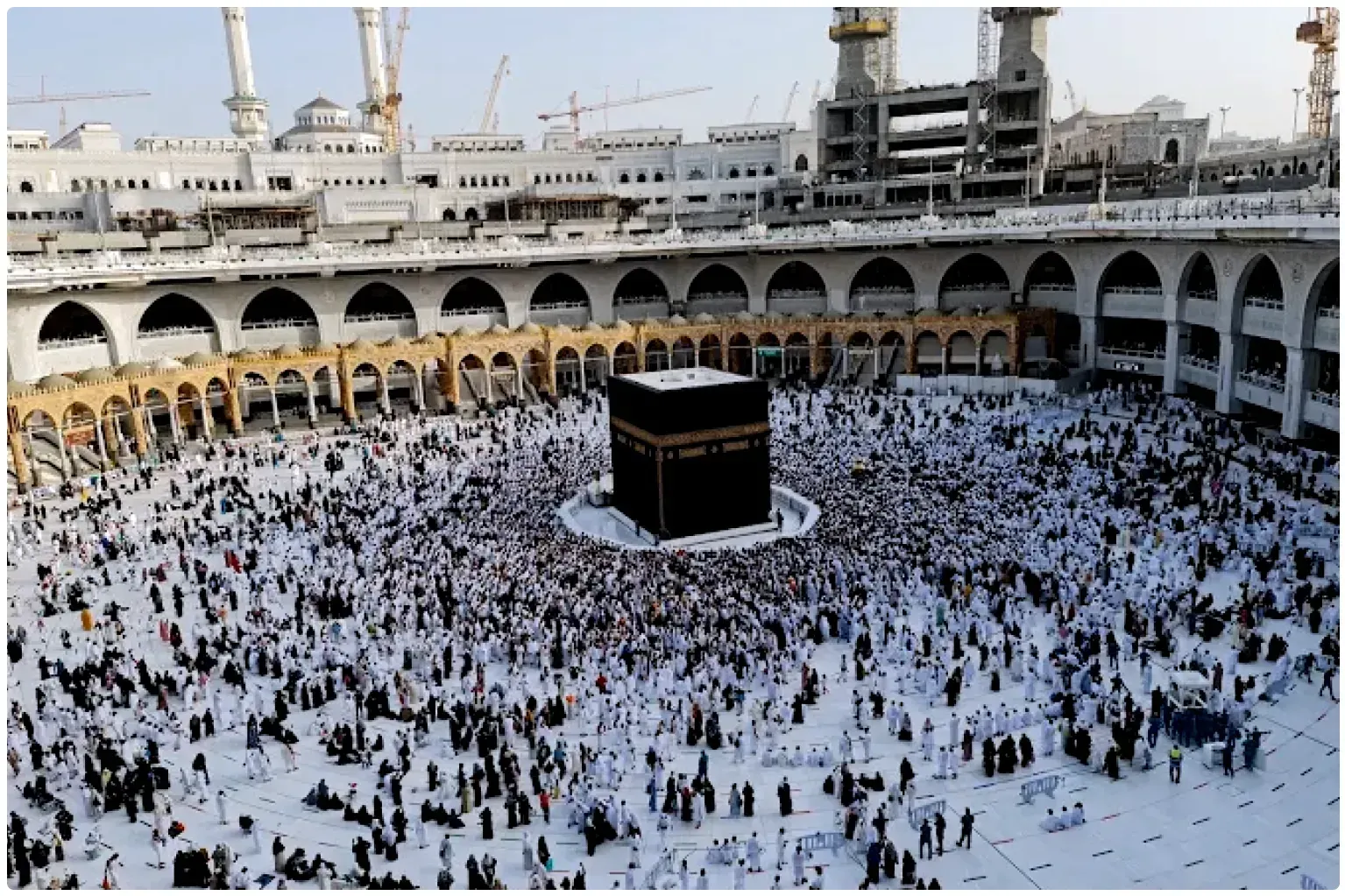
Saudi Arabian authorities have denied reports that a suicide bomber attempted to attack the Grand Mosque in Mecca, saying the security incident involved a man who harassed passers-by and caused fear among people near Islam’s holiest site.
Claims of an attempted bombing spread rapidly across social media after videos showed security personnel restraining a man in the mosque complex. Some posts alleged that the individual was wearing an explosive vest and had attempted to approach the Kaaba before being intercepted.
Saudi Public Security rejected that account. It said officers in the holy city had arrested a person for harassing people and spreading fear and panic, adding that the situation was brought under control immediately.
🔴 BREAKING | Saudi Arabia:
— Makkah Updates🕋 (@MakkahUpdate) October 2, 2026
Saudi authorities deny reports of a suicide bomber at the Grand Mosque in Makkah.
Security forces arrested a man for harassing passersby and causing panic. Authorities said there was no suicide bombing. pic.twitter.com/7FXBCDQ5tn
“The security authorities confirm that there is no truth to the claims being circulated regarding the incident,” the statement said.
Authorities did not identify the arrested man or explain what behaviour caused the panic. They also did not report recovering explosives, weapons or a suicide vest. No injuries were announced, and there was no indication that worship at the Grand Mosque had been interrupted.
The absence of detailed official information initially created space for speculation. Videos circulated without verified dates, locations or context, while some accounts attempted to link the man to Yemen’s Houthi movement. No credible evidence has emerged connecting the arrested individual to the Houthis or any other armed organisation.
The rumours gained traction because they appeared during a period of heightened security around Saudi Arabia’s holy cities. In September, Saudi air defences intercepted and destroyed a drone south of Mecca before it entered restricted airspace. The Saudi-led coalition accused the Houthis of launching the aircraft and described the incident as the second attempted attack on Mecca since 2017.
The Houthis denied targeting Mecca or any Islamic holy site.
Tensions increased further after a drone damaged a power distribution station in Medina that supplies electricity to the Prophet’s Mosque. Saudi authorities said forensic examination of the wreckage indicated Houthi involvement. One transformer was disabled, although the wider power supply was not disrupted.
The Houthis also denied responsibility for that attack and accused Saudi Arabia of using allegations involving holy sites to build public support for its military campaign in Yemen.
The competing claims come amid renewed fighting between the Houthis and Saudi-backed Yemeni forces. Missile and drone attacks have increased across the region, while Saudi Arabia has conducted airstrikes against Houthi-controlled areas in Yemen.
Mecca is particularly sensitive because millions of Muslims travel to the city throughout the year for the Hajj and Umrah pilgrimages. Even an unverified suggestion of an attack near the Kaaba can provoke alarm across the Islamic world.
The latest incident demonstrates how quickly an ordinary security disturbance can be transformed into a terrorism narrative during a period of regional conflict. Saudi authorities have confirmed an arrest, but they have explicitly denied that a suicide bombing was attempted.
Unless evidence of explosives or terrorist intent emerges, describing the incident as a foiled suicide attack would be inaccurate.