Saudi-backed Yemeni forces have withdrawn from positions overlooking the Bab el-Mandeb Strait, abandoning part of a coastal offensive launched six weeks ago to push the Houthis away from the southern entrance to the Red Sea. The troops are being redeployed towards Aden, where government commanders are preparing for the possibility of further Houthi advances.
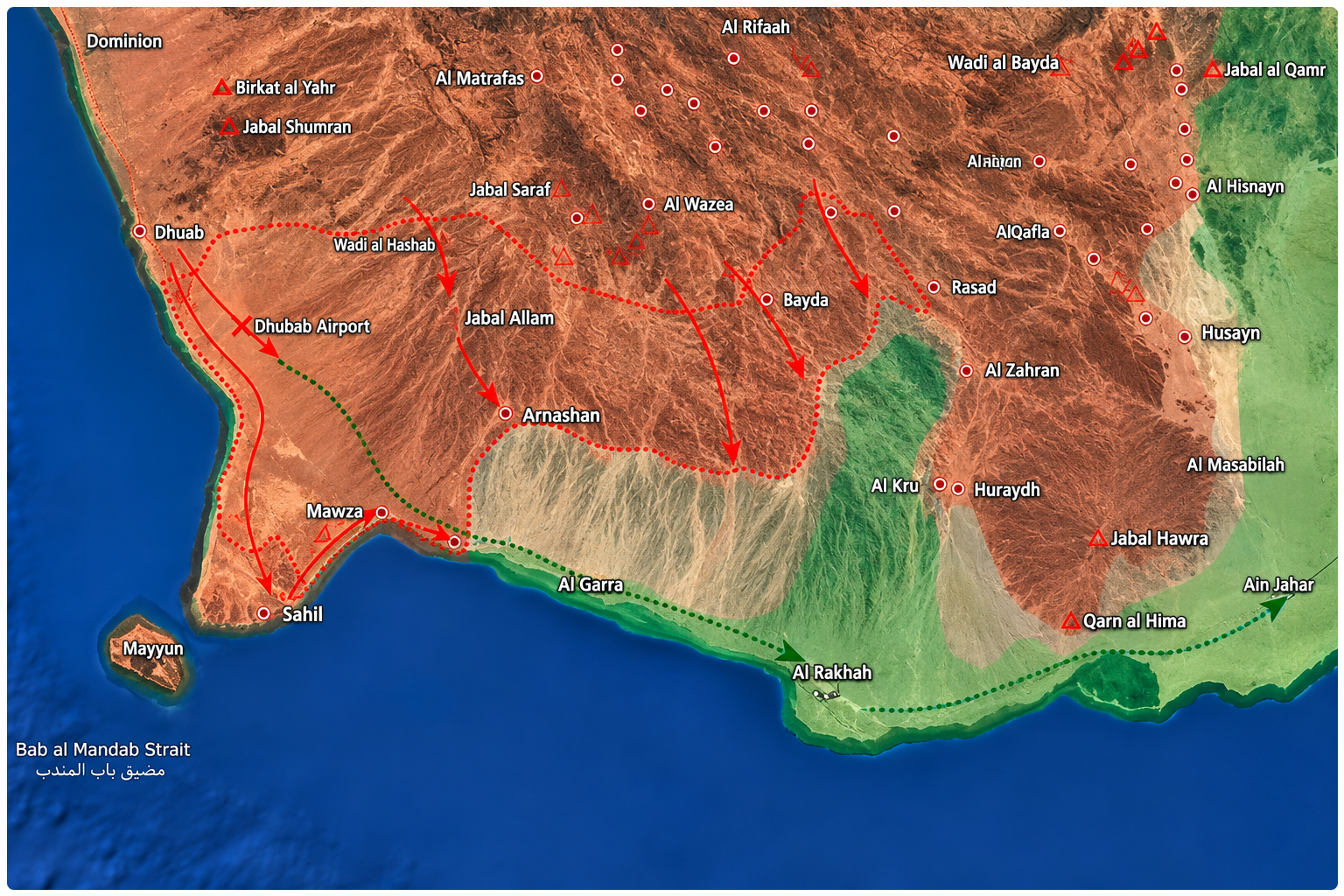
The Southern Armed Forces announced on Sunday, November 15, that they were leaving Dhubab Airport and positions around Bab el-Mandeb in western Taiz governorate. In a statement published on their official military website, the forces described the withdrawal as a redeployment intended to strengthen the defence of Aden and neighbouring governorates.
Saudi-backed forces have RETREATED from Bab el-Mandeb, leaving the Houthis in control of a strategic gateway to the Red Sea. THE SAUDIS ARE IN RETREAT. THE HOUTHIS REMAIN LOCKED AND LOADED. https://t.co/ioqoXOAcT5
— Steve Hanke (@steve_hanke) November 15, 2026
The announcement followed weeks of fighting along Yemen's western coast, where government forces had attempted to reverse territorial gains made by the Houthis in September. Their October counteroffensive recovered positions around Dhubab but failed to establish lasting control over the surrounding coastline.
Government troops have since moved towards Al-Suqyah, south of Dhubab, according to Yemeni military sources. Fighting continues in nearby coastal areas, while Houthi advances through the highlands south of Taiz have increased pressure on the approaches to Aden.
The retreat brings the Houthis closer to consolidating their positions along one of the world's most important maritime passages. Bab el-Mandeb connects the Red Sea with the Gulf of Aden, carrying commercial traffic between Asia and Europe through the Suez Canal.
Control of coastal territory gives armed forces opportunities to monitor and threaten nearby shipping. It does not, however, establish control over every navigational channel or the islands within the strait.
The Yemeni government's military spokesman, Colonel Majed al-Nazili, endorsed the southern forces' decision to prioritise Aden and efforts to relieve Taiz. He maintained that recovering Bab el-Mandeb and Yemen's western coastline remained objectives of the government campaign.
The withdrawal also reverses some of the advances described during October's Saudi-backed coastal offensive. Although government forces initially claimed substantial territorial gains, the extent of their control around the strait had remained disputed.
Taiz has become another major pressure point. Houthi advances and restrictions on access routes have worsened food shortages and humanitarian conditions in the city, while government-aligned forces are increasingly occupied with protecting territory farther south.
On November 4, the International Committee of the Red Cross delivered four trucks of medical supplies to hospitals in Taiz, warning that continuing fighting was placing extraordinary pressure on medical services.
The military setback comes as the Houthis continue missile and drone operations against Saudi Arabia, including attacks directed towards airports and energy infrastructure. Riyadh has responded with airstrikes inside Yemen while supporting forces fighting to prevent further Houthi territorial gains.
Saudi Arabia has not announced a new operation to retake the positions vacated near Bab el-Mandeb. The Southern Armed Forces say their campaign will continue, but their immediate deployment is now focused on defending Aden.