Scientists have identified a new species of wild cat in Bolivia, marking the first time a living feline species has been formally named and described in more than a century.
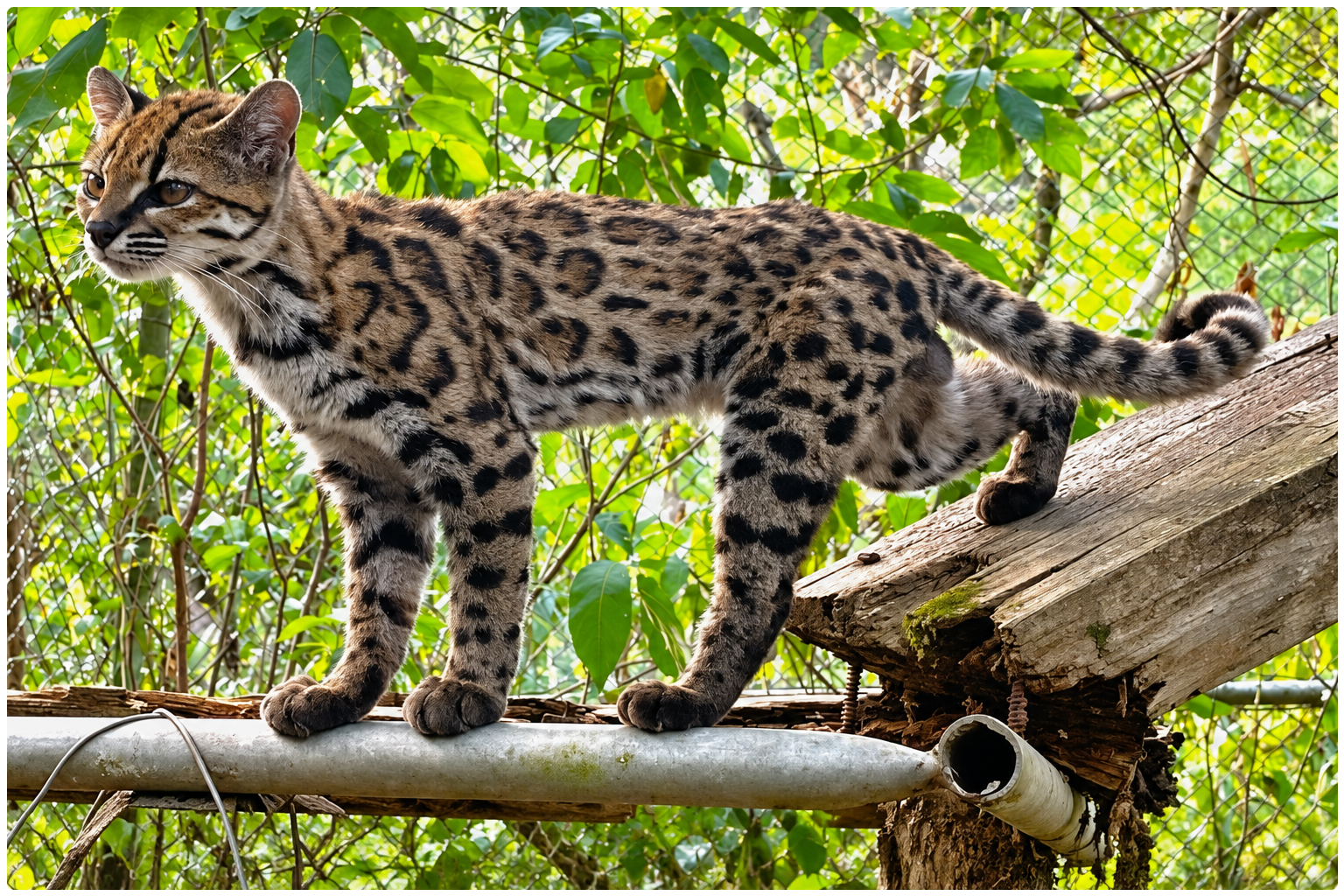
The animal, known locally as the tilcayo and now scientifically named Leopardus tilcayo, lives in Bolivia’s Yungas cloud forest on the eastern slopes of the Andes. It is remarkably small, measuring about 18 inches from head to body and weighing roughly three pounds it is smaller than many domestic cats. Its pale brown coat is covered in dark rosette-like markings, giving it the appearance of a miniature leopard.
The discovery began almost by accident. In 2016, Bolivian biologist Paola Nogales-Ascarrunz was contacted by a wildlife sanctuary after staff received what they described as an unusual cat. A local family had found the animal as a kitten near a forest and initially believed it was a domestic cat. As it grew, its unusual appearance prompted further examination.
What followed was nearly a decade of genetic work. Researchers compared the genomes of more than 30 wild cats from Bolivia, Peru, Colombia and Brazil, along with museum specimens. The analysis showed that the tilcayo was not simply a regional variant of another tiger cat, but a separate evolutionary lineage that diverged from its relatives roughly 1.4 million years ago.
The findings, published in the journal Current Biology, also reshaped scientists’ understanding of South America’s tiger cats. Animals once treated as a single species were found to comprise at least five distinct species, suggesting the group is far more genetically diverse than previously believed. Researchers also identified a new Peruvian subspecies, Leopardus tigrinus antisuyo.
The name “tilcayo” comes from local communities that were already familiar with the animal long before science formally classified it. That has become part of the significance of the discovery: the species was not entirely unknown to people living in the region, but it had remained invisible to formal taxonomy.
So far, scientists have genetically confirmed the species only in Bolivia’s Yungas, a humid mountain ecosystem stretching between the Andes and the Amazon basin. The habitat is under increasing pressure from deforestation, agriculture, fires and gold mining, raising concern that the tilcayo could already be vulnerable before researchers fully understand its population size or range.
Researchers have shared their findings with the International Union for Conservation of Nature, which could eventually assess the cat’s conservation status. For now, scientists know remarkably little about how many tilcayos survive in the wild, what they eat, how large their territory is or how they reproduce.
That uncertainty is precisely what makes the discovery so important.
Wild cats are among the world’s most studied mammals, yet a distinct species survived for generations in plain sight without being formally recognised. The tilcayo is therefore more than a new name on the feline family tree. It is a reminder that even among familiar groups of animals, significant biodiversity can still remain undocumented and potentially disappear before science fully understands it.