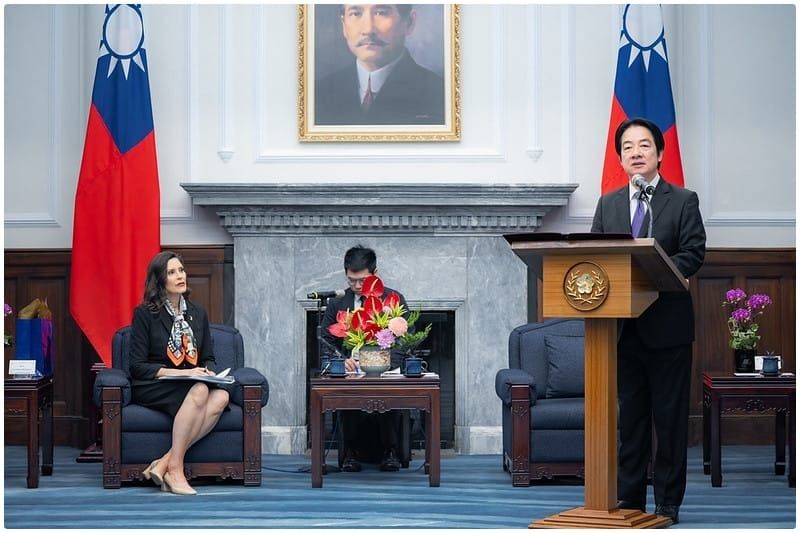
Taiwan is closely watching the summit between Donald Trump and Xi Jinping amid fears that the American president could soften US support for the island in return for trade or diplomatic concessions from China.
The immediate concern is a proposed $14 billion arms package that has been awaiting Trump’s approval for months. After meeting Xi in Beijing in May, Trump said he was keeping the package in abeyance and described it as a “very good negotiating chip,” raising fears in Taipei that weapons needed for its defence could be used as leverage in wider negotiations with Beijing.
The package would follow an $11 billion sale approved by the Trump administration in December, the largest American arms package ever authorised for Taiwan. The delay affecting the second proposal has attracted particular attention because Xi is expected to press Trump to halt future weapons sales to the island altogether.
Taiwan’s government has attempted to strike a measured tone ahead of the Washington summit. Cabinet spokesperson Michelle Lee said Taipei remained in close contact with the United States and thanked Washington for its longstanding support. Foreign Minister Lin Chia-lung has also said the United States repeatedly assured Taiwan that its policy had not changed.
Behind those statements lies concern that even a small change in American language could carry significant consequences. China regards Taiwan as part of its territory and has described the issue as a red line in relations with Washington. Beijing has not ruled out using force to bring the self-governed island under its control.
The United States officially recognises the government in Beijing as the sole legal government of China, but it does not formally recognise Beijing’s claim of sovereignty over Taiwan. Washington only acknowledges that Beijing considers Taiwan to be part of China. It maintains unofficial relations with Taiwan and continues to supply the island with defensive weapons.
American law requires the United States to help Taiwan maintain the ability to defend itself, although it does not compel Washington to enter a war on Taiwan’s behalf. This deliberate uncertainty, known as strategic ambiguity, is intended to discourage China from invading Taiwan without giving Taipei an unconditional guarantee of American military intervention.
Trump has declined to say whether the United States would defend Taiwan if China attacked. He has instead said that Xi personally assured him Beijing would not launch an invasion while he remained president. That assurance has not eliminated concerns in Taipei, particularly as China continues military exercises around the island and expands its air and naval capabilities.
Taiwan is not the only government worried about a possible concession. Officials and lawmakers in Japan fear Trump could moderate Washington’s position on Taiwan in exchange for Chinese commitments to purchase American aircraft, agricultural products or other goods before the US midterm elections. Tokyo considers stability in the Taiwan Strait essential to Japan’s own security and regional trade.
The concern is heightened by Trump’s transactional approach to alliances and his emphasis on presenting negotiations as measurable economic victories. China could offer purchases of American products, cooperation on fentanyl precursor chemicals or limited concessions on trade while seeking restrictions on US military support for Taiwan.
No concession has been announced, and the main subject of the summit is expected to be an extension of the trade truce between the United States and China. However, Xi has repeatedly raised Taiwan during his meetings with Trump, including questions about weapons sales and Washington’s willingness to defend the island.
For Taiwan, the danger is not limited to the cancellation of one arms package. A softer American statement, a prolonged delay in weapons deliveries or language appearing to accept Beijing’s claim of sovereignty could alter perceptions of Washington’s commitment. That could weaken deterrence even without producing a formal change in US policy.