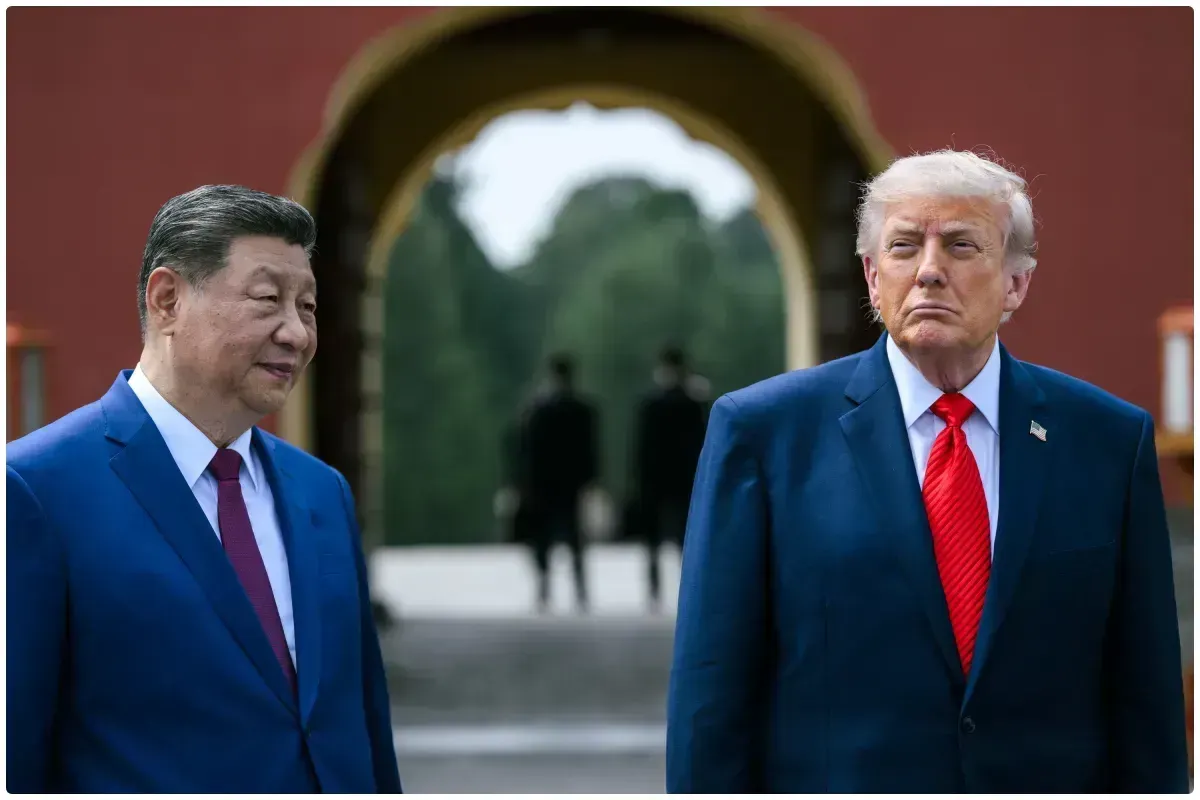
Chinese President Xi Jinping will arrive in Washington next week for a state visit that is shaping up to be one of the most consequential diplomatic meetings of the year, with the United States and China preparing to negotiate over trade, advanced technology, Taiwan, rare earth supplies and the widening war involving Iran.
Xi is scheduled to meet US President Donald Trump on September 24 in what will be their second summit this year, following Trump’s visit to Beijing in May. It will also be Xi’s first White House visit in a decade. Trump is expected to personally receive him at Joint Base Andrews, an unusual gesture that reflects the importance the administration is attaching to the visit. The programme will include a formal White House arrival ceremony, private talks and a state dinner.
Trade will sit at the centre of the discussions. Washington and Beijing are operating under a tariff truce reached after the two leaders met in South Korea last October, but that arrangement expires on November 10. Both sides are negotiating whether to extend it and are discussing a broader package covering agricultural goods, energy and non-tariff barriers. US Trade Representative Jamieson Greer has said announcements are expected on agriculture and other trade restrictions.
One possible deal involves Chinese purchases of American goods. Beijing has been in discussions with Boeing over what could become a major aircraft order, potentially including hundreds of 737 MAX jets, while US officials are also seeking larger Chinese purchases of agricultural products. Separately, negotiators are discussing whether China could reduce or remove its 15% tariff on US liquefied natural gas as part of a package covering roughly $30 billion in tariff reductions.
Rare earths and technology restrictions are another major point of contention. Washington wants Beijing to ease restrictions on exports of critical minerals used in everything from electric vehicles and aircraft to advanced weapons systems. China, in turn, is pressing the United States to soften restrictions that prevent thousands of Chinese companies from accessing advanced American technology.
The Taiwan question could prove even more sensitive. Beijing is seeking stronger language from Washington against Taiwanese independence, while US allies are watching closely for any shift in the longstanding American position. A US arms package for Taiwan worth as much as $14 billion remains delayed, and that delay has already raised concern in Taipei and among US defence companies.
Artificial intelligence is also expected to feature prominently. Treasury Secretary Scott Bessent and Chinese Vice Premier He Lifeng are due to discuss AI, rare earths and trade ahead of the summit, with both governments considering whether limited cooperation is possible on risks such as misuse of advanced AI systems. At the same time, the two countries remain in intense competition over chips, computing power and frontier models.
Iran adds another layer. China remains Tehran’s most important economic partner and the largest buyer of Iranian oil, while Washington wants Beijing to use more of its leverage over Iran. The subject is expected to be raised as the United States continues trying to contain the war and limit Tehran’s financial networks.
Xi is also expected to arrive with an unusually large Chinese business delegation. Executives from companies including BYD, CATL, Xiaomi and major Chinese banks are among those being considered, reflecting Beijing’s effort to put commercial engagement alongside geopolitical bargaining.
The summit is unlikely to resolve the deeper rivalry between Washington and Beijing. Their disagreements over technology, military power, Taiwan and global influence remain structural. But with tariffs, supply chains, AI and two major wars affecting the global economy, even limited agreements could have consequences far beyond the two countries.
That is what makes this visit so important. Trump and Xi are not simply negotiating over bilateral trade; they are negotiating over some of the rules that will shape the global economy and security order for years to come.