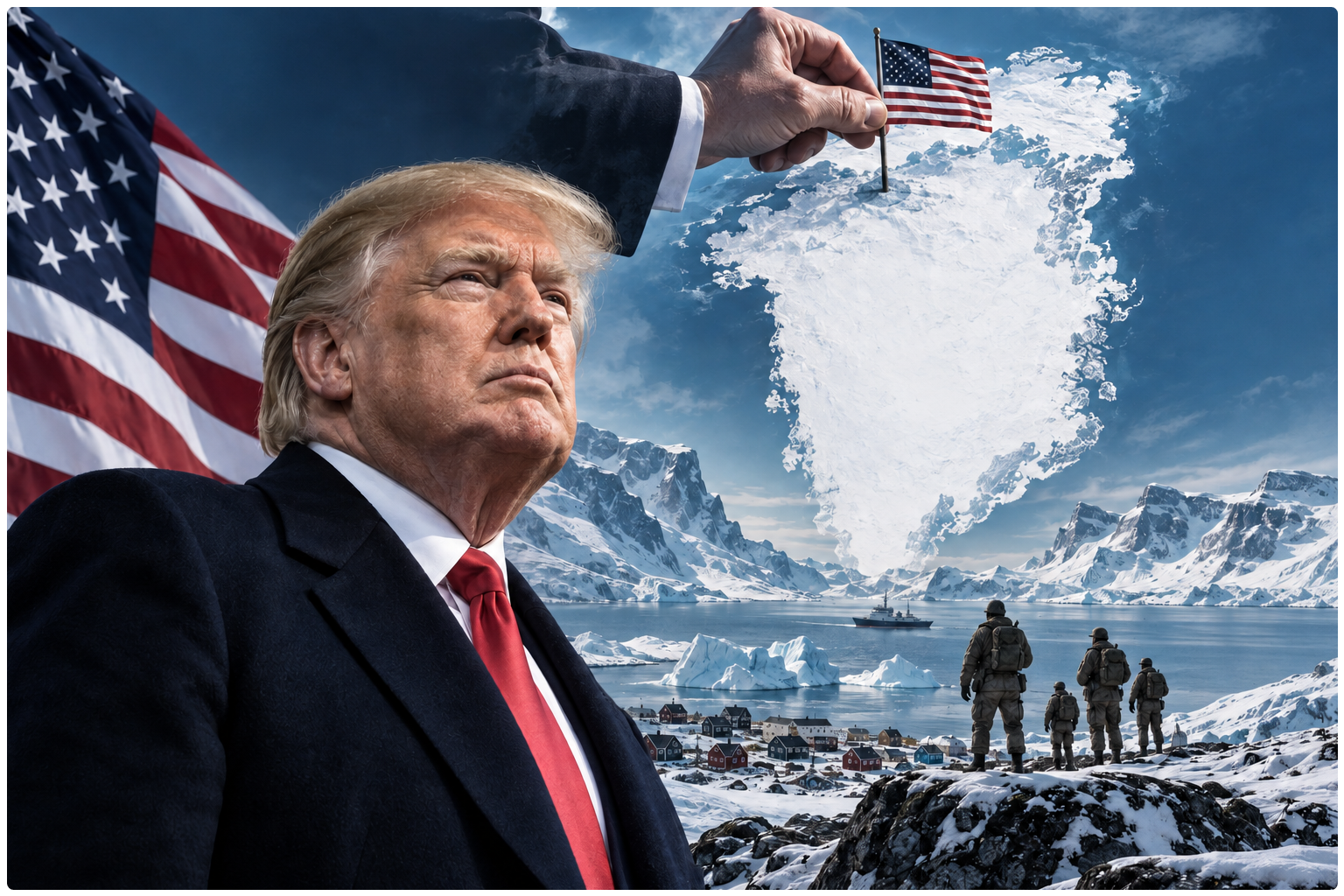
The United States, Denmark and Greenland have reached a sweeping new security agreement that could dramatically expand the American military presence on the Arctic island while preventing rival powers such as China and Russia from establishing military footholds or making sensitive investments there.
President Donald Trump announced the deal on September 18, saying Washington would have the ability to do “what is necessary” to defend Greenland and the United States and describing the arrangement as permanent. He also said no US adversary would be allowed to establish a base, maintain a military presence or make sensitive investments in Greenland without American approval. The agreement has no stated expiry date.
This historic deal is a huge win for the United States and the American people. Thanks to President Trump’s vision and leadership, this historic agreement permanently guarantees U.S. security interests in the Arctic at zero cost to the U.S. taxpayer.
— Secretary Marco Rubio (@SecRubio) September 19, 2026
Greenland will forever be… https://t.co/DPCiSEhoFS
The wording used by Denmark and Greenland is more restrained. A joint announcement from the Danish prime minister’s office said the three governments expect to sign an agreement next week on strengthening security in the Arctic and North Atlantic. Prime Minister Mette Frederiksen stressed that the deal recognises the sovereignty and territorial integrity of the Kingdom of Denmark as well as Greenlanders’ right to self-determination. Greenland’s premier, Jens-Frederik Nielsen, said the agreement strengthens security while recognising Greenland’s own interests.
The deal appears to give Washington significantly broader military access while leaving Greenland within the Kingdom of Denmark. The accord is expected to be signed during the UN General Assembly in New York and must then pass the necessary parliamentary procedures before entering into force.
The agreement could allow a much larger US military footprint, including additional bases, use of Greenlandic airspace and infrastructure linked to Trump’s planned Golden Dome missile-defence system. Negotiators have also discussed restrictions designed to prevent China and other non-NATO powers from gaining strategic access to the island.
Washington already has considerable military rights in Greenland. The 1951 US-Denmark defence agreement allows American forces to operate there under the NATO framework, while a 2004 update identifies Pituffik Space Base, formerly Thule Air Base, as the principal US defence area and requires consultation with Danish and Greenlandic authorities over significant changes to military operations.
Pituffik is strategically important because its radar systems provide early warning of ballistic missile launches and support missile defence and space surveillance for the United States and Canada. Its location high in the Arctic gives Washington an important vantage point over potential missile trajectories from Russia and increasingly contested northern air and maritime routes.
The new agreement follows months of tension after Trump repeatedly argued that the United States needed greater control over Greenland for national-security reasons and at times refused to rule out coercive measures. In January, he threatened additional tariffs on several European countries unless Washington was allowed to acquire Greenland, prompting calls in Europe to use the EU’s Anti-Coercion Instrument against the United States. Some European politicians explicitly described the strategy as coercion and warned that yielding to it could establish a dangerous precedent.
That history is also shaping criticism of the new agreement. Critics argue that even if Denmark and Greenland voluntarily sign the final pact, it was negotiated against the backdrop of months of extraordinary pressure from Washington, raising questions about how freely a much smaller ally could bargain with the world’s most powerful military and economic power. They warn that the episode could send a broader message that sustained economic and strategic pressure can eventually produce concessions from US allies.
Those concerns have become more pointed since the US military operation in January that captured Venezuelan President Nicolás Maduro and transported him to the United States to face criminal charges. Maduro described his seizure as a “kidnapping,” while international-law specialists questioned whether Washington had any lawful basis to use military force inside Venezuela without its consent, a UN Security Council mandate or a recognised self-defence justification. Critics of Trump’s foreign policy argue that when the Venezuela operation is viewed alongside tariff threats over Greenland and the eventual security agreement, it risks creating the perception that Washington is increasingly willing to use its economic and military power unilaterally to secure strategic objectives. Supporters of the administration reject that comparison and argue that the Greenland agreement is ultimately a negotiated defence arrangement that preserves Danish sovereignty.
The eventual compromise nevertheless appears to give Washington much of the security access it sought without altering Greenland’s political status.
That could prove significant well beyond the island itself. Melting Arctic ice is opening new shipping routes and increasing access to critical minerals, while Russia maintains a large military presence across its Arctic coastline and China has sought a greater economic and scientific role in the region.
The new pact therefore marks a substantial expansion of US strategic influence in the Arctic. But while Trump calls it permanent American control over Greenland’s security, Denmark and Greenland are presenting it as something more carefully defined: deeper defence cooperation without surrendering sovereignty.