Donald Trump believes the military phase of America's war against Iran is essentially finished. The naval blockade, American troops and the threat of renewed attacks, however, are staying in place. After eight months of fighting, the president is offering a possible end to major combat operations while retaining much of the military pressure that has prevented a diplomatic settlement.
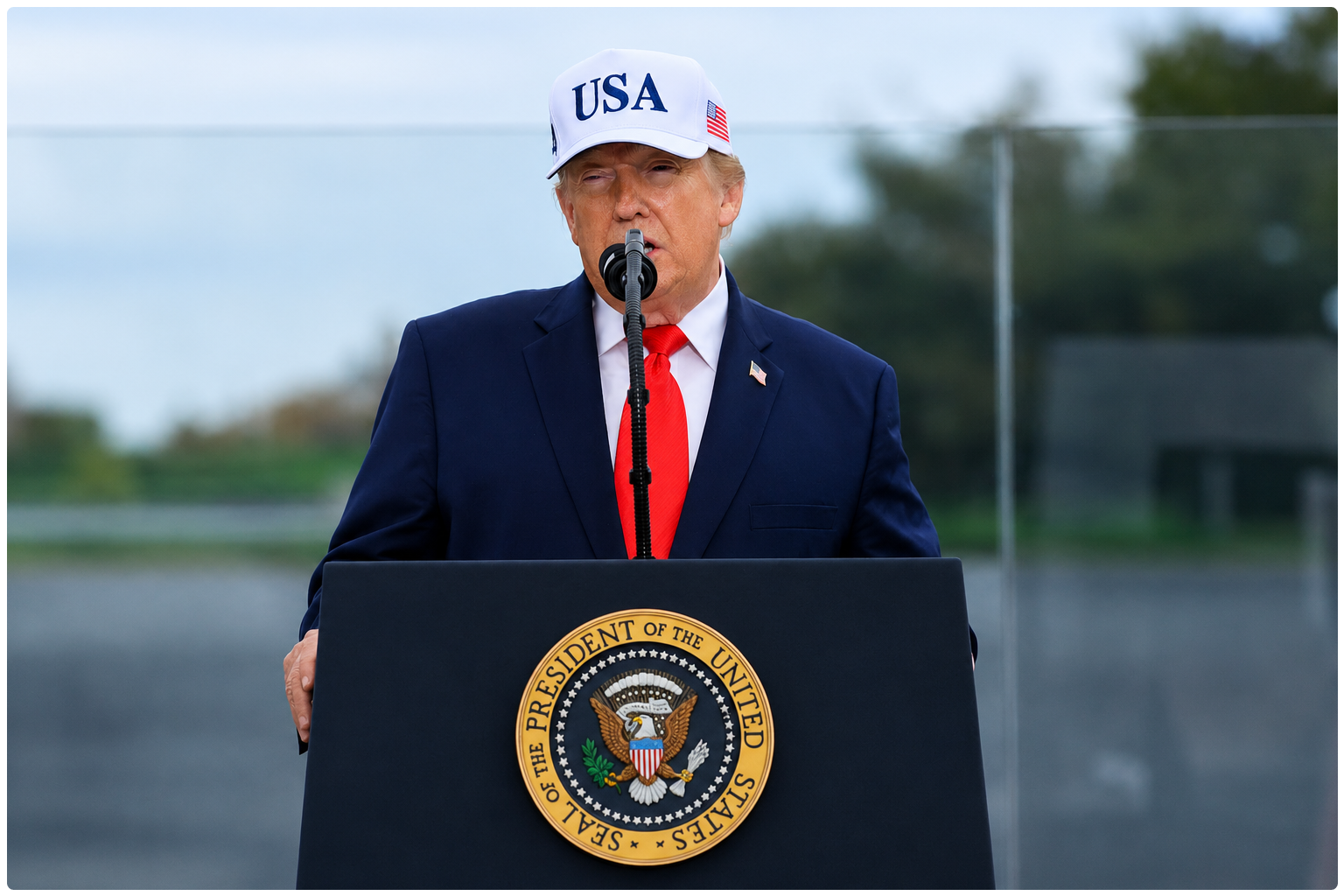
Speaking at the White House on Monday, November 9, following a meeting with Qatar's Prime Minister Sheikh Mohammed bin Abdulrahman Al Thani, Trump declared: "Iran, militarily, is effectively over."
He said Washington would maintain the existing military arrangements rather than immediately resume the large-scale bombardment he had repeatedly threatened. According to the president's remarks at the White House briefing, the United States would continue its naval blockade, alongside Operation Iron Gate, an effort to restrict Iranian trade over land.
Trump credited consultations with Qatar, Saudi Arabia, the United Arab Emirates, Bahrain and Kuwait for his decision to avoid immediate escalation. He claimed the neighbouring governments preferred maintaining the current restrictions while negotiations continued.
The president described positive diplomatic momentum, but offered no timetable for lifting the blockade, withdrawing American forces or formally ending hostilities.
Qatar has been central to the negotiations. Its Foreign Ministry confirmed on November 3 that mediators were exchanging proposals between Washington and Tehran, although no breakthrough had been reached. A subsequent conversation between the Qatari prime minister and Iran's foreign minister addressed efforts to reduce tensions and restore regional stability.
The two governments remain divided over the conditions for peace. Washington insists that Iran must not acquire nuclear weapons, while Tehran is seeking an end to the blockade, sanctions relief and guarantees against further attacks.
Trump maintains that Iran's military capabilities have been severely weakened. Yet the continuing confrontation has exposed the limits of that assessment.
American forces have conducted limited strikes against Iranian positions even while negotiations have proceeded. The recent attacks on Qeshm Island near the Strait of Hormuz demonstrated how quickly maritime incidents can produce another military exchange.
The blockade has also remained a significant source of economic pressure. Iran's restricted access to international oil markets and continuing uncertainty around Gulf shipping have disrupted energy trade. The consequences extend well beyond the two countries, particularly for economies dependent on Gulf energy supplies.
Trump's remarks represent a further shift from his earlier willingness to launch another major offensive. On November 8, he indicated that additional strikes were unlikely if negotiations advanced. A day later, he went further, describing the military conflict as effectively concluded.
There is a domestic political calculation as well. Republicans suffered substantial defeats in the November 3 midterm elections after months of public frustration over energy costs and the war. But the president has not announced any withdrawal of forces or binding agreement with Tehran.
For now, Washington is attempting to secure the concessions it wants without restarting a major bombing campaign. Trump's declaration gives diplomacy more room, but Iran must still negotiate under a blockade that the United States has no immediate intention of removing.