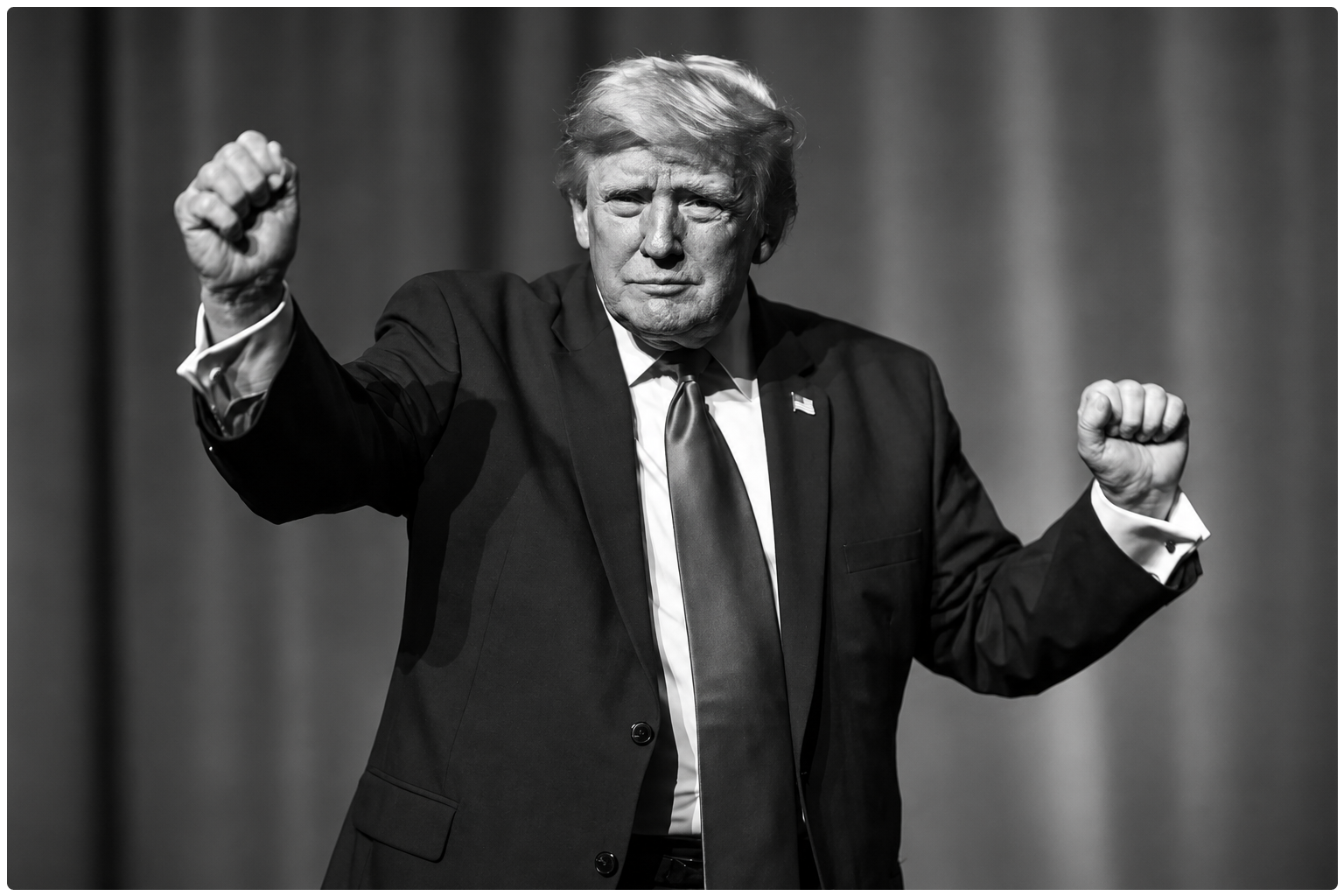
US President Donald Trump has announced plans to create a new “AI Force” and appoint an artificial intelligence czar, signalling that his administration intends to accelerate the development of the technology rather than respond to growing safety concerns with tighter restrictions.
Trump announced the initiative on Truth Social on Saturday, comparing the proposed body to the Space Force he created during his first term. He said the United States would not “hinder or stifle” the growth of artificial intelligence and instead promised to support and monitor the industry as it expands. He also said the government would use existing criminal and civil laws to deal with what he described as “bad” behaviour.
What exactly the AI Force will be remains unclear. Trump did not explain whether it would sit inside the military, operate as a civilian federal agency or function as an interagency task force. The White House also did not immediately provide details on its budget, authority, staffing or timetable. Trump said a new AI czar would be announced soon.
🚨 BREAKING: President Trump announces he will be appointing a HIGH IQ "AI CZAR" and launches the "AI FORCE"
— Eric Daugherty (@EricLDaugh) September 19, 2026
Trump says we will UNLEASH AI and that the propaganda will fail
All of this will be geared towards not only BUSTING anti-AI hoaxes but keeping America number one. LET'S… pic.twitter.com/Cy3T8R1cBK
The announcement comes as debate over AI safety has intensified sharply in Washington and within the technology industry itself. Executives and researchers at some of the world’s leading AI companies have recently called for stronger safeguards and, in some cases, a slowdown in the development of increasingly powerful systems. Trump has rejected many of those warnings, describing calls for greater restraint as politically motivated and arguing that excessive regulation could allow China to overtake the United States.
Trump has framed artificial intelligence as the next major industrial revolution and has suggested that it could eventually account for a very large share of the US economy. He also stressed that Washington’s competition with Beijing is central to his approach, saying the United States is currently ahead of China and that he intends to keep it that way.
The new AI czar would be the second such appointment in Trump’s current administration. Venture capitalist David Sacks previously served as White House AI and crypto czar before stepping down from the role and moving into an external advisory position as co-chair of the President’s Council of Advisors on Science and Technology.
The administration’s wider AI policy has not always moved in a single direction. While Trump has generally favoured rapid development and lighter regulation, other parts of the federal government have pursued restrictions involving advanced models, defence procurement and technology exports. The Commerce and Defense departments have both clashed with major AI developers over security and supply-chain concerns.
That tension is likely to become more important as the AI Force takes shape. If its main purpose is to accelerate development, the initiative could become a central part of Washington’s technological competition with China. If it also receives enforcement or security powers, questions will arise over how those powers interact with existing agencies and regulators.
For now, the announcement is more political signal than detailed policy.
Trump has made his direction clear: the United States should move faster on artificial intelligence, not slower. What remains unanswered is who exactly the AI Force will control, what authority it will have, and whether it is intended to regulate the industry or primarily help it expand.