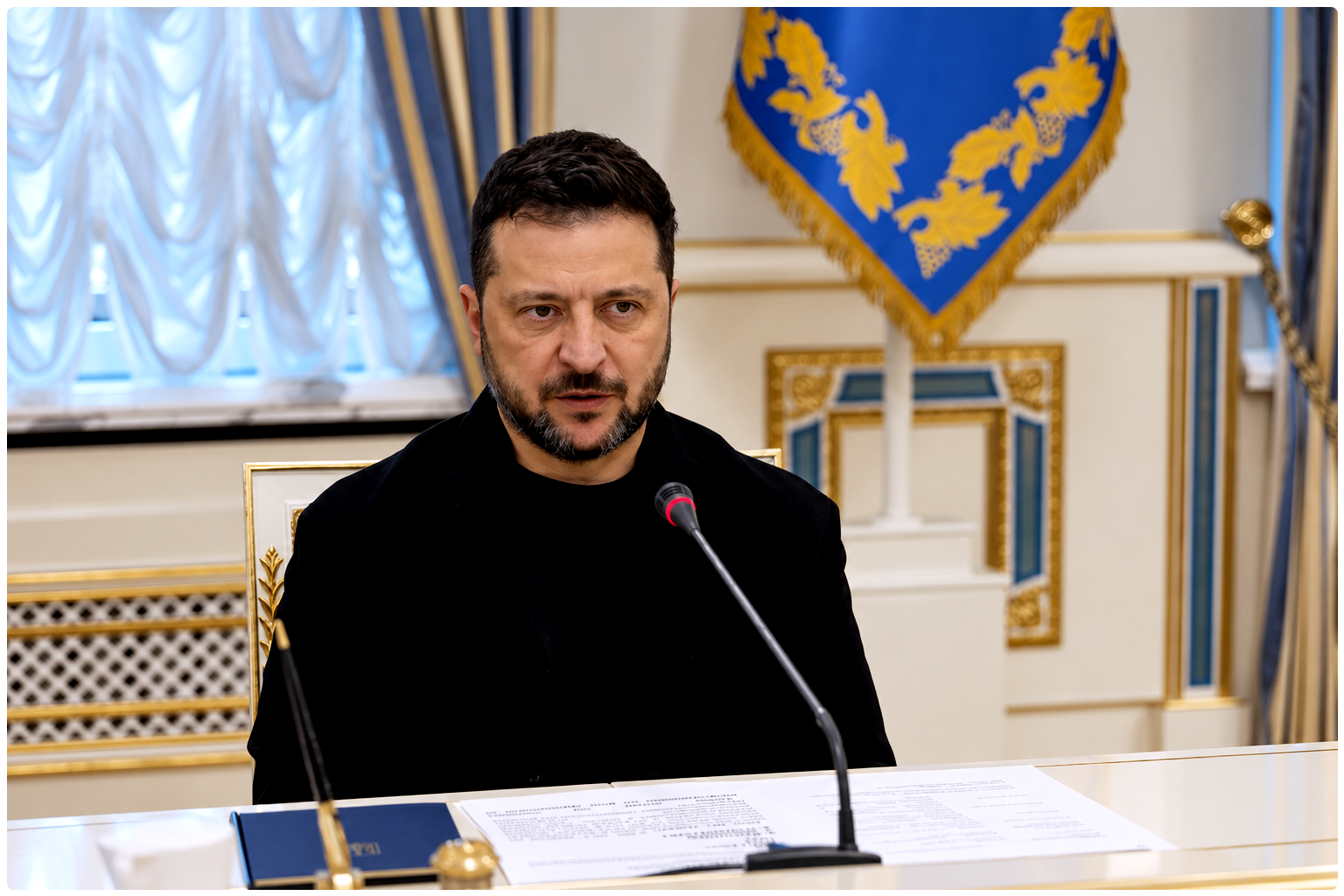
Ukraine has offered to stop attacking Russian oil refineries if Moscow ends its strikes on Ukrainian power and energy infrastructure, opening the possibility of a limited ceasefire focused on protecting facilities essential to both countries.
President Volodymyr Zelensky said any reduction in attacks would have to be reciprocal and supported by credible guarantees. Kyiv is not offering to end its refinery campaign unconditionally, and the proposal does not cover fighting along the frontline or attacks against other military and logistical targets.
“Ukraine will be ready to stop striking Russian oil refineries if Russia stops striking our energy infrastructure,” Zelensky said. He added that de-escalation measures must be mutual rather than imposed on one side.
Russia has not formally accepted the proposal. Moscow has previously called for an end to Ukrainian attacks against its refineries, pipelines and fuel depots, while continuing to describe Ukrainian electricity facilities as legitimate targets connected to military production and transport.
The offer comes after another intense week of aerial attacks. Zelensky said Russia launched approximately 1,450 guided bombs, 75 missiles and more than 1,640 drones against Ukraine over seven days. Kyiv and other cities have experienced new power disruptions as strikes damaged electricity generation and distribution systems.
A recent wave of Russian attacks struck Kyiv, Dnipro and other Ukrainian cities, reinforcing fears that Moscow is preparing another sustained campaign against the power grid as temperatures fall.
Russia has repeatedly targeted Ukrainian power stations, substations, gas facilities and heating networks since its full-scale invasion began in February 2022. The attacks have caused prolonged outages and forced Ukraine to impose emergency restrictions on electricity consumption.
Ukraine has responded by expanding long-range drone attacks against Russian energy infrastructure. Refineries, fuel terminals, pumping stations and storage facilities hundreds of kilometres from the border have been struck. Kyiv argues that these installations finance and supply Russia’s military operations.
The campaign has damaged Russia’s refining capacity and disrupted fuel production at a time when global diesel supplies are already under pressure. Russian authorities generally avoid providing detailed assessments of damage, but temporary shutdowns have been reported at several major facilities following Ukrainian strikes.
Zelensky’s proposal also follows public pressure from US President Donald Trump, who criticised Ukraine’s refinery attacks and linked them to rising international diesel prices. Trump demanded that Kyiv stop targeting the facilities and suggested that Ukraine required different political leadership if Zelensky refused.
The comments followed an agreement under which Washington temporarily eased restrictions to allow Russian diesel supplies to return to international markets. Zelensky condemned that arrangement, arguing that additional energy revenue would provide Moscow with more resources to continue the war.
Kyiv maintains that suspending refinery attacks without corresponding Russian action would remove one of Ukraine’s most effective forms of economic pressure. It therefore wants a monitored agreement that protects its electricity and heating networks in exchange for protection of Russian oil-processing infrastructure.
The proposal overlaps with wider diplomatic efforts to negotiate partial ceasefires covering energy facilities and Black Sea trade. Ukraine recently described India’s peace proposal as the most comprehensive initiative it had received. That framework reportedly includes discussions on energy infrastructure, ports, agricultural exports and a wider halt to fighting.
Previous attempts to restrict attacks on energy facilities have failed amid disagreements over which sites qualify for protection and accusations that both sides violated informal understandings. A workable agreement would therefore require a shared list of protected infrastructure, independent monitoring and a mechanism for investigating alleged breaches.
The offer does not bring the wider war close to an end. It does, however, provide a narrower test of whether Moscow and Kyiv can implement a verifiable reciprocal arrangement. If successful, an energy ceasefire could reduce civilian hardship during winter and create limited space for broader negotiations. If rejected, both sides are likely to intensify attacks on the infrastructure that keeps their economies and military operations functioning.