Russia has launched another wave of missile and drone strikes across Ukraine, hitting Kyiv, Dnipro and several other cities as fears grow that a substantially larger aerial campaign may be beginning.
At least two people were killed in Kyiv during the overnight attack. City authorities said a fire broke out at a garage cooperative in the Darnytskyi district, while an office and warehouse building in the Podilskyi district was partially damaged. Emergency crews were deployed as explosions continued across the capital.
The air-raid alert in Kyiv lasted for more than three hours. Residents again sheltered in underground stations as ballistic missiles, cruise missiles and attack drones approached the city from different directions.
This is horrific! A Russian missile has completely destroyed a five-story apartment building in Pryluky People are screaming for help beneath the rubble.
— NEXTA (@nexta_tv) October 7, 2026
Dnipro was struck by ballistic missiles, with authorities reporting damage at an industrial facility. Transport infrastructure was hit in Zaporizhzhia, while apartment buildings were reportedly damaged in Kremenchuk. Explosions were also reported in parts of the Poltava and Kharkiv regions.
The complete number and type of weapons used have not yet been officially disclosed. Ukraine’s air force had warned overnight that ballistic missiles and sea-launched cruise missiles were moving towards several regions, while Russian strategic bombers were also reported in the air.
The barrage followed a warning from Ukrainian President Volodymyr Zelenskyy that intelligence indicated Russia was preparing a massive new attack. It remains unclear whether Wednesday’s operation was the expected assault or an opening wave preceding something considerably larger.
Russia has already announced that it will intensify strikes against Ukrainian military and defence-linked infrastructure. Moscow says its targets include military facilities, defence factories, communications networks, energy sites and transport infrastructure supporting Ukrainian operations.
The latest attack comes after Russian strikes damaged or disrupted three critical crossings over the Dnipro River. These bridges connect Kyiv’s eastern and western districts and carry commuters, emergency vehicles, supplies and military traffic across the divided capital.
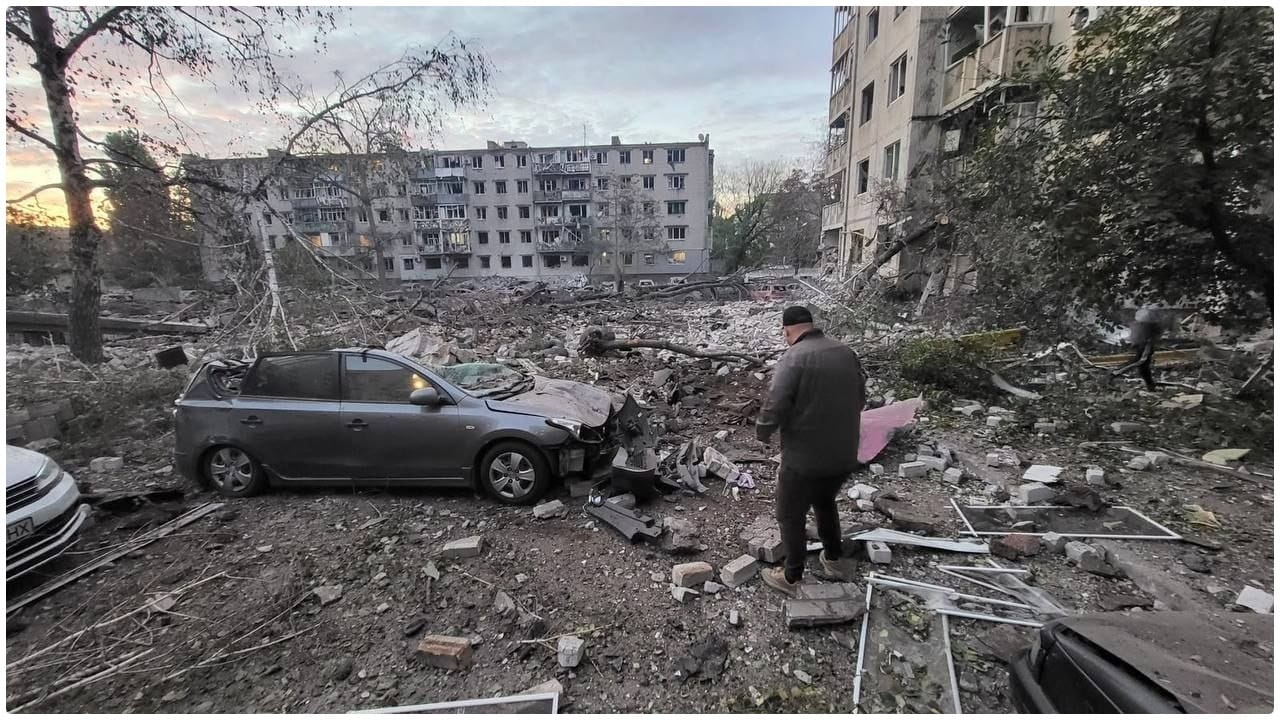
Repeated damage to bridges, warehouses, industrial plants and transport networks could gradually choke Kyiv’s ability to function. Even when individual strikes do not cause mass casualties, they force road closures, overwhelm emergency services and keep millions of residents under repeated air-raid alerts.
Ukraine is simultaneously struggling to respond to faster Russian drones and sustained missile attacks. Jet-powered drones provide defenders with less time to detect and intercept incoming weapons, while ballistic missiles require specialised systems such as the American-made Patriot.
Kyiv has attempted to strengthen its ability to retaliate by deploying the domestically developed FP-7 ballistic missile. However, Ukraine’s expanding strike capacity does not remove the enormous imbalance between the two countries’ long-range arsenals.
The economic consequences are already becoming severe. ArcelorMittal recently suspended operations at Ukraine’s largest steel plant after repeated missile attacks killed workers and made continued production increasingly dangerous. The decision placed thousands of jobs at risk and demonstrated how sustained bombardment can disable an industrial facility even without destroying it completely.
The danger will increase as winter approaches. A prolonged campaign against electricity generation, heating systems, transport corridors and industrial facilities could create simultaneous emergencies across several cities, forcing repair crews to work while additional strikes continue.
The overnight attack followed one of Ukraine’s largest operations inside Russia. Hundreds of Ukrainian drones targeted Moscow and its surrounding region, while other long-range attacks have struck Russian refineries and defence-linked industrial facilities.
Russian authorities said the latest Ukrainian operation killed two people, damaged residential property and hit a major fuel facility. Moscow has presented its intensified campaign in Ukraine as a response to attacks on Russian energy and civilian infrastructure.
The expanding exchange threatens to overwhelm diplomatic efforts. Ukraine recently described India’s peace plan as the most comprehensive proposal it had received, but continued attacks on cities, refineries, ports and transport networks are steadily narrowing the space for negotiations.
For Kyiv and Dnipro, Wednesday’s barrage may therefore represent more than another isolated night of explosions. If Russia follows through on its promise to expand the campaign, Ukraine could face repeated waves intended to exhaust its air defences, paralyse transport and industrial activity, and place its cities under extreme pressure before winter fully arrives.