Russia has warned that it will continue conducting “massive retaliatory strikes” against Kyiv and other Ukrainian cities, while urging foreign nationals and diplomatic personnel to leave the country as the aerial campaign enters an increasingly dangerous phase.
The Russian Foreign Ministry said the attacks would continue in response to Ukrainian operations against Russian civilians and infrastructure. It maintained that Russian forces were systematically striking military facilities in Kyiv and elsewhere in Ukraine.
The ministry said foreign embassies had continued operating despite earlier warnings and that international officials were still travelling to the Ukrainian capital. It cautioned that those remaining in the country were exposing themselves to “mortal danger” and would bear responsibility for disregarding the notice.
The warning is not a formal evacuation order, and foreign governments will determine whether their embassies remain open. However, a public appeal for diplomats to leave Kyiv suggests that Moscow expects its air campaign to continue at a scale that could make normal operations in the capital increasingly difficult.
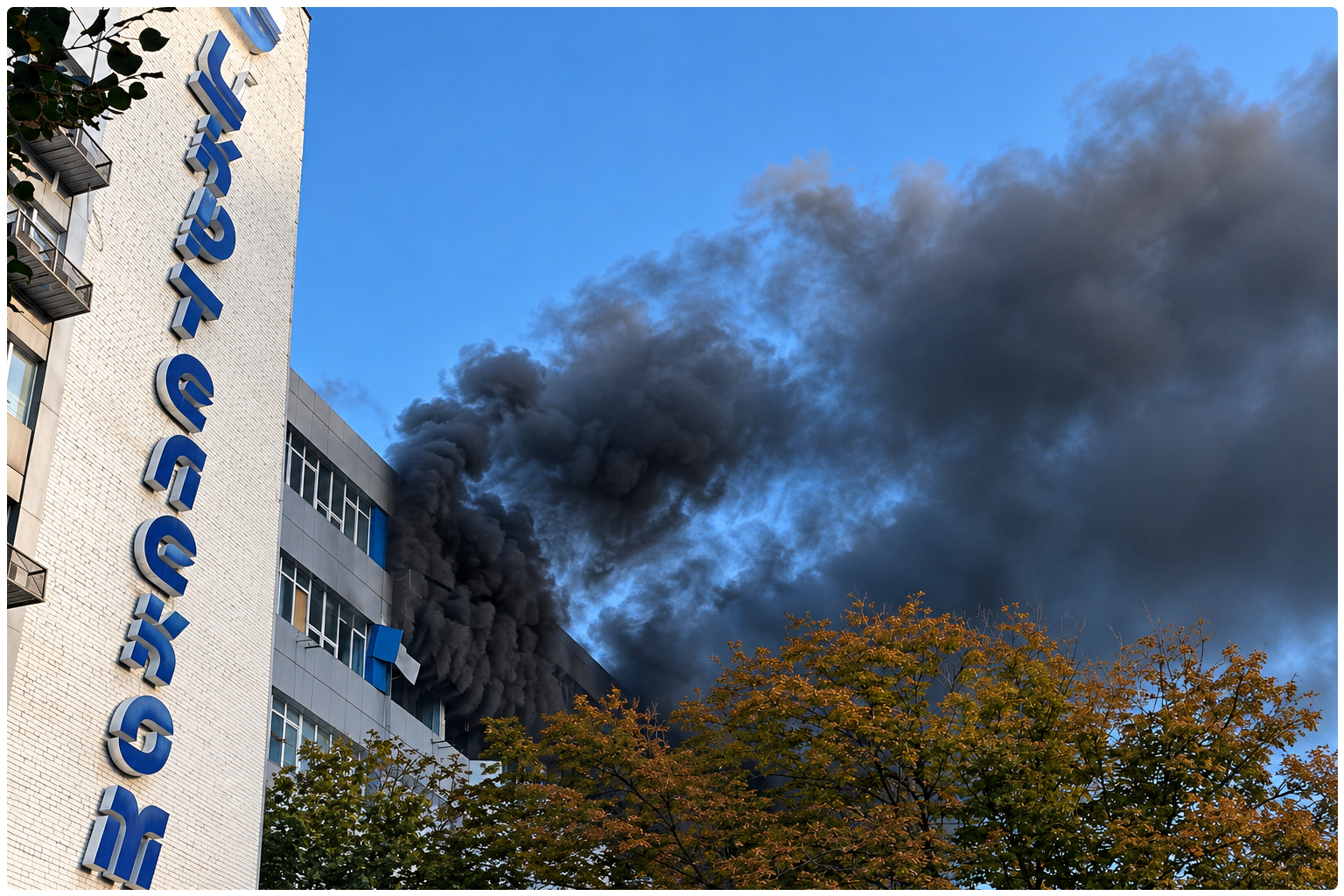
💥 𝗚𝗘𝗥𝗔𝗡 𝗛𝗜𝗧𝗦 𝗨𝗞𝗥𝗧𝗘𝗟𝗘𝗞𝗢𝗠 𝗗𝗔𝗧𝗔 𝗖𝗘𝗡𝗧𝗘𝗥 𝗜𝗡 𝗗𝗡𝗜𝗘𝗣𝗥𝗢𝗣𝗘𝗧𝗥𝗢𝗩𝗦𝗞 A “Geran” drone struck a Ukrtelecom data center in Dniepropetrovsk — thick black smoke is pouring from the building. Earlier, the Russian Ministry of Defense reported that the company is one of the main suppliers of high-speed internet services to the Ukrainian Armed Forces. https://t.co/oiXm6NDOn5
— Elisabeth Eliseeva 🇷🇺 SPUTNIK (@Eliseevanews) October 4, 2026
President Vladimir Putin has described the strikes as a response to Ukrainian attacks inside Russia. The Kremlin says Kyiv is now “paying the price” for drone operations against Moscow, oil refineries, border regions and other Russian targets.
Those attacks have grown considerably in scale. Ukraine recently launched what Russian authorities described as a record assault involving hundreds of drones aimed at Moscow, killing at least two people, damaging residential buildings and striking an oil refinery.
Ukrainian forces have also targeted Russian energy and defence facilities across several regions, including installations located more than 1,000 kilometres from the border. Kyiv argues that refineries, defence factories and logistics centres directly support Russia’s military operations.
The announcement followed further damage to Kyiv’s transport network. Russian attacks have damaged three critical bridges across the Dnipro River, placing severe pressure on routes connecting the eastern and western sections of the capital.
Even when the bridges remain partly operational, inspections, closures and traffic restrictions can produce severe congestion and delay emergency services, supplies and military equipment. More than a third of Kyiv’s estimated three million residents live on the eastern bank, while much of the city’s government and commercial activity is concentrated on the western side.
Kyiv is now confronting the possibility of a sustained campaign against transport, energy and communications infrastructure as winter approaches. Damage to substations, heating systems, bridges or railway connections could create cascading problems extending far beyond the immediate site of an attack.
The economic consequences are already visible elsewhere. ArcelorMittal said it could not safely restart its Kryvyi Rih steelworks following four missile strikes in five weeks. The attacks killed five workers, injured 17 and extensively damaged production facilities, leaving the company facing an impairment of approximately $1 billion.
The widening military preparations are adding to the alarm. European officials have raised concerns that Russia could mobilise approximately 300,000 additional personnel, although the Kremlin has firmly denied that another mobilisation is planned.
The conflict also threatens to extend beyond Ukraine. Moscow has warned that European arms factories supplying Kyiv could become military targets, while Putin has said that deploying European troops inside Ukraine would mean direct war between Russia and European states.
Diplomatic efforts have not yet interrupted the escalation. The United States has proposed new technical-level talks involving Russia and Ukraine in the UAE, while Kyiv has described India’s peace proposal as the most comprehensive initiative currently under consideration. No ceasefire has been agreed.
Russia’s warning leaves Kyiv facing weeks of uncertainty. The immediate danger is no longer a single night of attacks, but a prolonged campaign capable of progressively damaging the systems that keep a city of millions functioning. With winter approaching and both sides expanding their long-range operations, the war appears to be moving towards heavier bombardment rather than restraint.