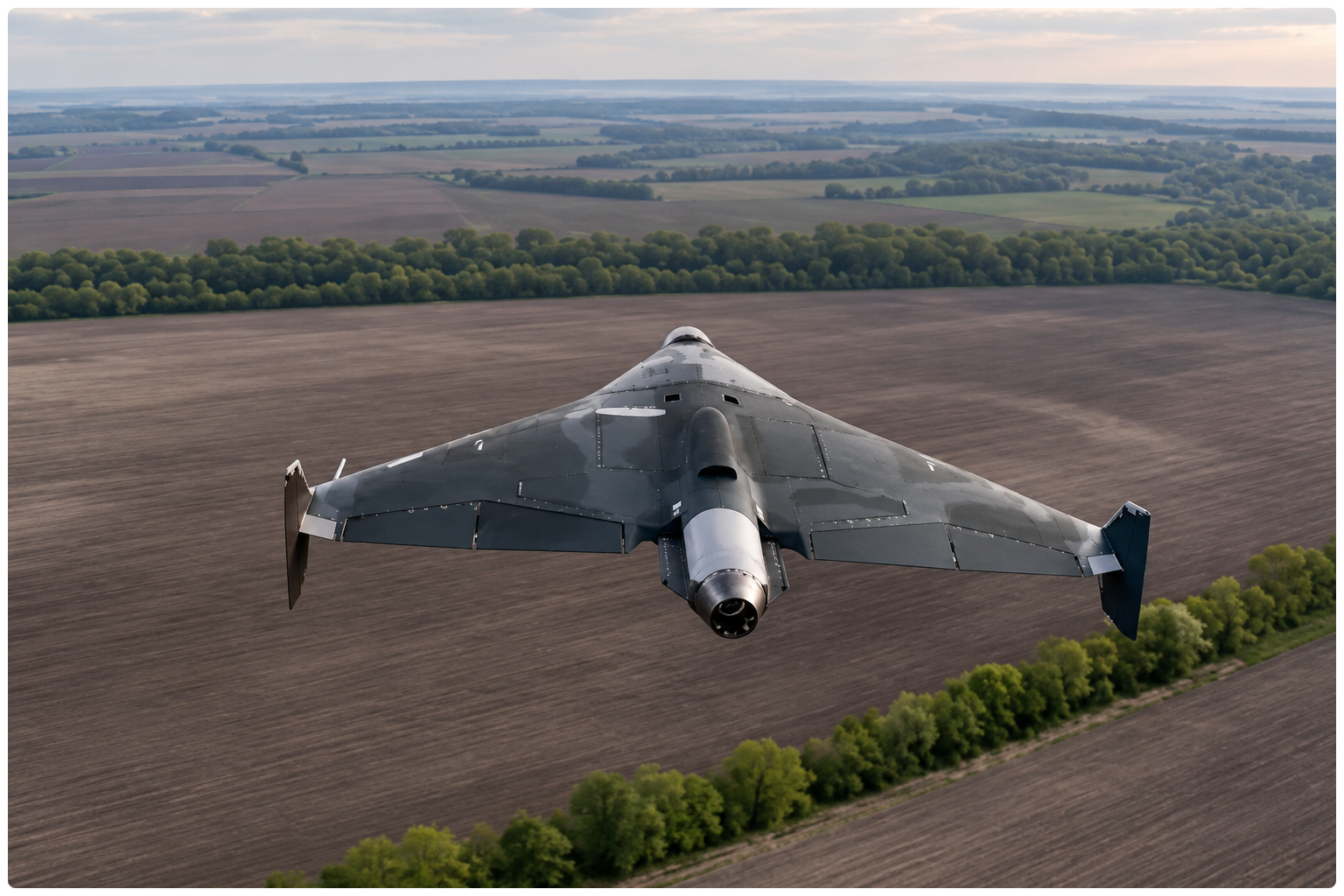
The war over Ukraine's skies is entering a dangerous new phase. Russia launched drone strikes on Kyiv for a third consecutive day on the night of September 26–27, and the capital now faces an air campaign with no clear end in sight. Air defences worked through the night as fires broke out across the city. Mayor Vitali Klitschko said residential buildings and a warehouse were damaged. One woman was injured and handed over to medics.
The escalation began on Friday, September 25, and quickly became the most intense phase of the operation. Strikes that started overnight continued into the daytime, leaving seven people dead and 59 injured, 25 of them hospitalised. Among the dead was a 14-year-old boy, an Israeli citizen, killed when a jet-powered Shahed drone hit a residential high-rise in the Pechersk district. Nearly 300 drones were launched across Ukraine that morning. By afternoon, another drone had hit an office building in the Solomianskyi district, where three bodies were found among burning cars.
There was no pause on Saturday. Five more people were injured across four districts of the capital. Six air raid alerts sounded by 10 a.m., some lasting hours. A shopping centre in the Sviatoshynskyi district caught fire, another drone crashed into a building in the Obolonskyi district, and an office building burned in Solomianskyi. Eighteen trains, including eight international services, were delayed.
The numbers point to an operation growing in scale. Geran 4 drones were launched across Ukraine overnight into Saturday, 50 of them jet-powered. Ukrain claims that its air defences brought down 134, but hits were still recorded at 19 locations. Across the country, six people were killed and 45 injured in a single day.
The strikes are also reaching the systems a modern city runs on. Drones damaged data centres in the capital, disrupting several media outlets. Two TV channels, Novyny.Live and Armiia TV, temporarily went off air. The internet provider Kolo.TV was struck for the third time.
The most alarming trend is the technology. Faster, jet-powered drones have become far more common in recent months, placing heavy strain on Ukraine's air defences. President Volodymyr Zelenskyy says Russia plans to spend $12 billion next year on jet-powered drones and loitering munitions. That points to an even heavier air campaign in 2027. Ballistic missile strikes are rising too. In July, they were 83% higher than a year earlier, while US supplies of Patriot interceptors to Ukraine were reduced. With winter approaching, experts warn that the faster Shaheds could soon rival ballistic missiles as a threat.
The attacks are not flowing in only one direction. Ukraine has stepped up its own long-range strikes, hitting Russian oil refineries and missile production facilities. Earlier this month, Kyiv endured nine straight days of round-the-clock strikes before a brief three-day pause on attacks between the two capitals. That pause collapsed within days.
All of this is unfolding just as Washington tries to bring Russia and Ukraine back to the negotiating table in the UAE. Tit-for-tat strikes are intensifying, weapons are getting faster and interceptors are running short. With winter approaching, the window for diplomacy may be closing faster than the talks can open.