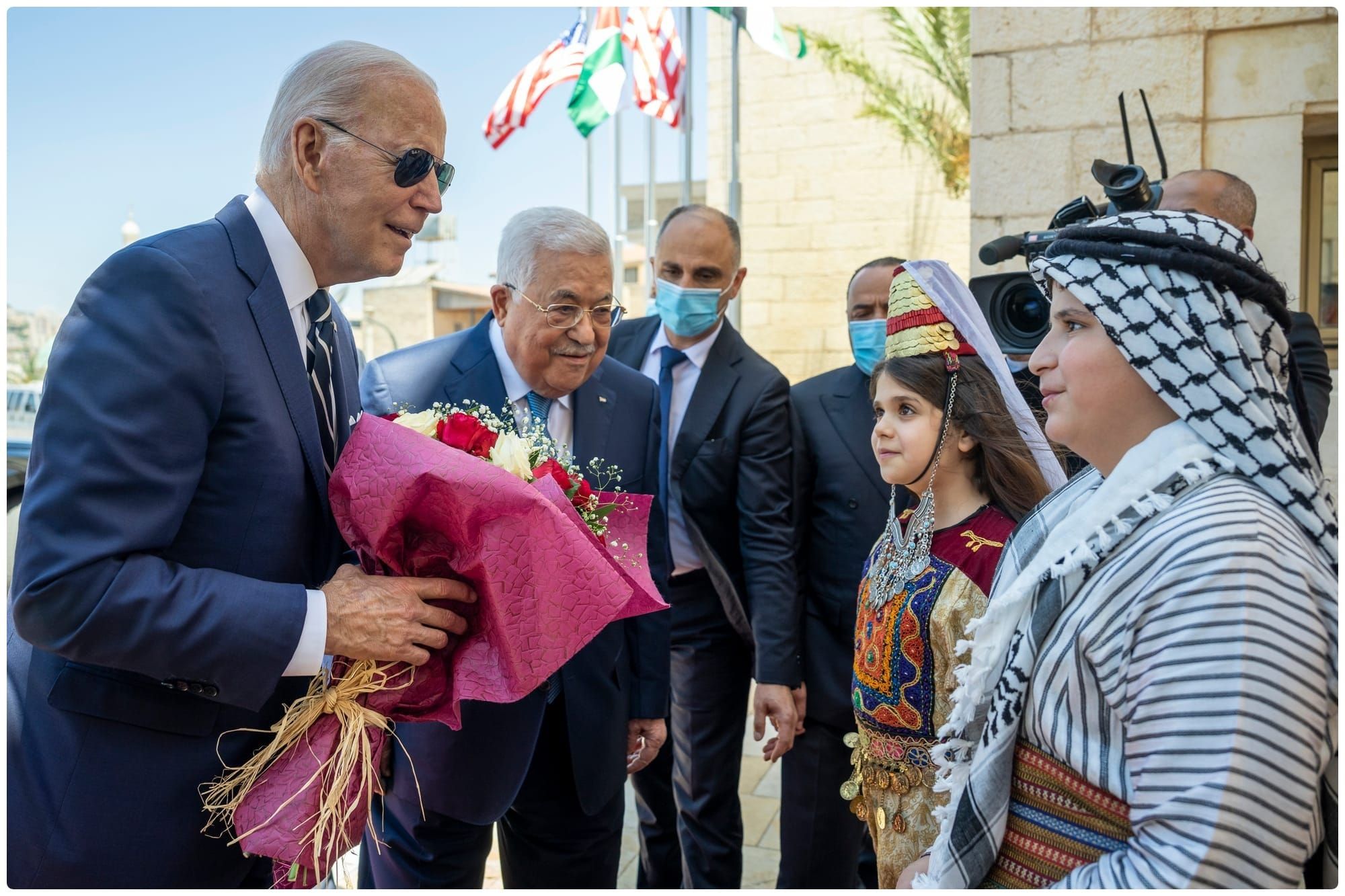
The United Nations General Assembly has voted overwhelmingly to allow Palestinian President Mahmoud Abbas to address world leaders remotely after the United States denied him a visa to attend the annual gathering in New York for the second consecutive year.
The resolution passed on September 17 with 152 countries voting in favour, three against and four abstaining. The United States and Israel were among those opposing the measure. Abbas will now be able to deliver a prerecorded video address during the General Assembly’s high-level debate, which begins on September 22. The resolution also allows Abbas and other senior Palestinian officials to participate remotely in certain UN meetings during the coming year if they are prevented from travelling to the United States.
In light of US visa ban on Palestinian officials, UN General Assembly votes to allow President Mahmoud Abbas to address #UNGA via pre-recorded statement.
— UN News (@UN_News_Centre) September 17, 2026
IN FAVOUR: 152
AGAINST: 3
ABSTENTIONS: 4 pic.twitter.com/yqJUbrIo5v
Washington extended visa restrictions on members of the Palestine Liberation Organization and Palestinian Authority this week, saying the organisations had failed to meet commitments under US law. The State Department accused Palestinian leaders of supporting terrorism and of trying to “internationalise” the Israeli-Palestinian conflict through institutions including the International Criminal Court and International Court of Justice. The Palestinian Authority rejects those accusations and says taking disputes to international legal institutions is a legitimate diplomatic right.
The United States has kept a waiver for personnel officially assigned to the Palestinian observer mission at the UN, allowing the mission itself to continue operating in New York. Abbas, however, is not covered by that exemption.
The dispute has renewed questions over Washington’s obligations as host of the United Nations. Under the 1947 Headquarters Agreement between the US and the UN, American authorities are generally expected to facilitate access for foreign representatives travelling to UN headquarters. Washington maintains that it retains the right to deny entry in cases involving national security or foreign-policy concerns. France has publicly urged the US to reconsider Abbas’s exclusion, citing the headquarters agreement.
The contrast with Iran has drawn additional attention. Despite an ongoing conflict with Tehran, the Trump administration has approved visas for Iranian President Masoud Pezeshkian and Foreign Minister Abbas Araghchi to attend the same General Assembly session, although their movements in New York will be heavily restricted. The State Department cited its obligations as host of UN headquarters when explaining the Iranian visas.
This is not the first time the General Assembly has created a special arrangement for Abbas. Washington also denied him entry ahead of last year’s session, prompting member states to approve a similar video address. That resolution was explicitly limited to the previous General Assembly session, meaning a new vote was required this year.
Palestine has non-member observer state status at the United Nations and therefore participates in General Assembly debates but does not have a vote. The latest resolution does not overturn Washington’s visa decision or force the US to admit Abbas. Instead, it ensures that the decision cannot prevent the Palestinian leadership from addressing the Assembly.
The result leaves the underlying dispute unresolved while creating an increasingly unusual pattern: for the second year running, the host country has barred the Palestinian president from New York, and the overwhelming majority of UN members has responded by creating another way for him to speak.