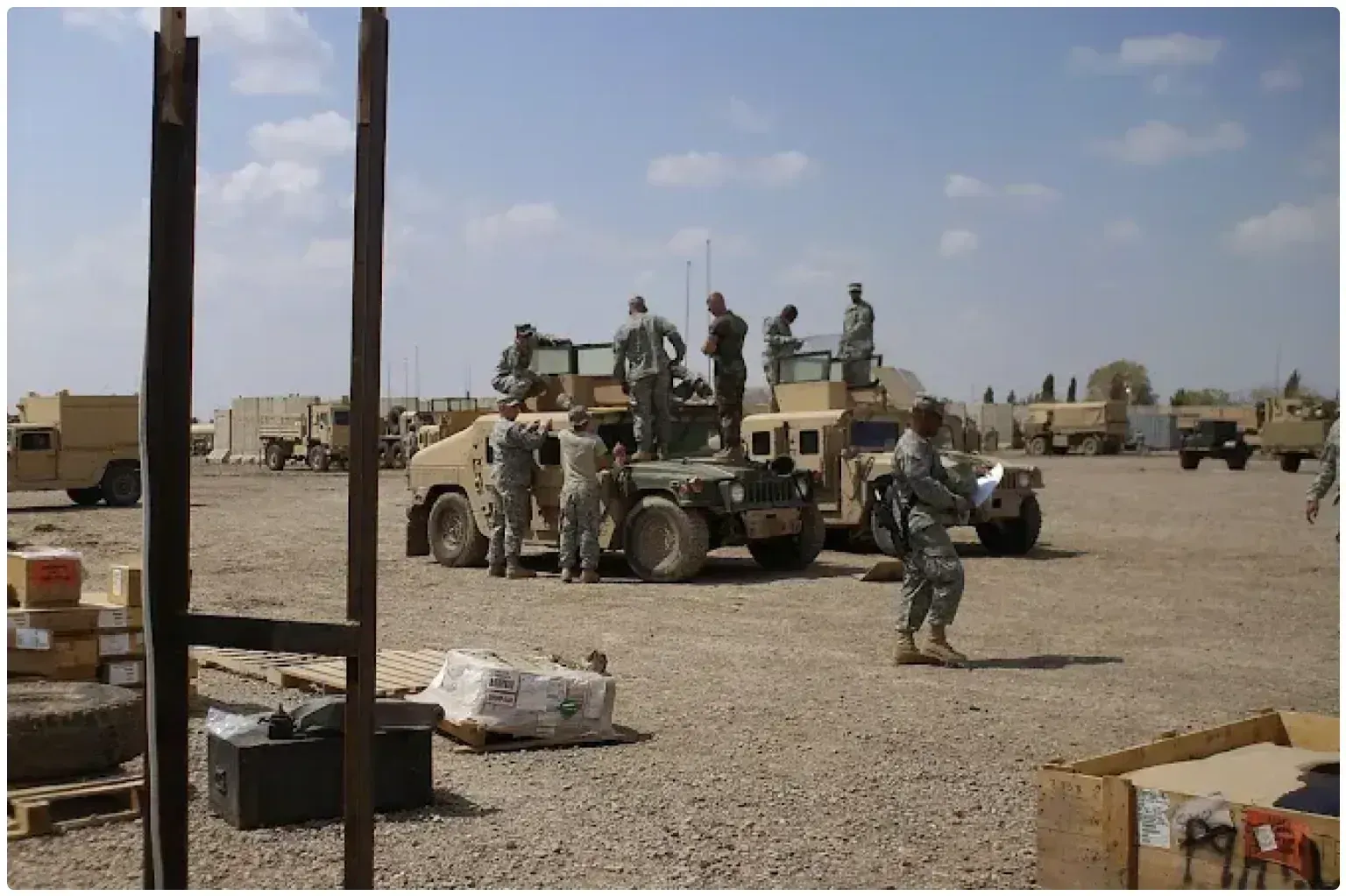
The United States has completed the withdrawal of its remaining military forces from Iraq, ending a presence that began with the 2003 invasion and later evolved into a campaign against the Islamic State group.
The final American and coalition personnel left the country by September 30 under an agreement reached by Washington and Baghdad in 2024. Iraqi authorities said no troops belonging to the international coalition would remain and described the departure as the restoration of full national sovereignty.
Approximately 2,500 American personnel had been stationed in Iraq in recent years. Their principal responsibilities included training Iraqi forces, providing intelligence and surveillance, and assisting operations against Islamic State cells. The remaining contingent was gradually reduced as Iraqi units assumed control of bases and military operations.
The withdrawal closes the latest phase of an American intervention that lasted more than two decades. US-led forces invaded Iraq in March 2003 and removed Saddam Hussein’s government. At the height of the war in 2007, more than 170,000 American troops were deployed in the country.
Most US forces left in 2011 but returned three years later at the invitation of the Iraqi government after Islamic State captured Mosul and seized large areas of northern and western Iraq. The group lost its final major territorial strongholds in the country in 2017, although small cells continued to operate in deserts and mountainous regions.
American combat operations formally ended in 2021, but advisers and support personnel remained under the international coalition. The latest departure therefore ends the residual military mission rather than an active large-scale combat deployment.
Some of the final personnel were transferred to Jordan, from where operations against Islamic State remnants may continue. The United States also retains military forces elsewhere in the Middle East, including Kuwait, Qatar and Bahrain. The withdrawal from Iraq does not represent a broader American departure from the region.
Iraq’s armed forces will now carry full responsibility for securing the country and preventing an Islamic State resurgence. Iraqi officials say the military can conduct counterterrorism operations independently and no longer requires foreign combat forces. The country has developed stronger intelligence, aviation and special-forces capabilities since the collapse of large parts of its army in 2014.
However, Islamic State remains capable of carrying out ambushes, bombings and assassinations, particularly in sparsely populated areas where government control is weaker. The loss of direct American surveillance and intelligence assistance could make tracking those cells more difficult.
The departure may also alter Iraq’s internal balance of power. Armed groups aligned with Iran retain significant military and political influence, despite repeated government promises to bring all weapons under state control. Some of those groups had demanded an American withdrawal and carried out attacks against US bases and personnel.
Iraqi leaders have presented the withdrawal as proof that the country can manage its security without a permanent foreign military presence. Its success will depend on whether the government can contain Islamic State remnants, control powerful militias and prevent Iraq from becoming an arena for confrontation between the United States and Iran.
For Washington, the departure ends a deployment that shaped American foreign policy for a generation. For Iraq, it begins a more uncertain test: maintaining security after the foreign troops that invaded, withdrew, returned and remained for another 12 years have finally left.