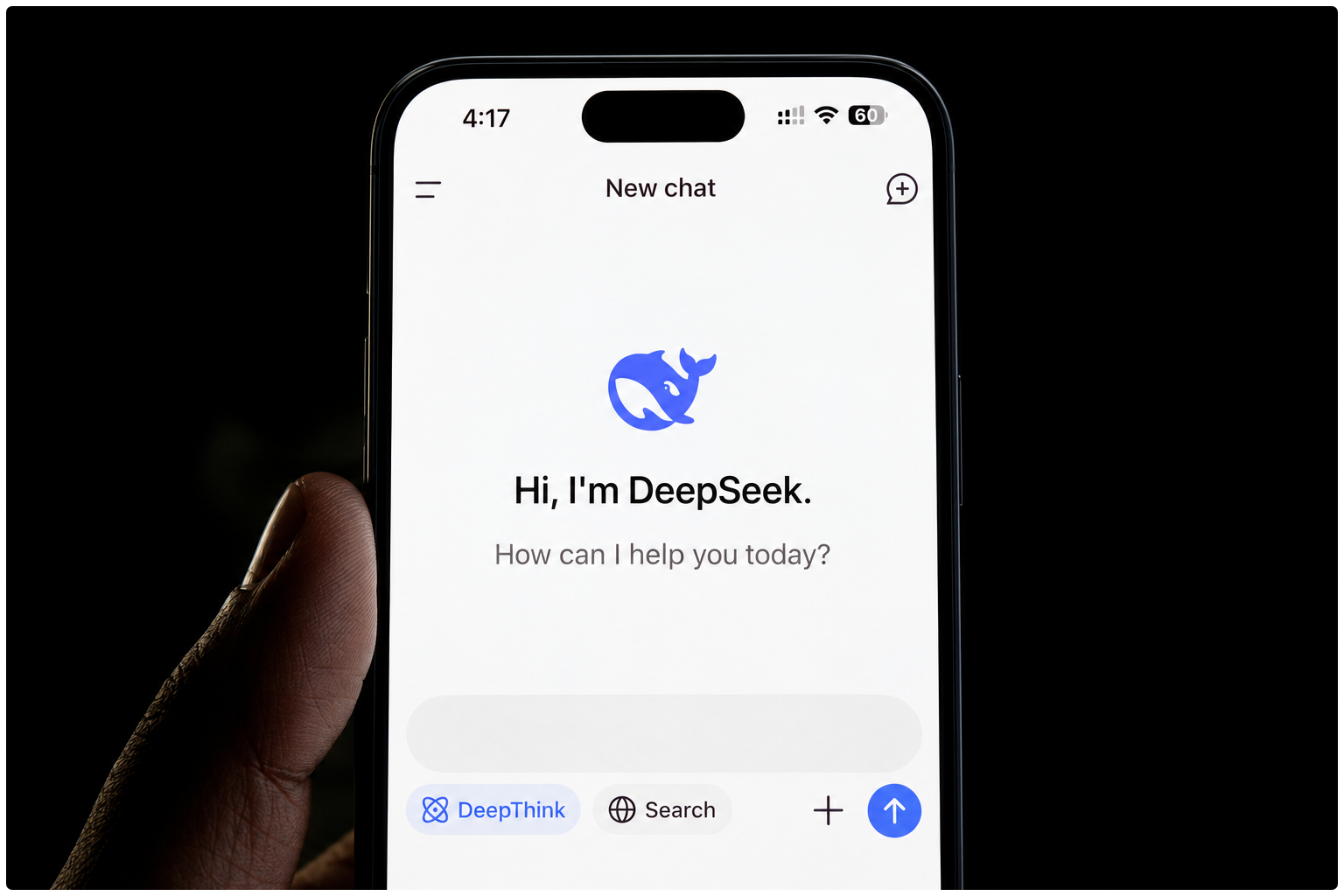
An American government agency could remove DeepSeek's chatbot from its computers and still be using the Chinese company's artificial intelligence through another software provider. Washington's latest restriction is designed to close that route as well.
The US Department of Homeland Security (DHS) has ordered civilian federal agencies to remove products and services developed by DeepSeek from their information technology systems, extending the prohibition to third-party software built using the company's AI models.
The directive, published in the Federal Register on October 20, also bars federal civilian agencies from purchasing DeepSeek products and services in future. It covers the company's affiliates and applications incorporating DeepSeek implementations, potentially affecting government contractors and software suppliers that have integrated its technology into their products.
The underlying order, signed by Homeland Security Secretary Markwayne Mullin on July 24, was issued under the Federal Acquisition Supply Chain Security Act of 2018. The legislation allows federal authorities to exclude technology suppliers or require their products to be removed when they present unacceptable risks to government information systems.
DHS identifies several potential threats. It warns that government employees or contractors using DeepSeek could expose sensitive information to servers in China, where the company is based. Such data, the department argues, could be used to develop intelligence about American government operations, institutions and individuals.
The order also raises concerns about possible malware and security vulnerabilities associated with DeepSeek's technology.
Those allegations require careful interpretation. A chatbot transmitting information to servers operated by its developer creates a data-exposure risk, particularly when users enter confidential material. That is separate from establishing that the developer has deliberately stolen government information or inserted malicious software.
DeepSeek's products have attracted international attention partly because the company has released powerful AI models with openly available weights. Developers can download and operate some of these models on their own infrastructure rather than sending every request to DeepSeek's servers.
That arrangement can reduce the risk of data being transmitted to the company's cloud services, although it introduces other questions about model provenance, software dependencies and security testing. The American order nevertheless extends to third-party products developed using DeepSeek implementations, reflecting a broader supply-chain approach rather than a restriction limited to the company's website or mobile application.
The order applies to federal civilian executive branch agencies, with national security systems and sensitive compartmented information systems excluded from its stated scope. It does not constitute a nationwide prohibition on Americans using DeepSeek privately.
Several American government bodies had already restricted the Chinese chatbot, while individual states introduced their own limitations. The new federal action establishes a common exclusion and removal requirement across civilian agencies.
Washington's position also reflects the growing technological competition between the United States and China, particularly as Chinese developers offer increasingly capable AI models despite restrictions on their access to advanced American semiconductor technology.
The directive leaves federal agencies with a practical challenge. Identifying an installed DeepSeek application is relatively straightforward. Establishing whether an existing software product incorporates a DeepSeek model, including one adapted or deployed by another company, may require examining suppliers, dependencies and contractual disclosures.
The effectiveness of the restriction will depend partly on how thoroughly agencies can identify those less visible uses of the technology.