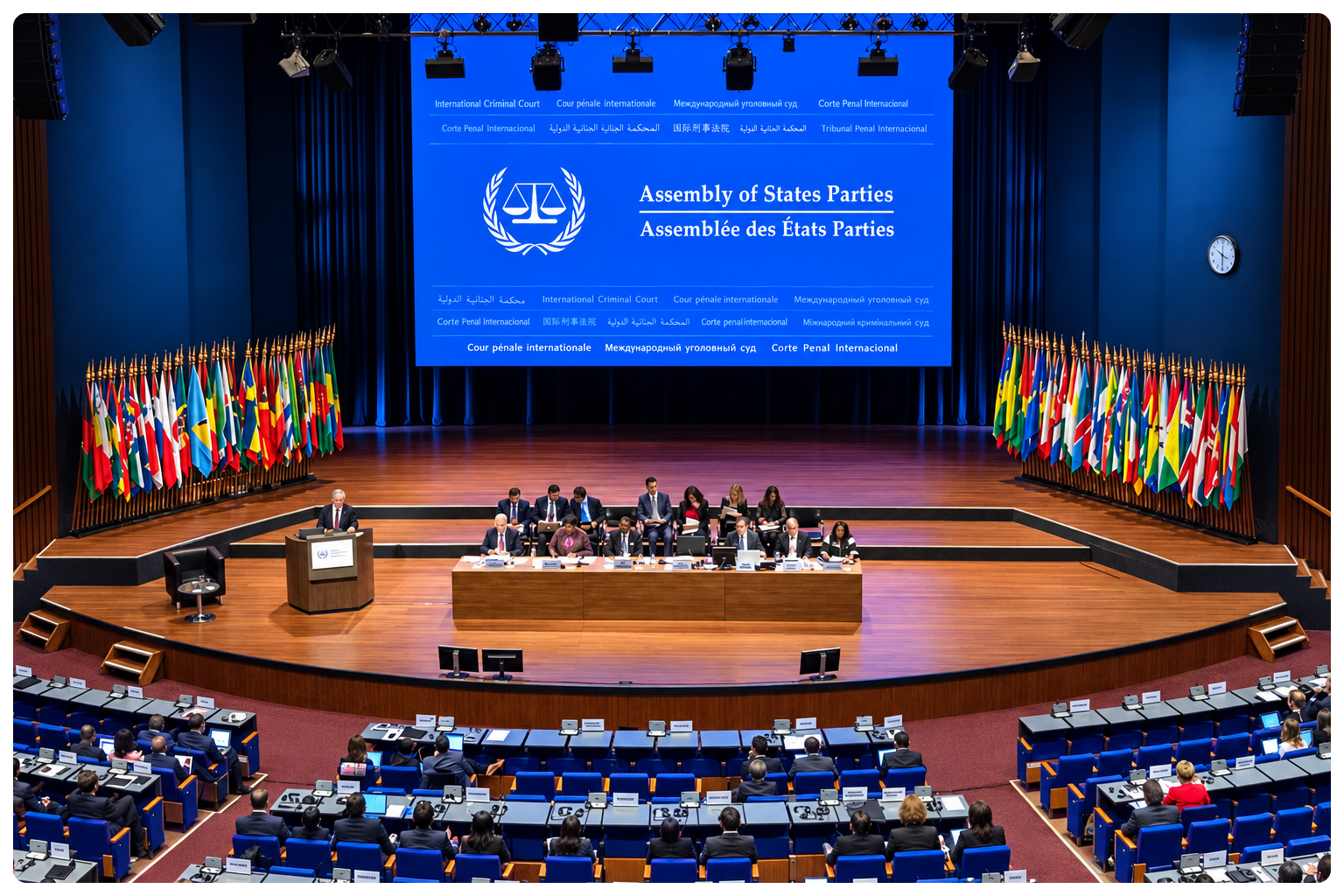
The United States is preparing measures against the International Criminal Court that could target the institution as a whole, marking a significant escalation in Washington’s campaign against the tribunal and potentially disrupting its financial and administrative operations.
The proposed sanctions have not yet been formally announced, and their final scope and timing remain uncertain. An announcement could come during or shortly after the United Nations General Assembly meetings in New York.
If implemented, the measures could prohibit American citizens and companies from conducting financial transactions with the court without special government authorisation. Because many international payments and services depend on US banks, technology companies and dollar-based systems, the restrictions could affect salary payments, insurance, information technology, evidence management and investigations.
Previous American measures have focused primarily on individual ICC judges, prosecutors and other officials. Targeting the court itself would be considerably broader, placing service providers and financial institutions at risk of penalties if they continued doing business with it.
🚨 BREAKING: President Trump and Sec. Marco Rubio are preparing SWEEPING SANCTIONS against the globalist International Criminal Court (ICC) — WSJ
— Eric Daugherty (@EricLDaugh) September 20, 2026
The move would effectively CUT OFF the ICC from making most transaction in US dollars…
GLOBALISTS ON THE RUN 🔥
Within the… pic.twitter.com/XaaRqFBqn0
The administration of President Donald Trump has accused the ICC of threatening US sovereignty by investigating citizens of countries that have not joined the court. Neither the United States nor Israel is a party to the Rome Statute, the treaty that established the tribunal.
Washington’s objections have intensified over the court’s investigation into the war in Gaza and its arrest warrants for Israeli Prime Minister Benjamin Netanyahu and former defence minister Yoav Gallant. The warrants, issued in November 2024, concern allegations of war crimes and crimes against humanity. Israel rejects the accusations and disputes the court’s jurisdiction.
The United States has also opposed the ICC’s investigation into alleged crimes committed during the war in Afghanistan, including possible offences involving American military and intelligence personnel. Washington maintains that the court has no authority over US nationals without American consent.
Supporters of the ICC argue that it can exercise jurisdiction over alleged crimes committed on the territory of member states, even when the accused comes from a country that has not accepted the court’s authority. Palestine joined the Rome Statute in 2015, while Afghanistan became a member in 2003.
The ICC, established in 2002 and based in The Hague, prosecutes individuals accused of genocide, crimes against humanity, war crimes and the crime of aggression when national authorities are unwilling or unable genuinely to investigate. It has 125 member states but lacks its own police force, leaving it dependent on governments to execute arrest warrants.
The Trump administration revived sanctions against the court in February 2025 through an executive order authorising asset freezes and entry restrictions against people involved in investigations targeting the United States or its allies. Several ICC officials have subsequently been sanctioned.
Court supporters warn that institution-wide restrictions could undermine cases unrelated to the disputes involving the United States and Israel. The tribunal is also investigating alleged crimes in Ukraine, Sudan, Libya, the Democratic Republic of the Congo and several other conflict zones.
European governments and other member states are examining ways to protect the court from financial isolation, including alternative banking arrangements and safeguards for essential services. Any comprehensive US sanctions would therefore test whether the ICC’s members are willing and able to preserve its operations without access to American companies and financial infrastructure.
The dispute has developed into a wider confrontation over the reach of international justice. Washington describes the court’s actions as an intrusion on national sovereignty, while the ICC and its supporters argue that political and economic pressure on judges threatens judicial independence and accountability for the world’s gravest crimes.