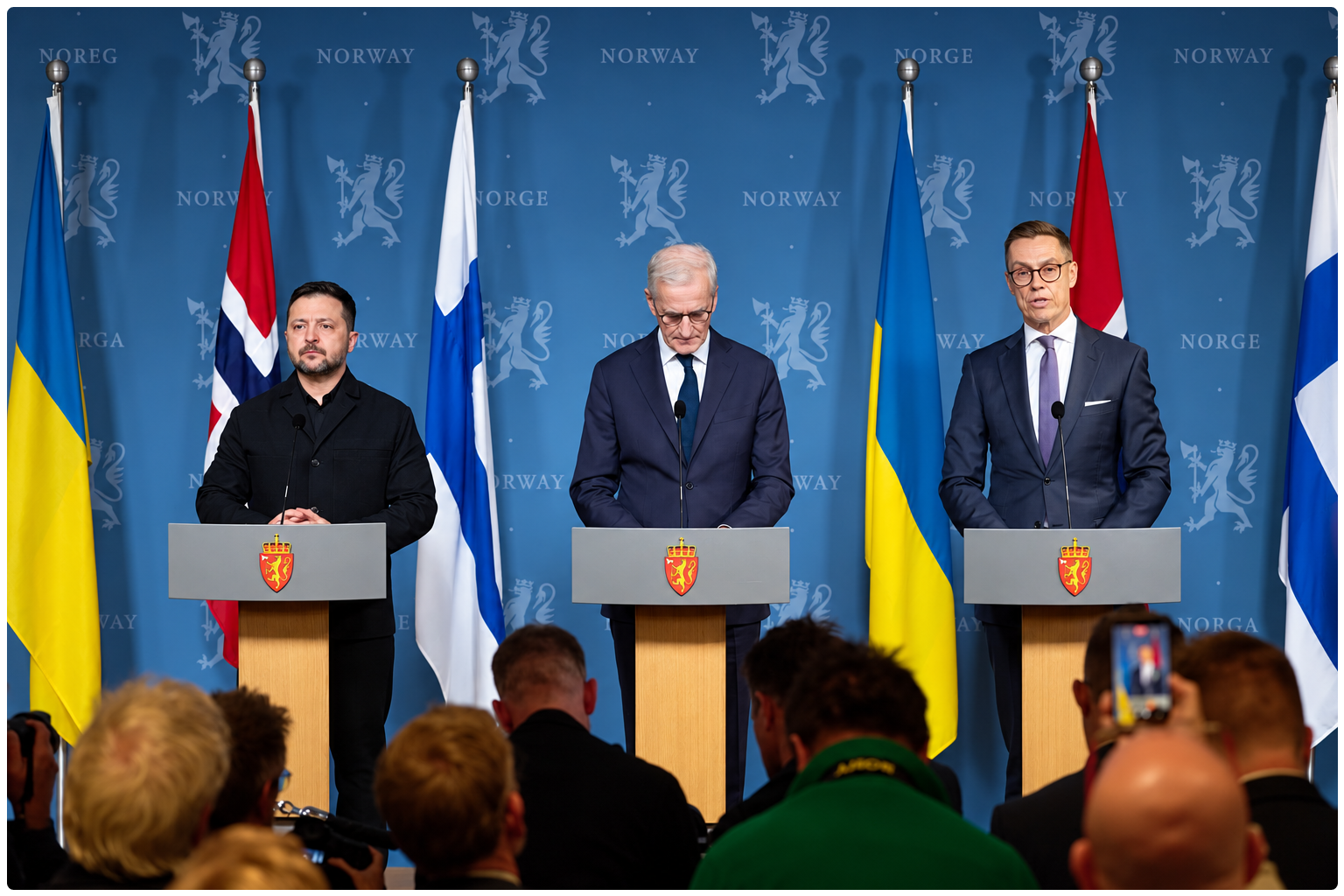
Norway has brought the leaders of Ukraine and Finland together in Oslo for talks on the war and Europe's security, at the request of President Volodymyr Zelenskyy. The Ukrainian leader's visit on Tuesday, October 20, comes as renewed diplomatic efforts to end the fighting contend with continued Russian attacks and growing tensions between Kyiv and Washington.
Prime Minister Jonas Gahr Støre is hosting Zelenskyy and Finnish President Alexander Stubb, with discussions expected to cover the military situation, European support for Ukraine and prospects for negotiations with Russia. Zelenskyy is also scheduled to meet King Harald V and visit Norway's parliament, the Storting, where he will hold discussions with parliamentary leaders.
The meeting was arranged at Kyiv's initiative. In its announcement of the visit, the Norwegian government said Zelenskyy had asked Norway and Finland to organise the gathering as part of continuing diplomatic efforts. Støre described the moment as critical for Ukraine, although the government did not announce a specific negotiating proposal or new military assistance package ahead of the talks.
Norway's involvement carries weight beyond its diplomatic role. It shares a border with Russia, remains one of Ukraine's substantial European financial supporters and has built its assistance around commitments extending well beyond the immediate war.
Under the Nansen Support Programme, Norway allocated NOK 85 billion to Ukraine in 2026, including NOK 70 billion in military assistance. Oslo has proposed maintaining the same overall level of support in 2027, providing Kyiv with a measure of financial predictability at a time when the availability and timing of some American military assistance have become contentious.
Finland brings a different perspective to the discussions. Its long border with Russia and accession to NATO in 2023 have placed it at the centre of Europe's changing security arrangements. Stubb has maintained close contact with Zelenskyy and has participated in diplomatic discussions involving Washington.
The three leaders have already established a working relationship. During their September 23 meeting in New York, they discussed additional air defences, support for Ukraine's energy infrastructure through winter and cooperation on drone technology.
Those earlier commitments have acquired greater urgency as Russian strikes continue to damage Ukraine's electricity network. Norway has allocated NOK 4.8 billion in civilian support for energy security in 2026, including equipment, gas purchases and measures intended to maintain electricity supplies.
Oslo is also becoming part of a wider diplomatic effort involving the United States. American envoy Steve Witkoff has been reported as a possible participant in discussions connected to the visit, with subsequent negotiations involving Moscow under consideration. The Norwegian government's announcement, however, identifies only Zelenskyy, Stubb and Støre as participants in Tuesday's meeting.
Ukraine is seeking renewed negotiations without losing the European support on which its military and economic resilience increasingly depends. Norway and Finland have a direct interest in ensuring that any settlement accounts for the security of countries bordering Russia, rather than addressing only the immediate terms of a ceasefire.
The three leaders are expected to address the media following their meeting. Any fresh commitments or proposals will become clearer once those discussions conclude.