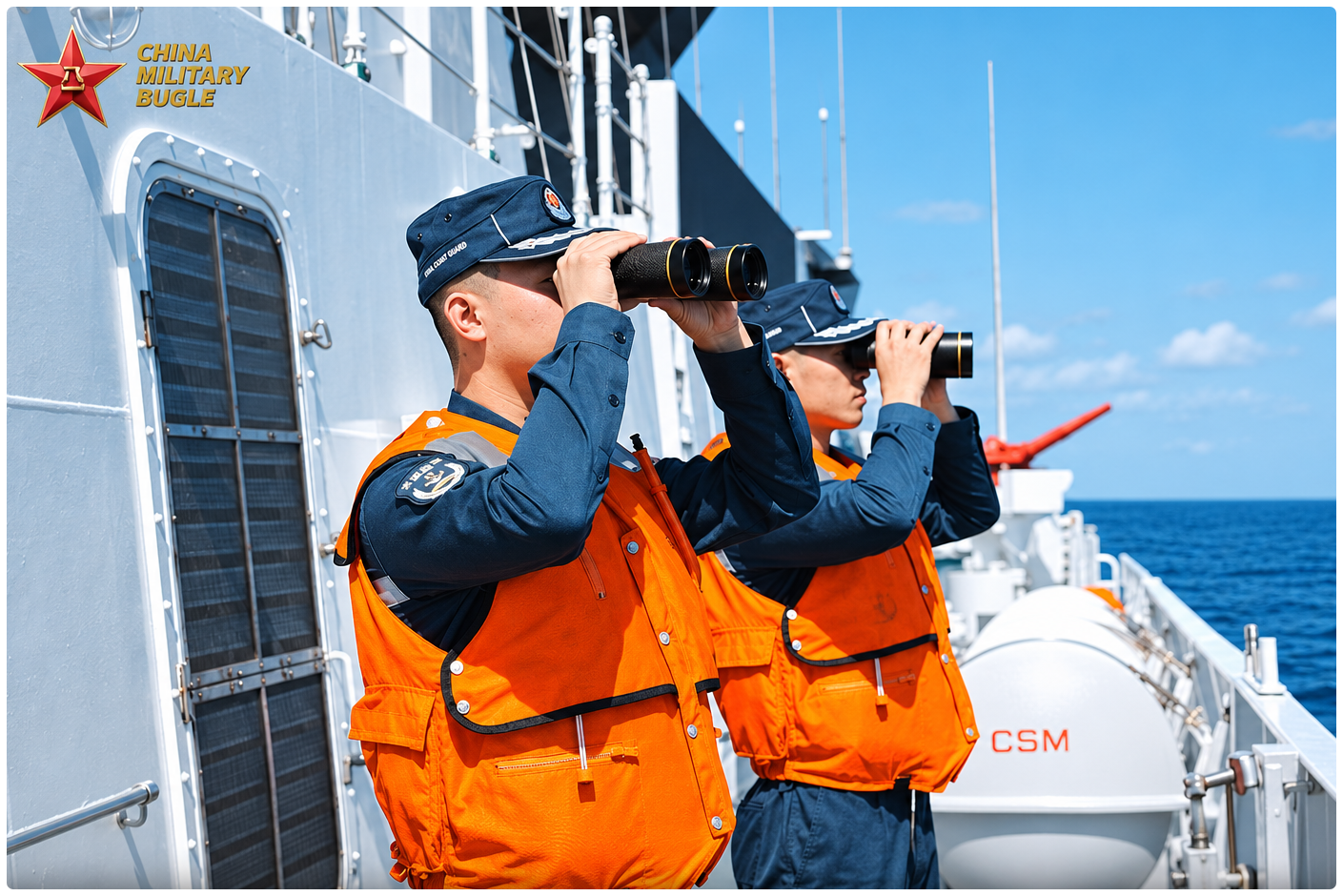
A maritime presence that began in June is becoming increasingly familiar off Taiwan’s Pacific coast. On October 31, China sent another coastguard formation into waters east of the island, extending a patrol pattern beyond the Taiwan Strait and into an area where such operations were once less common.
The formation was led by the Hushi, hull number 1308, and included the Meishan, numbered 2303. According to China’s Ministry of National Defense, the ships conducted what Beijing described as a routine law-enforcement patrol intended to maintain navigation and working order.
China said the Hushi formation had strengthened patrol and inspection activity throughout October and promised to continue operating in waters it considers under its jurisdiction.
Taiwan rejects that claim. Its Coast Guard Administration deployed the Jian cutter and other vessels to monitor the Chinese ships, describing the operation as harassment presented under the language of law enforcement. Taipei also accused the Chinese vessels of using radio communications to assert authority over passing ships.
The disagreement is not merely over whether Chinese government vessels may sail through the area. It concerns Beijing’s attempt to establish a recurring coastguard role and describe that presence as an exercise of jurisdiction.
China first publicly announced these eastern patrols on June 1. A month later, the China Coast Guard said one formation had replaced another, indicating a continuing deployment rather than an isolated mission. Another formation operated there in September, followed by the Hushi group in October.
Taiwan’s coastguard has shadowed the deployments. During the July rotation, it sent the Bali and Hualien cutters after identifying two Chinese coastguard vessels east of Hualien.
The latest patrol coincided with wider Chinese activity around Taiwan. Taiwan’s Ministry of National Defense recorded 13 Chinese military aircraft, seven naval vessels and two other official ships around the island in the 24 hours ending on the morning of October 31.
Eastern Taiwan faces the open Pacific rather than the narrow strait separating the island from mainland China. A regular Chinese government presence there therefore widens the geographical reach of Beijing’s pressure and requires Taiwan to monitor both sides of the island more closely.
These waters also connect with the Luzon Strait, where shipping routes and submarine communications cables carry regional importance. The Philippines and Taiwan have already been examining stronger protection for critical undersea cables, while Chinese coastguard involvement near research vessels farther south has sharpened concerns about maritime activity around Batanes.
No collision or physical confrontation was reported during the October patrol. The larger change lies in repetition: coastguard ships are returning under rotating formations, and Beijing is presenting each deployment as part of an established administrative practice. Taiwan is responding at sea because leaving that description unanswered could allow an asserted authority to acquire the appearance of normality.