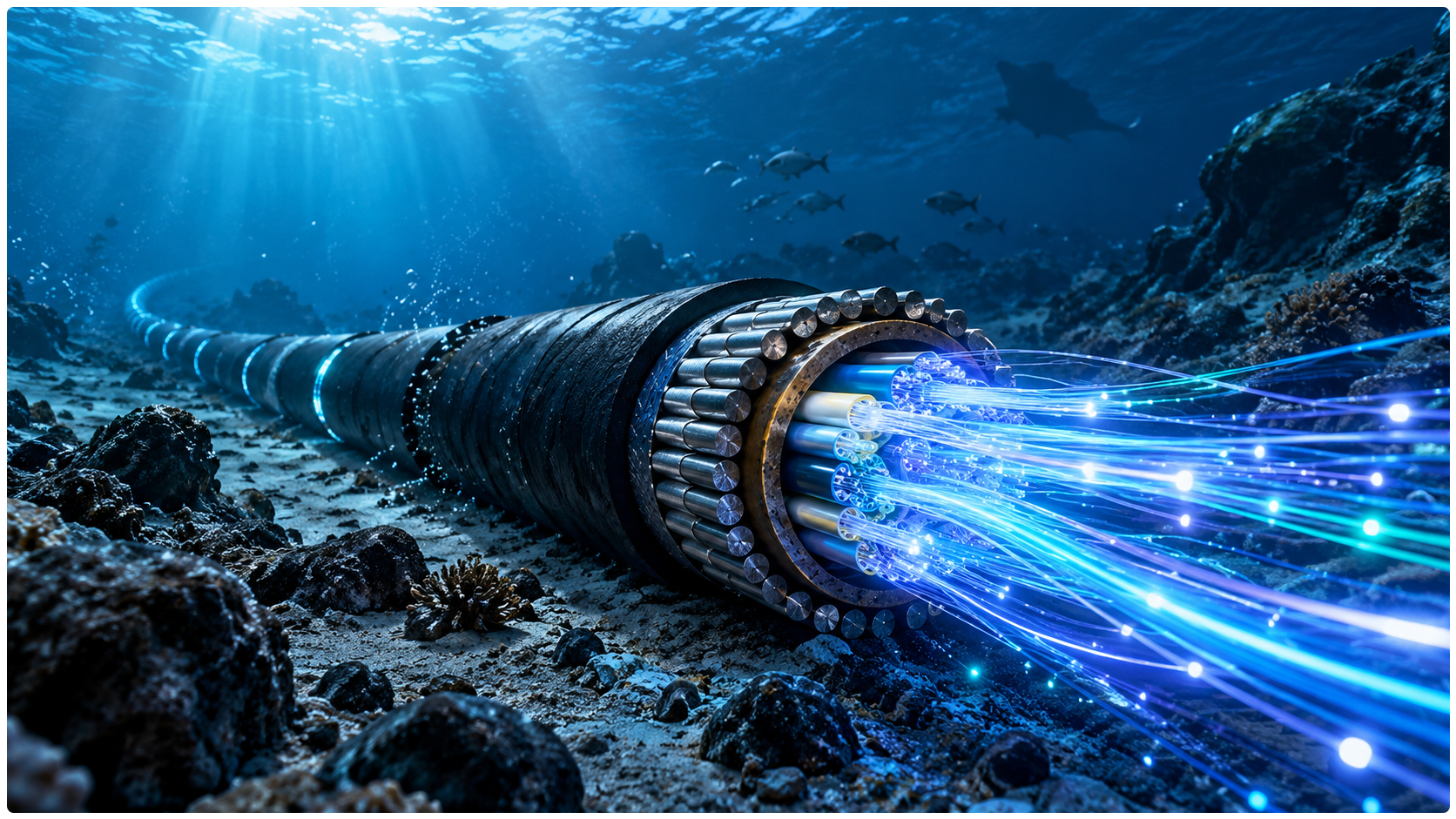
Beneath the waters separating Taiwan and the northern Philippines lies infrastructure that neither government can afford to lose. Fibre-optic cables running across the seabed carry international communications, financial transactions and vast quantities of commercial data. Protecting these connections has become an increasingly urgent concern for Manila and Taipei, particularly as Chinese vessels operate near important cable routes.
The Philippines is now exploring closer cooperation with Taiwan to safeguard this infrastructure, even as Manila maintains its longstanding diplomatic recognition of Beijing.
Felipe F. Cariño III, deputy chief of mission at the Philippine Embassy in Washington, outlined the discussions during an October 21 event hosted by the Center for a New American Security. The meeting accompanied the launch of Digital Lifelines, a documentary examining threats to undersea communications infrastructure in the Indo-Pacific.
Cariño said both sides were considering practical arrangements involving information sharing and capacity building, particularly around the Bashi Channel, which separates Taiwan from the Philippines' northernmost islands. He described cooperation with Taipei as a necessary response to shared security concerns, notwithstanding Manila's one-China policy.
The geography helps explain the urgency. The Bashi Channel forms part of the Luzon Strait, a passage connecting the South China Sea to the western Pacific. Commercial shipping, military vessels and telecommunications infrastructure converge around these waters, making suspicious maritime activity especially sensitive.
Earlier this month, the Philippine Coast Guard deployed its largest patrol vessel and an aircraft to monitor a Chinese research ship operating near the Batanes Islands. The ship's movements raised concerns about activity near submarine cable corridors. Taiwanese coast guard vessels were also observed monitoring Chinese ships in the wider area, although the presence of vessels from both sides did not establish a coordinated patrol.
Taiwan has confronted more direct disruptions to its communications infrastructure. Cable damage involving Chinese-linked vessels has prompted investigations, legal action and demands for stronger maritime surveillance. At the Washington discussion, Taiwan's deputy representative, Andrea Yang, referred to the imprisonment of a Chinese ship captain over damage to an undersea cable and said Taipei was investing further in unmanned maritime monitoring systems.
Determining whether cable damage results from an accident or deliberate interference remains difficult. Anchors, fishing equipment and other maritime activity can sever seabed connections, while identifying responsibility requires reliable vessel-tracking records and physical evidence.
For Manila, closer cooperation also carries diplomatic complications. The Philippines recognises the People's Republic of China and maintains unofficial relations with Taiwan. Beijing regards Taiwan as part of its territory and opposes foreign engagement that implies separate political recognition.
Nevertheless, security contacts have gradually expanded. In June, Taiwan's Foreign Ministry welcomed remarks by Philippine Defence Secretary Gilberto Teodoro supporting cooperation with regional partners, including Taiwan, in response to growing security challenges.
Cable protection is also becoming part of the Philippines' broader infrastructure policy. In July, its Bureau of Customs introduced simplified procedures for foreign cable-laying and repair vessels, intended to reduce delays in installing and maintaining submarine networks.
The concern extends beyond the two territories. A recent US-led regional programme on undersea cable resilience brought together participants from the Philippines, Taiwan and other Indo-Pacific countries to examine maritime surveillance and infrastructure protection.
Manila has not announced a formal cable-security agreement with Taipei, and Cariño offered no timetable for joint patrols or other operational measures. For now, both sides appear to be examining how much practical cooperation they can establish in waters where commercial infrastructure, competing maritime claims and diplomatic sensitivities increasingly overlap.