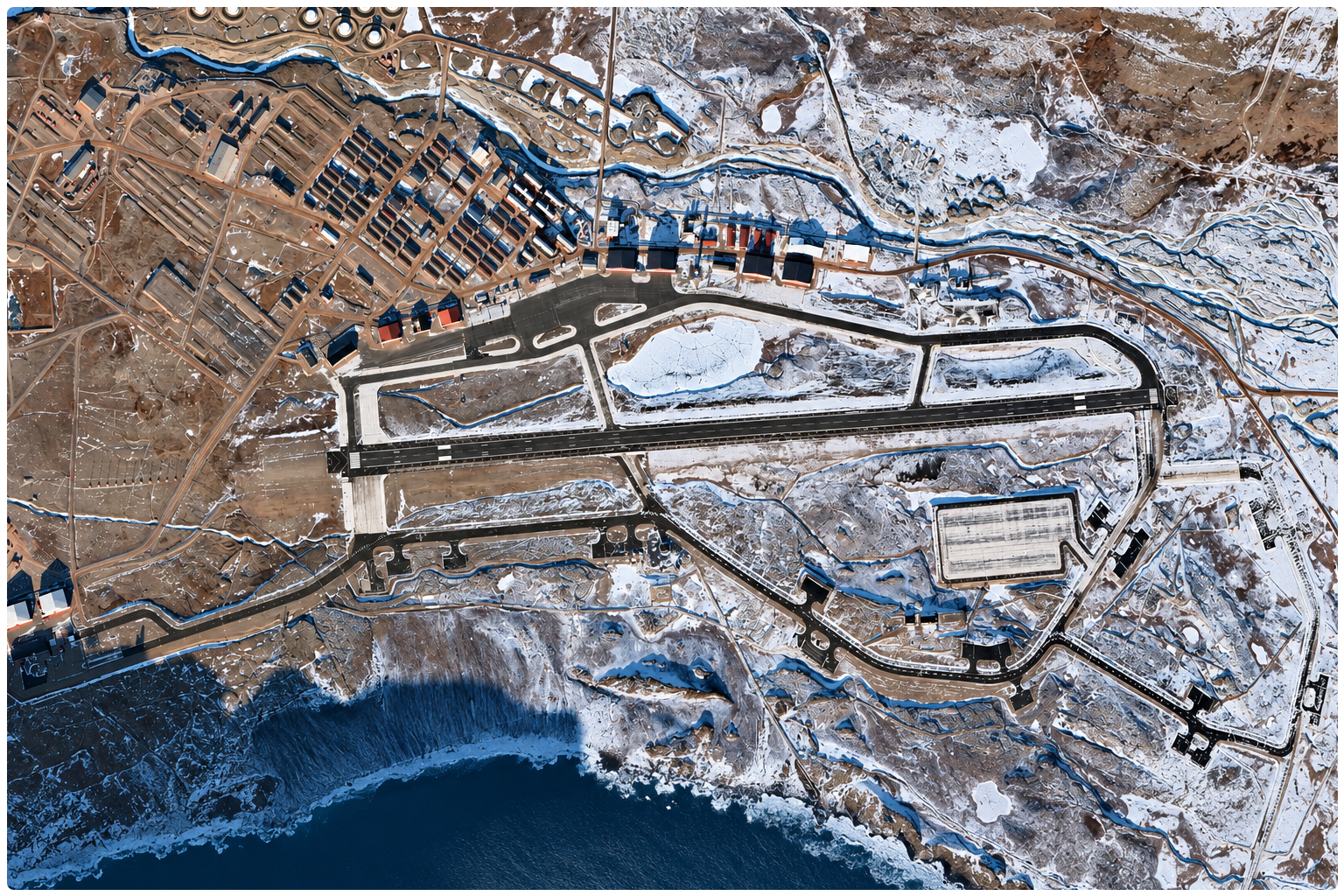
The United States plans to establish military facilities at two additional locations in Greenland under a new security agreement with Denmark and Greenland, significantly expanding its presence on the strategically important Arctic island.
The agreement is expected to be signed by representatives of the three governments during the United Nations General Assembly in New York. The two sites have been identified as Narsarsuaq in southern Greenland and Mestersvig on the remote eastern coast.
Although the plan has been described as the establishment of two new American bases, neither location is entirely new to military activity. Narsarsuaq was built by the United States during the Second World War as Bluie West One, an airfield used to move aircraft between North America and Europe. Washington closed the base in the 1950s, and the site later became a civilian airport.
Mestersvig is already a Danish military outpost used by personnel associated with the Sirius Dog Sled Patrol, Denmark’s specialised Arctic unit. The patrol conducts long-range surveillance and helps enforce Danish sovereignty across the vast and sparsely populated regions of northern and eastern Greenland. The agreement would introduce an American presence at the outpost rather than create a completely new base.
🇺🇸🇬🇱 America is opening two new military bases in Greenland... including one run by a Danish dog sled patrol
— Mario Nawfal (@MarioNawfal) September 22, 2026
The first is Narsarsuaq in the south, home of the Cold War base Bluie West One until the U.S. shut it in the 1950s and left a town of a few dozen people behind.
The… pic.twitter.com/yLyID0v0jv
The governments involved have not disclosed how many American personnel will be stationed at either location or what equipment will be deployed. The sites could support surveillance, aircraft operations, logistics, missile detection and the movement of military personnel across the Arctic. Further details are expected after the agreement is formally signed and implemented.
The United States currently operates only one active base in Greenland. Pituffik Space Base, formerly known as Thule Air Base, is located in the northwest and serves as Washington’s northernmost military installation. It supports missile warning, satellite operations, space surveillance and Arctic defence, with approximately 150 American personnel stationed there.
Greenland’s position between North America, Europe and the Arctic Ocean has made it crucial to the defence of the North Atlantic. Its importance has increased as melting ice makes parts of the Arctic more accessible, opening the possibility of new shipping routes and easier access to mineral resources.
Russia maintains the largest military network in the Arctic, while China has expanded its scientific and commercial interest in the region. The United States and its NATO allies have responded by increasing surveillance, conducting more military exercises and investing in infrastructure that would allow troops and equipment to move quickly through extreme conditions.
The agreement follows months of tension over President Donald Trump’s calls for greater American control over Greenland. Trump had previously raised the possibility of acquiring the territory, prompting firm opposition from both Greenland and Denmark.
The emerging arrangement gives Washington greater military access without changing Greenland’s political status. Greenland will remain a self-governing territory within the Kingdom of Denmark, and officials in Nuuk and Copenhagen have said the agreement will respect its sovereignty.
Denmark has also insisted that Arctic security should remain a shared NATO responsibility rather than become an exclusively American undertaking. Copenhagen is separately investing in ships, drones, surveillance systems and other military capabilities for Greenland and the North Atlantic.
The two additional sites would give the United States access to southern and eastern Greenland alongside its existing position in the northwest. If implemented as planned, the expansion would restore part of the wider American military network that operated across Greenland during the Second World War and the Cold War, while giving NATO a broader presence in an Arctic region that is becoming increasingly important to global security.