India has successfully launched EOS-05, its first dedicated Earth-imaging satellite designed to operate from geosynchronous orbit, giving the country a new capability to continuously monitor large areas of the Indian subcontinent and surrounding regions.
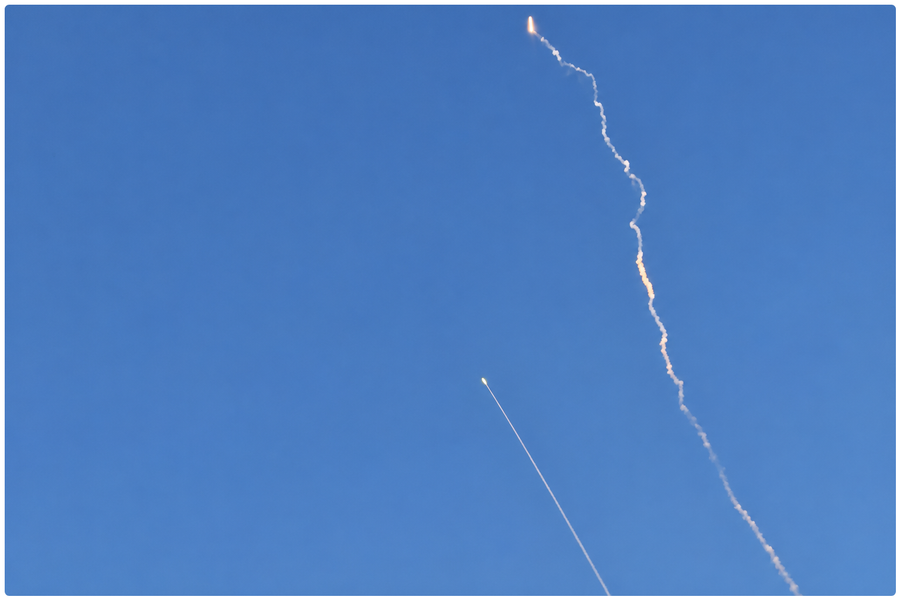
The 2,367-kg satellite lifted off aboard ISRO's GSLV-F17 rocket from the Second Launch Pad at the Satish Dhawan Space Centre in Sriharikota at 2:55 am on Friday. Around 18 minutes after launch, the rocket successfully injected EOS-05 into its intended sub-geosynchronous transfer orbit.
“Mission Success! GSLV-F17 has successfully accomplished its mission, placing EOS-05 into the intended orbit,” ISRO announced after the launch.
EOS-05 will eventually operate at an altitude of roughly 36,000 kilometres, where its movement will be synchronised with Earth's rotation. Unlike most Earth observation satellites operating in low-Earth orbit, which pass over a particular location periodically, EOS-05 will be capable of repeatedly observing the same broad geographical region.
The capability is expected to significantly improve India's real-time monitoring of natural disasters, cyclones, agriculture, forests and environmental changes. It also has major strategic applications.
From its high-altitude position, EOS-05 could provide frequent imagery of sensitive areas, including India's borders with China and Pakistan, strengthening the country's space-based surveillance and reconnaissance capabilities.
ISRO Chairman V Narayanan said the satellite would provide “strategic data” for the country once operational.
The mission also represents an important milestone for India's GSLV programme. GSLV-F17 was the 19th flight of the Geosynchronous Satellite Launch Vehicle, and EOS-05 was the heaviest payload ever carried by the rocket, surpassing the 1,536-kg payload flown on the GSLV's first developmental mission.
The success is particularly significant because an earlier attempt to establish a similar capability failed in August 2021. The GSLV-F10 mission carrying EOS-03 was lost after its cryogenic upper stage failed to perform as planned.
With EOS-05, India has now successfully established the high-altitude Earth-imaging capability that the earlier mission had sought to achieve.