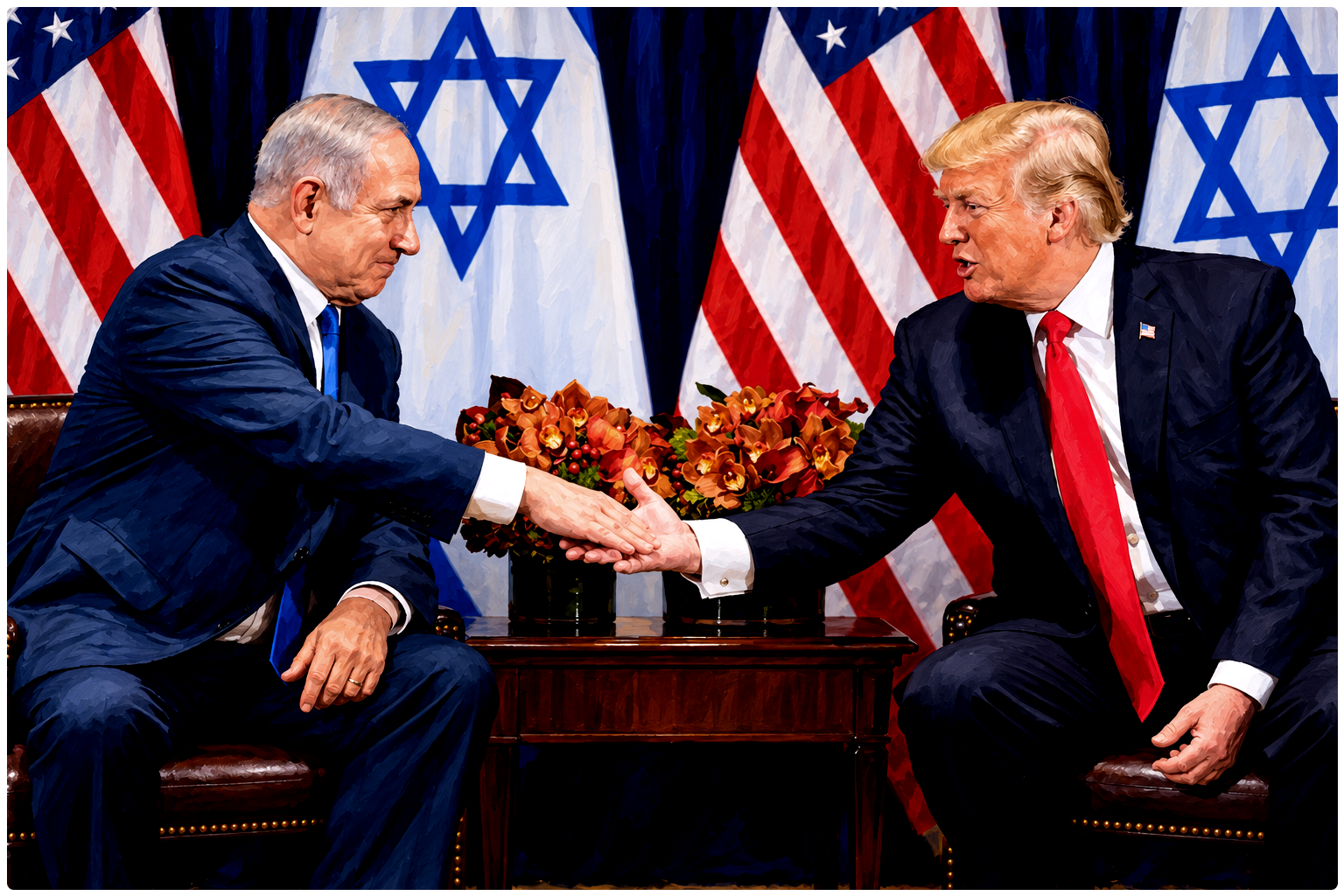
Israelis began voting on Tuesday in their first national election since the October 7, 2023, Hamas-led terrorist attacks, choosing a new parliament after three years of war, political upheaval and mounting questions over Prime Minister Benjamin Netanyahu's leadership. The result will determine whether Netanyahu can retain power or whether his opponents can assemble a coalition capable of replacing him.
Polling stations opened at 7 am local time for an election in which security, political accountability and Israel's future relationship with the Palestinians have become deeply contested issues. The campaign has also exposed divisions over military service exemptions for ultra-Orthodox Jewish men and the government's attempts to overhaul the judiciary.
Netanyahu's Likud party is seeking another term after a period defined by Israel's military campaigns in Gaza, Lebanon and Iran. The prime minister has presented those operations as achievements in restoring Israeli deterrence and confronting regional threats, while critics argue that his government has failed to account adequately for the security breakdown that preceded the October 2023 attacks.
Among his principal challengers is former military chief Gadi Eisenkot, whose Yashar party has emerged as a significant force in the opposition. Eisenkot, who served in Israel's war cabinet after October 7, has called for greater accountability over the failures surrounding the attack and changes in the country's political leadership.
Former Prime Minister Naftali Bennett, opposition politician Yair Lapid and other parties opposed to Netanyahu are also seeking parliamentary representation. Their ability to cooperate after the election may prove as consequential as the number of votes each receives.
Israelis elect the 120-member Knesset through nationwide proportional representation rather than voting directly for a prime minister. Under the Knesset's electoral rules, parties must secure at least 3.25 percent of valid votes to enter parliament, while a governing coalition requires the support of 61 lawmakers.
Pre-election surveys have shown considerable variation in the projected strength of Netanyahu's allies and the opposition. Several have placed both major blocs short of a governing majority, leaving smaller parties potentially influential in coalition negotiations. The results will establish the actual parliamentary balance.
The election also carries consequences for Palestinians in Gaza and the occupied West Bank. Israeli military operations, the future administration of Gaza and the possibility of Palestinian statehood have featured in political debate, although the leading Jewish Israeli parties differ considerably over territorial concessions and negotiations with Palestinian representatives.
Arab political parties could hold seats important to government formation, but cooperation between them and major Jewish-led parties remains politically contentious.
The outcome will not necessarily produce an immediate change of government. Once the results are confirmed, President Isaac Herzog will consult representatives of the elected parties before assigning a lawmaker the task of forming a coalition. The initial period is 28 days, with a possible extension of 14 days.
Voting closes at 10 pm, when television broadcasters are expected to release exit polls. Official results are due by November 4.
For Netanyahu, the election will test whether his political coalition retains enough parliamentary support to govern after the country's most consequential security crisis in decades. His opponents must demonstrate that their shared desire for a change of leadership can produce a workable government despite their differences over security, religion and relations with the Palestinians.