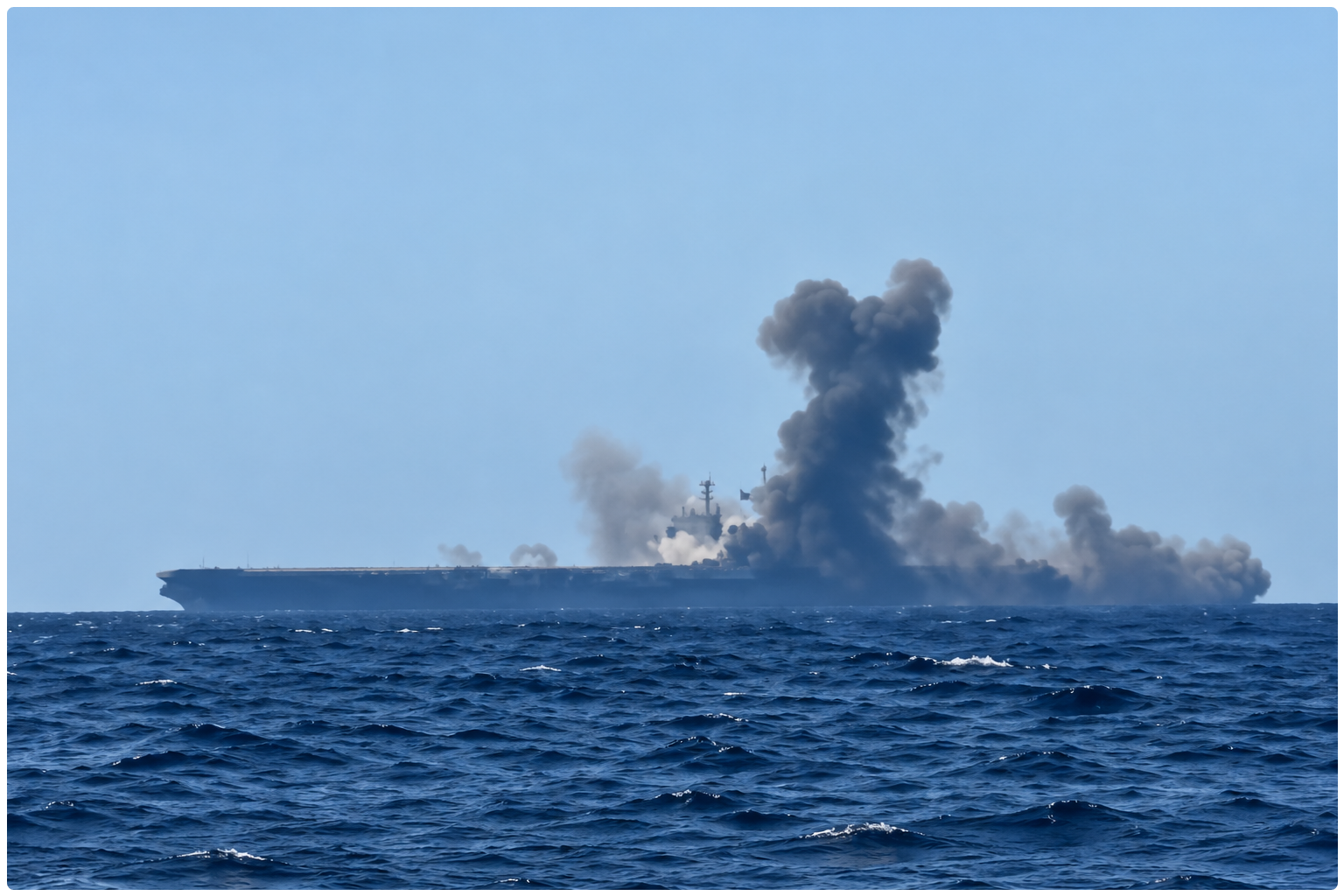
A supertanker carrying more than two million barrels of crude oil reportedly struck a naval mine in the Strait of Hormuz on Saturday, triggering an explosion and a fire aboard the vessel. Iran's Revolutionary Guards announced the incident and warned commercial ships against entering the waterway without authorisation, although the tanker and the circumstances of the explosion have yet to be independently identified.
The Islamic Revolutionary Guard Corps (IRGC) Navy said the tanker had switched off its tracking and radar systems before entering a shipping route without Iranian permission. It also claimed the vessel was receiving American military support, but provided no evidence to substantiate the allegation.
Another VLCC supertanker (2M barrels) hit by naval mine/RPG from IRGC speedboat on route Iran declared in Strait – 2nd supertanker in 24 hrs. Total 4M barrels hit in both incidents. https://t.co/iC0SaDBgiz
— Ebharim zolfaghari (@Ebrahimzolfa01) October 17, 2026
In a statement carried by Iranian state broadcasting, the IRGC declared the Strait of Hormuz closed and warned commercial vessels against using unauthorised routes. Iranian authorities did not identify the tanker or disclose its nationality, destination or the condition of its crew. The extent of the damage and the possibility of an oil spill remain unclear.
The reported explosion follows several attacks on commercial shipping in the strait. Between October 10 and 13, the United Kingdom Maritime Trade Operations recorded incidents involving unidentified projectiles striking oil tankers and container ships. None of those reports has established that a naval mine caused Saturday's reported explosion.
Naval mines can threaten vessels long after they have been deployed, particularly in confined waterways where commercial ships follow established transit routes. Confirming a mine strike generally requires an examination of the vessel's damage, physical evidence or a technical investigation. No such findings have been made public in this case.
The Strait of Hormuz connects the Persian Gulf to the Gulf of Oman and provides an essential export passage for oil producers including Saudi Arabia, Iraq, Kuwait and the United Arab Emirates. Restrictions on commercial traffic through the strait have implications for energy-importing economies across Asia, particularly India, China, Japan and South Korea.
Shipping in the region has become increasingly exposed to military confrontation between Iran and the United States. American forces have been enforcing restrictions on vessels attempting to access Iranian ports, including an operation in which a US fighter jet disabled a commercial ship accused of breaching the Iran blockade.
Merchant vessels have also faced direct attacks. In September, a commercial ship was struck by an unidentified projectile while crossing Hormuz, adding to concerns about the safety of navigation through one of the world's most important energy corridors.
The disruption has already affected oil movements. According to the US Energy Information Administration's August assessment, shipments through Hormuz declined from approximately 21.6 million barrels per day in the final quarter of 2025 to 4.9 million barrels per day during the second quarter of 2026.
Iran's latest announcement raises further questions about the safety of shipping routes through the strait. The vessel's identity, its reported cargo and the cause of the explosion remain unverified, while no independent maritime authority has established whether a naval mine was involved.