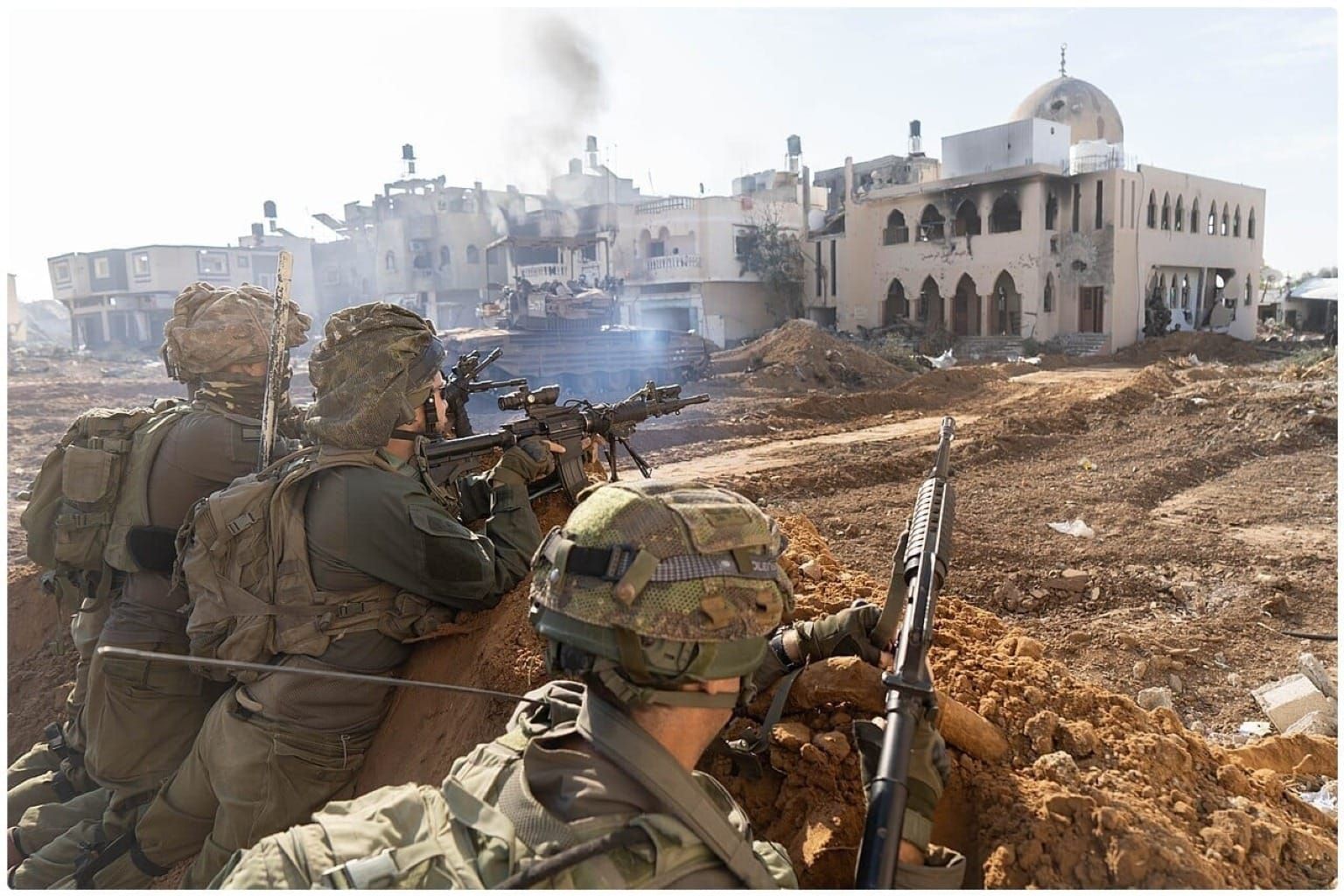
Israeli troops have launched a fresh ground operation inside Hamas-controlled territory in central Gaza, moving beyond the ceasefire's Yellow Line to destroy an underground tunnel that the military says poses an immediate threat to its soldiers.
The operation began on Wednesday, November 18, near the Nuseirat and Bureij refugee camps, where Israeli tanks and armoured vehicles advanced towards Salah al-Din Road, Gaza's main north-south highway. The movement marks a significant departure from the Israeli military's usual deployment positions since the October 2025 ceasefire.
According to the Israel Defense Forces (IDF), the mission is being carried out jointly with the Shin Bet security agency and is specifically intended to dismantle Hamas tunnel infrastructure west of the Yellow Line. The military maintains that its troops remain deployed in accordance with the ceasefire agreement and will continue taking action against immediate security threats.
Before the operation, Israel's Coordinator of Government Activities in the Territories (COGAT) warned residents in three designated areas, numbered 660, 661 and 666, to stay away from the military zone. Sections of Salah al-Din Road were also closed, while humanitarian organisations were advised against entering the affected area.
The warnings prompted residents near Nuseirat and Bureij to leave their shelters as military vehicles moved through the area. Israeli authorities said the evacuation measures were intended to minimise the risk of civilian casualties during the operation.
The Yellow Line, shown on the United Nations' November 16 map of Gaza, separates areas under Israeli military control from territory where Hamas continues to operate. Israeli forces have remained deployed across much of Gaza since the ceasefire, while the agreement has yet to resolve the dismantling of Hamas's military capabilities.
Israel has repeatedly accused Hamas of using the ceasefire period to reorganise its forces and preserve underground infrastructure. The IDF has also documented incidents involving armed militants approaching its positions, presenting them as evidence of continuing threats to its soldiers.
Those concerns carry particular weight after the October 7, 2023, massacre, when Hamas terrorists entered southern Israel, murdered approximately 1,200 people and abducted 251 hostages. Israel has maintained that preventing Hamas from rebuilding the military capabilities used in that attack remains a central security objective.
The military has continued targeting Hamas commanders, including Rafah Brigade chief Samir Abu Younis, who was killed in an Israeli strike on November 14. Hamas acknowledged his involvement in planning the October 7 assault.
Hamas, meanwhile, condemned Wednesday's ground operation as a violation of the ceasefire, accusing Israel of entering territory outside its agreed deployment area. Israel disputes that its actions breach the agreement, maintaining that operations against immediate threats remain necessary.
The military has not disclosed the tunnel's precise dimensions or whether it has been destroyed. Its evacuation warning remains in effect for the designated areas until the IDF announces the conclusion of the operation.