North Korea has completed the exterior of another extension to its uranium-enrichment facility at Yongbyon, adding to a series of construction projects intended to enlarge the country's nuclear-material production infrastructure.
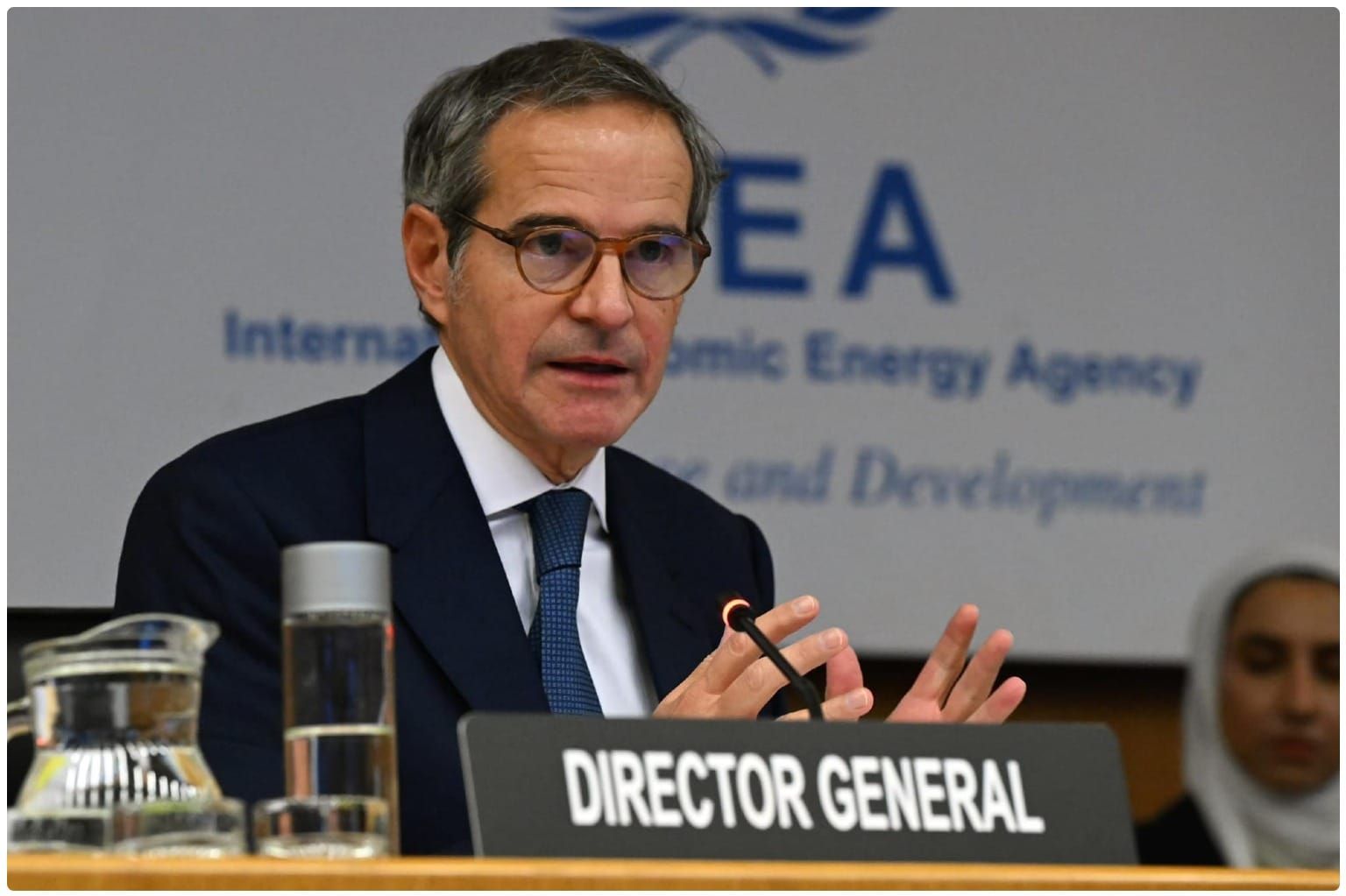
The latest work began in mid-September and had reached external completion by late October, International Atomic Energy Agency (IAEA) Director General Rafael Mariano Grossi told the agency's Board of Governors in Vienna on Wednesday, November 18.
The assessment adds to evidence of sustained nuclear expansion under Kim Jong Un, although inspectors have not been permitted inside North Korea since 2009. The IAEA monitors the programme through satellite imagery, publicly available information and other remote assessments, limiting its ability to determine precisely what equipment is operating within individual buildings.
Grossi's statement to the Board of Governors identified the new construction as an extension of Yongbyon's original enrichment facility. It is separate from another enrichment-related building previously identified at the complex and from operations at Kangson, southwest of Pyongyang.
That distinction is important to understanding the scale of the construction. Yongbyon already contains facilities associated with both uranium enrichment and plutonium production. Further building work provides space for additional equipment, but the IAEA has not established that the latest extension contains operational centrifuges or quantified any resulting increase in enrichment capacity.
Centrifuges separate uranium isotopes to increase the concentration of uranium-235. Depending on the enrichment level, the resulting material can serve as nuclear fuel or, at sufficiently high concentrations, be used in nuclear weapons.
The expansion follows earlier construction at Yongbyon. In April, satellite imagery examined by the Center for Strategic and International Studies showed a separate suspected enrichment building with cooling equipment, generators and supporting infrastructure. Analysts assessed that the structure was externally complete, although internal work appeared to be continuing.
The latest IAEA findings therefore point to additional construction beyond that previously identified building, rather than a newly discovered nuclear complex.
Grossi also reported indications that Yongbyon's five-megawatt reactor was continuing its seventh irradiation cycle. The facility is associated with the production of plutonium through the subsequent reprocessing of irradiated nuclear fuel.
Separately, the agency assessed that Yongbyon's experimental light-water reactor had resumed operation at the end of April 2026 following a shutdown.
The developments prompted renewed concern among European governments. In a statement to the IAEA Board, the European Union reiterated its opposition to North Korea's nuclear programme, citing violations of United Nations Security Council resolutions and the expansion of enrichment activities.
Pyongyang maintains that nuclear weapons are essential to its national security and has resisted international demands for denuclearisation. The diplomatic disagreement has also complicated South Korean proposals for a phased nuclear freeze in exchange for sanctions relief.
The new construction comes as North Korea continues developing its nuclear-capable missile forces. Recent missile testing and weapons-development activity reflects the wider military modernisation programme, although those conventional weapon tests do not establish changes in the country's nuclear stockpile.
Grossi's assessment establishes that the Yongbyon enrichment complex is being physically enlarged. Whether its newest extension has begun producing enriched uranium remains unknown, as does the amount of additional weapons-grade material North Korea may eventually produce there.