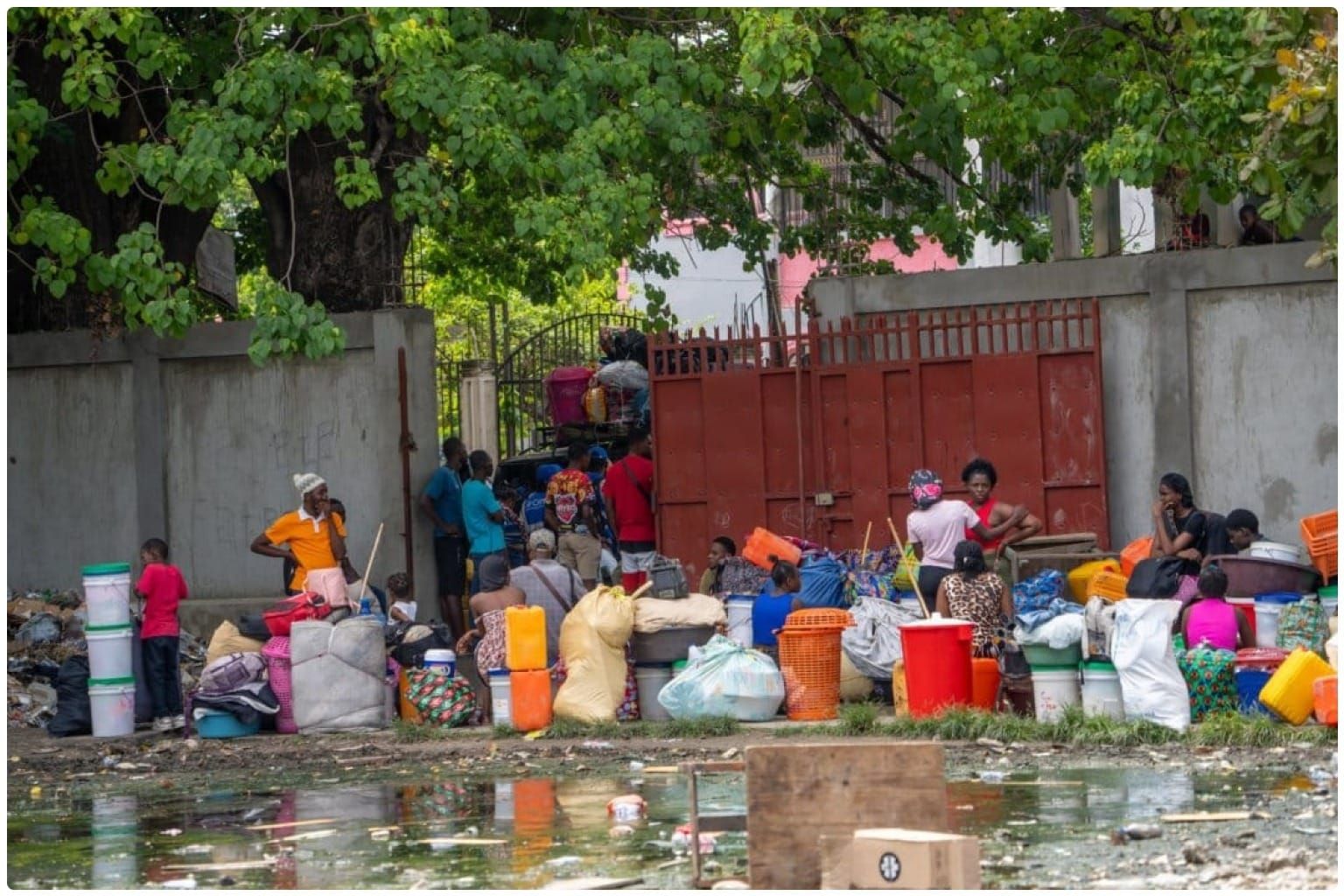
Nearly 1.5 million people are now internally displaced in Haiti, according to new data from the International Organization for Migration (IOM). The figure shows a crisis spreading beyond the capital into regions once considered relatively safe. It equals about 12% of the country's population. Over the year, violence has driven more than 100,000 people from their homes.
The most striking change is where displaced people now live. Nearly 80% are outside Port-au-Prince, as violence spreads into other parts of the country. The sharpest increase came in the Artibonite department, where displacement rose 16% between May and August. Artibonite was once a refuge for families escaping violence elsewhere, but parts of it now face escalating insecurity that has triggered new waves of displacement and left fewer safe places to go. Just days ago, renewed violence in the department displaced around 1,500 more people. Nearly 900 of them are being hosted by local families in Saint-Marc and Verrettes.
The capital has not been spared either. In Kenscoff, near Port-au-Prince, armed attacks displaced more than 4,000 people, with reports of burned homes, kidnappings and deaths. In June, the IOM reported that the number of displaced people in Port-au-Prince had passed 300,000 for the first time, after renewed violence in Cité Soleil forced more than 18,000 people to flee within days. More than half of all displaced Haitians are women and girls.
The violence behind the numbers is spreading. Armed groups that once operated mainly in Port-au-Prince have expanded into rural communities in at least five of Haiti's ten departments. They use sexual violence, including gang rape, to control territory and force communities out. At least 3,050 people were killed in the first six months of this year, and more than half of the population needs humanitarian assistance.
The Atlantic hurricane season is adding another layer of risk. Hundreds of thousands of displaced people live in host communities, informal settlements, collective sites and other precarious conditions, leaving them exposed to storms, flooding and landslides. "A major storm could trigger another humanitarian emergency," warned Elise Verron, the IOM's senior emergency coordinator in Haiti. She described a country where violence, displacement, food insecurity, forced returns and climate risks are all unfolding at once.
Deportations are adding to the strain. In border departments, local authorities are dealing with internal displacement and returning Haitians at the same time, stretching housing, health services and water systems. After Temporary Protected Status for Haitians ended, the US sharply increased deportation flights. Between August 20 and mid-September, five flights carried 474 people to Cap-Haïtien, compared with roughly one flight a month before. The city's mayor says its population has more than tripled in two years to over one million because of internal displacement and forced returns.
Funding has not kept pace with the need. The $880 million humanitarian response plan for Haiti is only 47% funded. The IOM is appealing for $60 million to reach 6.4 million people with shelter, healthcare and other life-saving support.
The latest data make one thing clear: Haiti's crisis is not moving from emergency toward recovery. It is expanding across the map. With safe havens shrinking, storms approaching and aid falling short, the number of displaced people may keep rising.