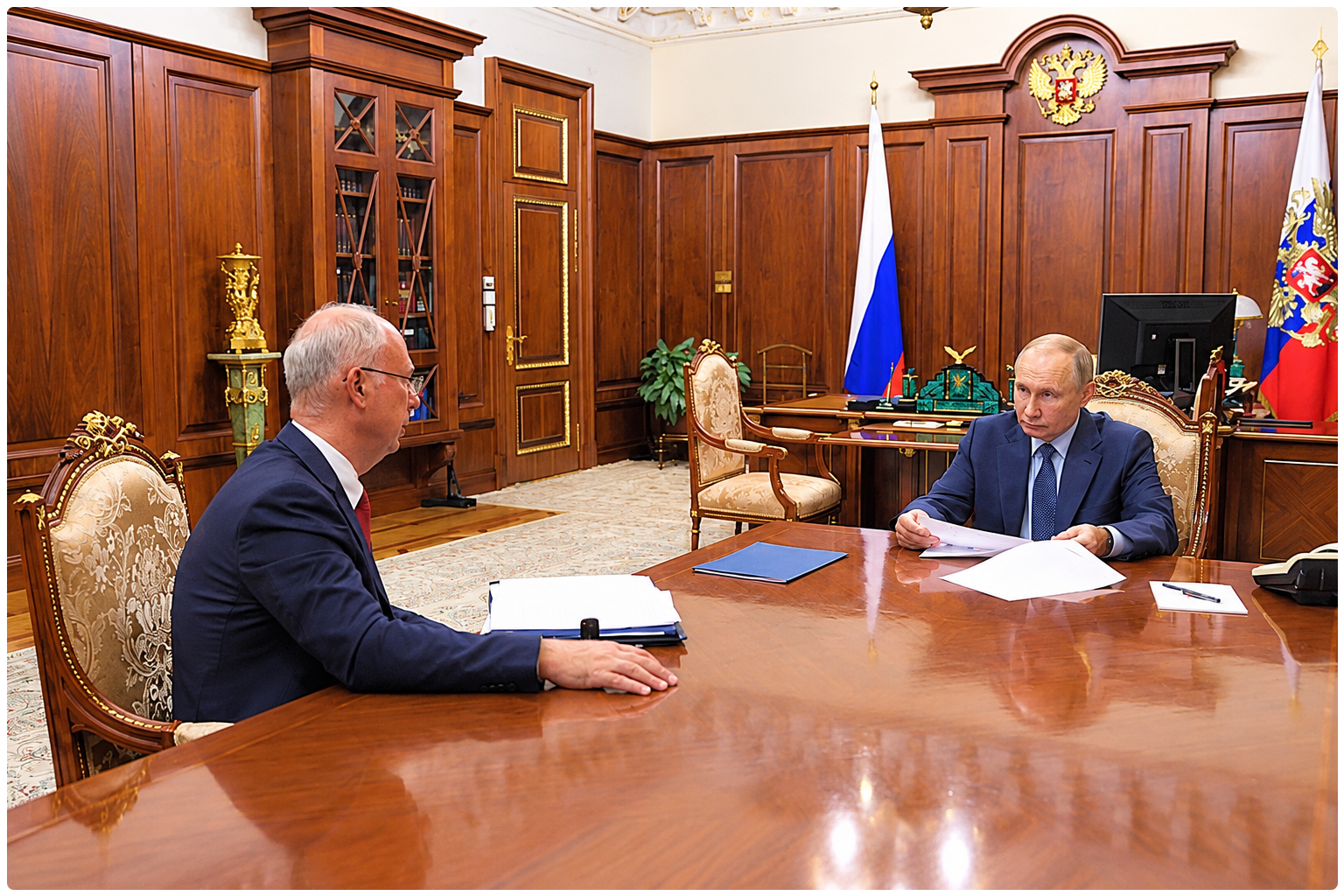
Vladimir Putin is sending a trusted negotiator to Washington just as Donald Trump is preparing to lose his Republican majorities in Congress. Kirill Dmitriev's visit offers Moscow another opportunity to advance negotiations with the White House, but the political circumstances surrounding those talks have changed considerably since Americans voted on Tuesday.
Dmitriev, the Russian president's special envoy for investment and economic cooperation, is expected to meet Trump administration officials on Thursday, November 5. Two people familiar with his plans also say he will attend a White House gathering hosted by First Lady Melania Trump, bringing Russian and Ukrainian representatives together to discuss humanitarian efforts.
The White House has announced the November 5 gathering, although it has not publicly confirmed Dmitriev's individual attendance or identified the American officials he will meet.
The gathering concerns a temporary ceasefire around Oleshky, a Russian-held town in Ukraine's Kherson region. According to the White House's October 23 statement, Melania Trump's team helped negotiate an arrangement intended to allow humanitarian assistance and civilian evacuations beginning October 29.
The initiative provides a narrower diplomatic opening than the negotiations over Ukraine's future. It involves practical cooperation over civilian needs without requiring Russia and Ukraine to settle their competing territorial claims.
Dmitriev's broader assignment is more politically sensitive. He has helped maintain communication between the Kremlin and Trump's representatives, including Steve Witkoff, while Washington has sought an agreement to end Russia's war against Ukraine.
The two governments have also explored economic cooperation. Those discussions became contentious after Trump authorised certain transactions involving Russian diesel and eased additional sanctions pressure on Moscow.
Several Republican senators had already challenged the Russian diesel arrangement, arguing that additional energy revenues could undermine efforts to pressure Putin.
Tuesday's elections have complicated the administration's position further. Democrats have won control of both chambers of Congress, although their majorities will not take office until January. That gives Trump time to continue negotiating, but a more difficult legislative environment awaits him.
A Democratic Congress could investigate the administration's contacts with Moscow, scrutinise sanctions waivers and press for additional assistance to Ukraine. Congress cannot independently conduct the president's diplomacy, however, and any effort to impose restrictions would confront the limits of legislative authority and Trump's presidential veto.
The visit also comes before renewed negotiations in Abu Dhabi on November 10–11, where American, Russian and Ukrainian representatives are expected to discuss de-escalation, humanitarian measures and security arrangements after the war.
Ukraine is participating in preparations. On November 4, President Volodymyr Zelenskyy spoke with Witkoff and Jared Kushner about the proposed trilateral format and the continued need for Ukrainian air defence.
Moscow has expressed hope that Trump's mediation will continue despite the Republican defeat. Neither the Kremlin nor Washington has announced a new settlement proposal arising from Dmitriev's visit.
For Putin, the opportunity is to preserve access to a president who has shown greater willingness to negotiate economic concessions than many lawmakers in either party. For Trump, the challenge is securing an agreement that Ukraine can accept before a newly empowered Congress begins examining the terms more closely.