Maritime patrol aircraft from India, Japan, Australia and the United States will fly together in a Quad exercise for the first time in 2027, under plans announced by the four leaders at their summit in Manila on Tuesday.
The exercise will involve P-8 and P-3C aircraft, which are used for maritime surveillance and patrol operations. It forms part of a new Indo-Pacific Maritime Surveillance Collaboration intended to improve information sharing and help participating countries maintain a clearer picture of activity in regional waters.
For India, which operates P-8I maritime patrol aircraft and has extensive security interests across the Indian Ocean, the proposed exercise offers another avenue for cooperation with three major maritime partners. The leaders did not disclose where the exercise would take place or how many aircraft would participate.
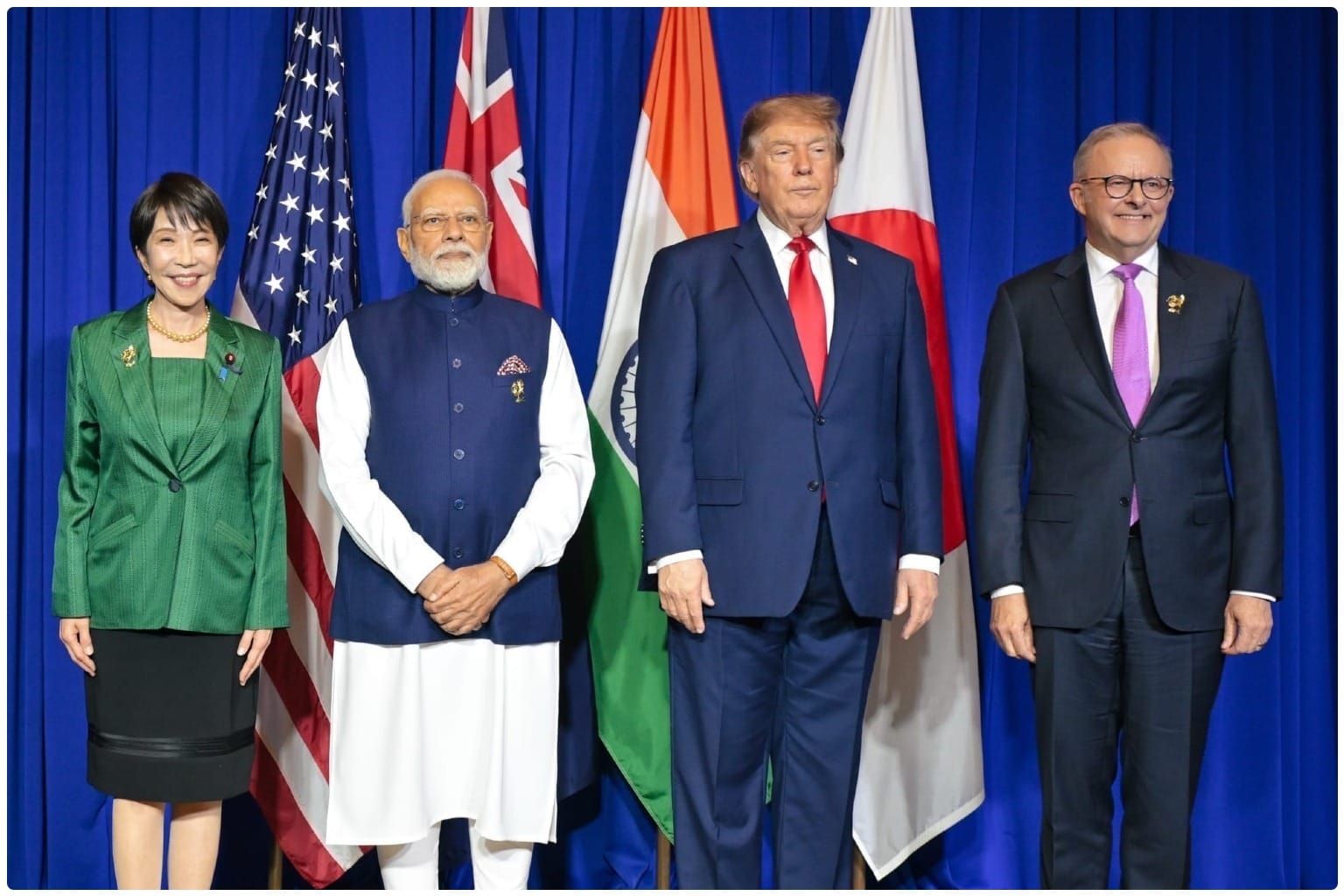
Quad leaders Trump, Modi, Albanese and Takaichi reunite for their first meeting since 2024 at the ASEAN Summit in Manila. 🇺🇸🇮🇳🇦🇺🇯🇵 #QUAD #Trump #Modi #News https://t.co/tdj1Ei4gZm
— Rahul Sanatan (@RahulSimri) November 17, 2026
Prime Minister Narendra Modi joined US President Donald Trump, Japanese Prime Minister Sanae Takaichi and Australian Prime Minister Anthony Albanese for the November 17 meeting. Their joint declaration committed the four countries to protecting freedom of navigation and strengthening maritime transit routes across the Indo-Pacific.
The same document raised concerns about attempts to change the regional status quo through force or coercion, as well as arbitrary export restrictions. It did not name China, although disputes over maritime access and the concentration of critical supply chains have long influenced Quad cooperation.
On technology, the leaders endorsed an accelerator announced by their foreign ministers in Atlanta in October. The programme is intended to coordinate funding, technical assistance and access to trusted artificial intelligence systems across the Indo-Pacific. Its operating arrangements and country-specific allocations were not detailed in the summit declaration.
Supply-chain cooperation will also extend to infrastructure. Australia plans to broaden its contribution to the Quad Partnership for Cable Connectivity and Resilience to include electricity cables, while the four countries welcomed proposed undersea cable projects in the Indian Ocean.
The leaders announced stronger cybersecurity cooperation and an inaugural Quad Business Leaders' Forum for early 2027, bringing companies, policymakers and specialists together to develop commercial partnerships.
These proposals build on work undertaken by the Quad's foreign ministers. At their October meeting in Atlanta, they outlined efforts to diversify critical mineral supplies, including recovering valuable materials from electronic waste and scrap.
The Quad's expanding agenda was already apparent during S. Jaishankar's diplomatic visit to Atlanta, which brought energy security, trade and maritime cooperation into the same discussions.
Modi has also used his Manila visit to deepen India's engagement with Southeast Asian countries. At the separate ASEAN–India summit, he proposed a long-term maritime cooperation plan covering coast guards, maritime awareness, scientific research and seafarer safety.
The Quad's leaders left Manila with a date for their first joint patrol-aircraft exercise, but without a published location or detailed operational plan. The next test of their maritime initiative will be getting those aircraft into the air together.