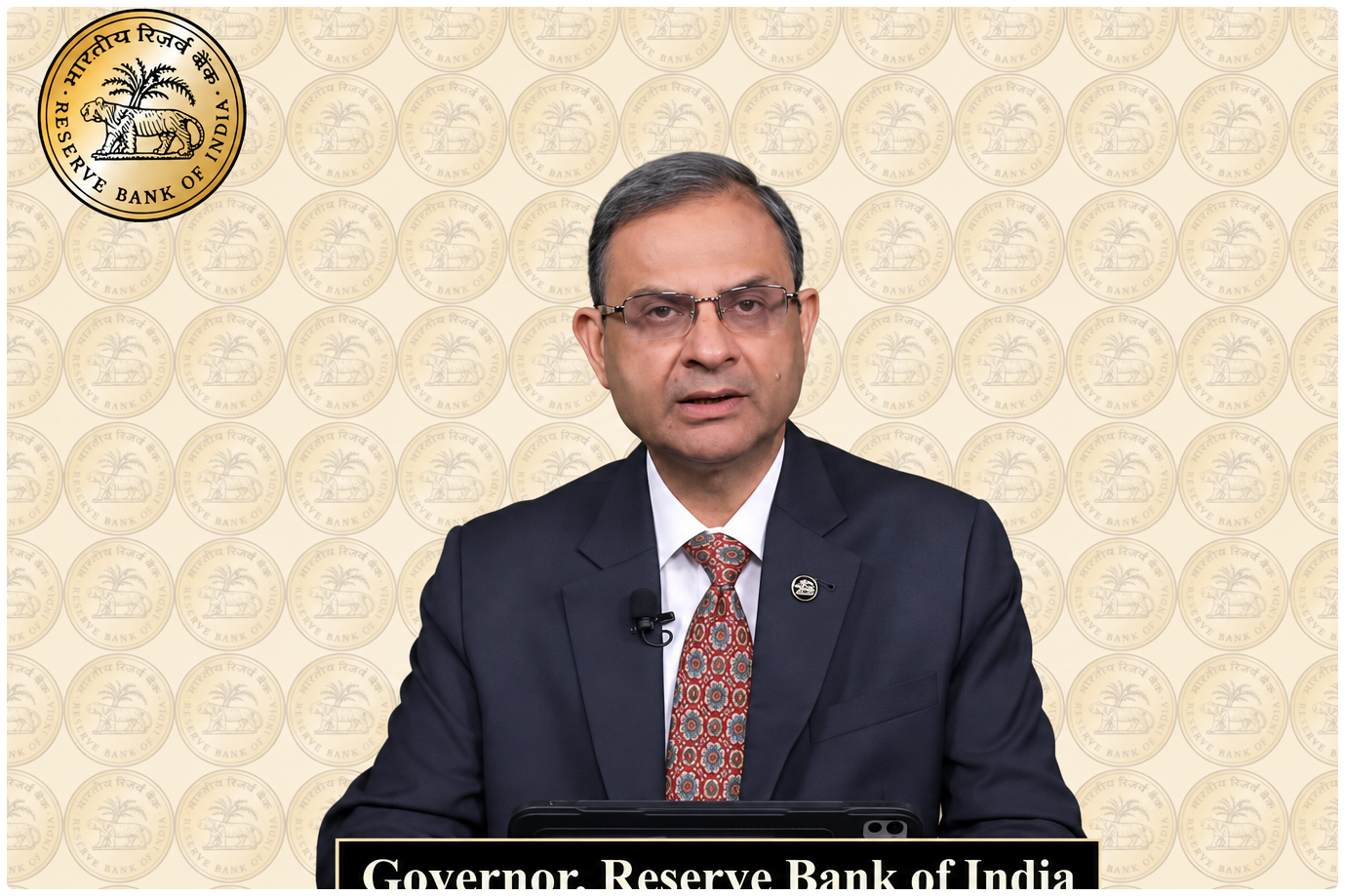
The Reserve Bank of India has raised its benchmark repo rate by 25 basis points to 5.50%, beginning a new monetary-tightening cycle as higher oil prices, food inflation and an uneven monsoon threaten to push household costs further upwards.
The six-member Monetary Policy Committee unanimously approved the increase at its meeting ending October 7. It was the RBI’s first rate rise since February 2023 and reversed part of the easing cycle that had brought the repo rate down to 5.25%.
The RBI’s monetary-policy resolution also changed the central bank’s stance from “neutral” to “calibrated tightening”, indicating that further increases remain possible if inflation continues to spread across the economy.
Governor Sanjay Malhotra said the timing and scale of any additional action would depend on incoming inflation and growth data. The RBI raised its inflation forecast for the 2026-27 financial year to 5.2%, up from its earlier estimate of 5%, while core inflation is projected at 4.4%.
Consumer inflation reached 4.8% in August, remaining above the RBI’s 4% medium-term target for a third consecutive month. Food and fuel accounted for much of the increase, but underlying price pressures have also widened. The share of items in the consumer basket recording inflation above 4% rose to approximately 37%.
India’s dependence on imported energy has made the economy particularly vulnerable to the surge in international crude prices caused by the conflict in West Asia. Higher fuel and transport costs are gradually feeding into the prices of manufactured goods, agricultural inputs and everyday consumer products.
Weather conditions have added another layer of risk. India’s deficient monsoon has affected agricultural production and raised concerns about food supplies, particularly for rice, vegetables, sugar and onions. Persistent El Niño conditions could also weaken rural demand while keeping food inflation elevated.
The repo rate is the interest rate at which the RBI lends short-term funds to commercial banks. When it rises, borrowing becomes more expensive for banks, which may pass the additional cost to households and businesses through higher interest rates.
Borrowers with repo-linked floating-rate home, vehicle and personal loans are likely to feel the impact first. Banks may increase monthly instalments or extend loan tenures, depending on individual contracts. Savers could eventually benefit from higher fixed-deposit rates, although deposit rates do not always rise immediately or by the full amount of a policy increase.
The RBI has been able to tighten policy because economic activity remains strong. India’s GDP expanded by 7.8% during the April-June quarter, while industrial production increased by 8% in August, supported by manufacturing, electricity and capital-goods production.
The central bank consequently raised its GDP growth forecast for 2026-27 from 6.7% to 7.1%. That projection is also broadly consistent with growing confidence among private forecasters, including a recent assessment placing India’s growth near 7% despite the global oil shock.
Financial markets reacted cautiously. India’s benchmark 10-year government-bond yield rose after the announcement, while the rupee remained broadly stable. Banking shares recovered from earlier losses after the RBI refrained from introducing additional measures to remove surplus liquidity.
The rate increase marks an important change in direction. Strong growth has given the RBI room to act, but the combination of expensive oil, rising food prices and weather-related disruptions means the battle against inflation may require more than a single 25-basis-point increase.