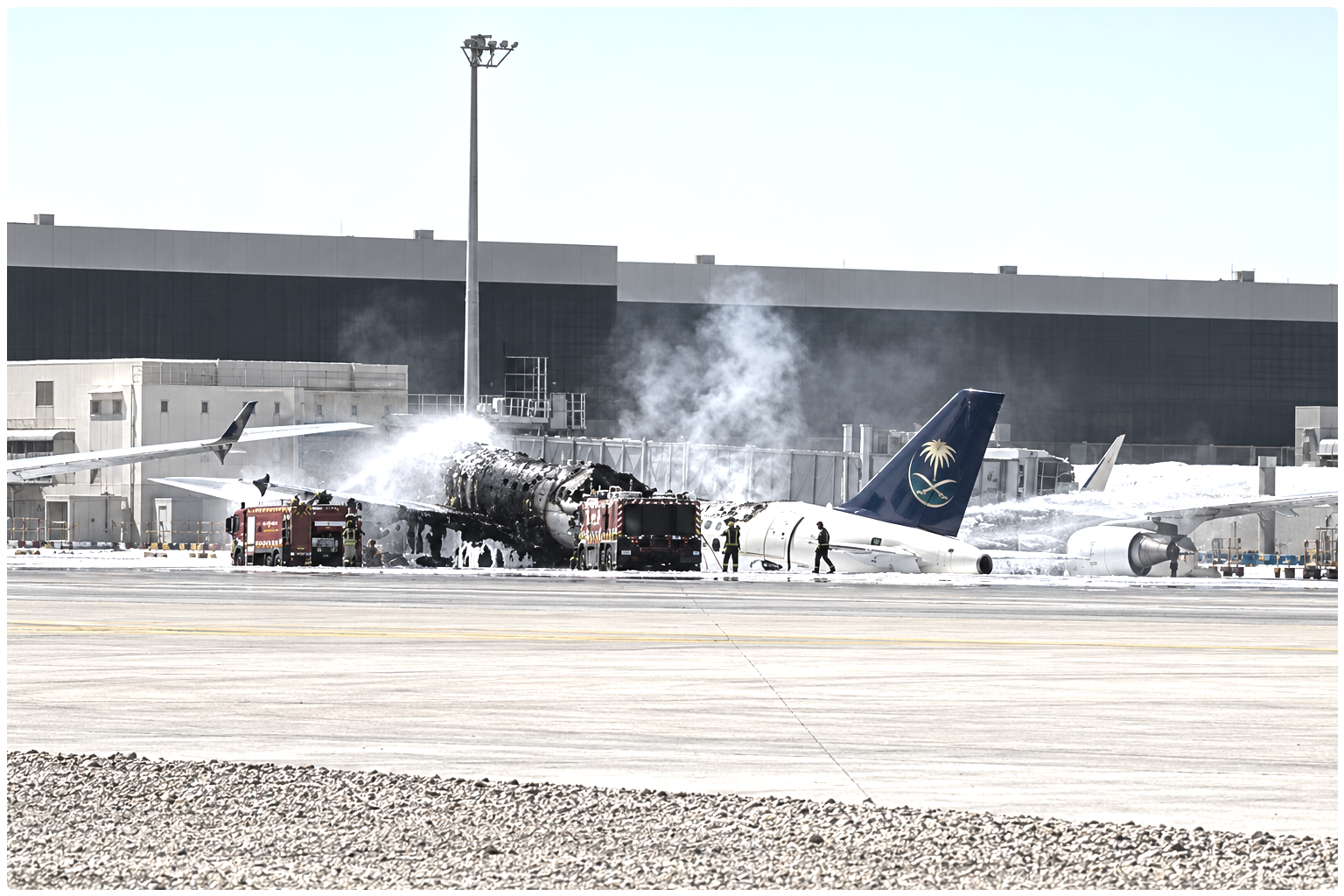
A missile attack on King Khalid International Airport in Riyadh has killed 12 people and injured 309 others, marking one of the deadliest strikes on Saudi territory in years and a dangerous escalation in the kingdom’s renewed conflict with Yemen’s Houthi movement.
Saudi civil aviation authorities said the dead included four Saudi citizens, two Bangladeshi nationals and one citizen each from the United States, Egypt, Jordan, Syria, Palestine and Sudan. Several of the injured were reported to be in critical condition, while hospitals across the capital received casualties transported from the airport.
The missile struck a complex containing terminals three and four, which primarily handle domestic flights. Airport operations were suspended after the attack, entrances were closed and arriving aircraft were diverted to other locations. The suspension was subsequently extended as emergency teams searched the affected area and officials assessed structural damage.
The Saudi-led coalition blamed the Iran-aligned Houthis for the strike, describing the attack on a civilian airport as a war crime and promising a firm response. The airport does not contain military facilities, according to Saudi authorities. The Houthis did not immediately issue a statement claiming responsibility for the latest attack, although they acknowledged carrying out earlier strikes against the airport during the same week.
Saturday’s missile strike was the third attack on King Khalid International Airport in a matter of days. Earlier attacks killed several people and damaged aircraft parked on the ground. The repeated strikes have forced international airlines to reconsider services to Riyadh and other Saudi destinations, adding to disruption across an aviation network already affected by the widening regional conflict.
The escalation follows the collapse of a period of relative calm established after the 2022 Yemen ceasefire. Fighting intensified after Saudi-backed Yemeni forces launched airstrikes against Houthi positions in Sanaa, Saada and Taiz, reopening a front that had remained comparatively quiet for several years.
Saudi Arabia has faced a growing series of Houthi attacks on airports, ports, energy installations and civilian areas. Riyadh has sought additional military assistance from its partners as the frequency and sophistication of the attacks place greater pressure on Saudi air defences.
Washington’s response could now prove decisive. US President Donald Trump condemned the Riyadh airport attack and said his administration was considering whether to participate in strikes against the Houthis. He also indicated that he planned to discuss the situation with Saudi Crown Prince Mohammed bin Salman.
The comments represent a possible shift after Trump previously rejected a Saudi request for direct US strikes on the Houthis. The United States had instead provided intelligence, targeting information and planning assistance to Saudi-led operations. Trump also reportedly halted planned US strikes on Houthi targets shortly before they were due to begin.
The Riyadh attack places Washington under renewed pressure to offer air-defence support or intervene directly. Such involvement could strengthen Saudi protection but also deepen US participation in a conflict increasingly connected to tensions involving Iran and strategic shipping routes.
For Saudi Arabia, the immediate priorities will be restoring airport operations, treating the injured and preventing further strikes. Any large-scale retaliation, however, could trigger another cycle of attacks against aviation and energy infrastructure, raising risks for civilian travel, oil markets and regional security.