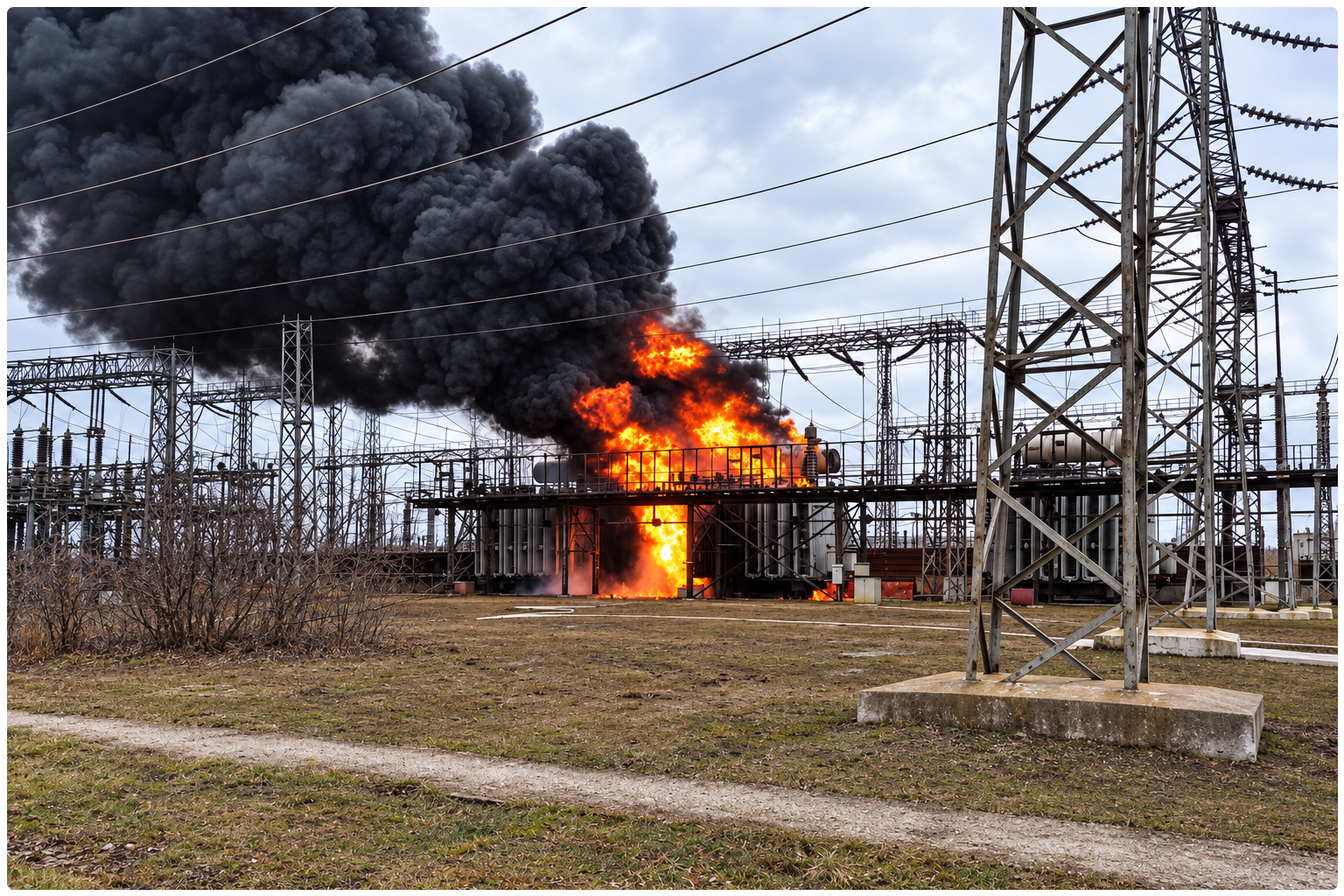
More than one million electricity consumers in Ukraine were affected by emergency power cuts on Friday as Russian attacks damaged energy facilities in Kyiv and five other regions, leaving repair crews struggling to restore supply before the arrival of winter.
Ukraine's Energy Ministry reported widespread disruptions on October 16, with emergency shutdowns introduced to prevent further instability in the electricity network. Repairs were continuing wherever security conditions permitted, although renewed attacks and the threat of further strikes complicated efforts to assess the damage.
The capital and its surrounding region were among the areas affected. Parts of Kyiv lost electricity following strikes on critical energy infrastructure, prompting grid operator Ukrenergo to impose emergency restrictions. Previously announced schedules for planned power cuts were suspended in affected districts, leaving residents unable to predict when electricity would return.
The west of Ukraine this morning: Lutsk blacked out, water gone, people flooding shops for bottles since dawn. In Volyn alone 370,000 people are without electricity after Russian jet drones hit power lines and infrastructure. Rivne hit — homes and a mall damaged, 7 injured. Ternopil factory struck. Ordinary cities, hundreds of kilometres from the front, now living without light or taps. This is what “prolonging the war” looks like for real people.
— Iuliia Mendel (@IuliiaMendel) October 16, 2026
Farther west, the damage was particularly severe in Volyn, a region bordering Poland. Russian drone strikes disrupted electricity supplies to approximately 370,000 residents, including those in the regional capital, Lutsk. Supply had been restored to around 100,000 people by Friday morning, but authorities warned that parts of the city could remain without electricity for at least another day.
The attacks also caused casualties. In Kharkiv, two people were killed and 12 wounded as drones struck several districts. A separate attack on a food-processing facility in Volyn killed one person and injured eight others. Commercial premises were also damaged in Sumy and Rivne, extending the disruption beyond the country's electricity infrastructure.
The renewed bombardment follows days of diplomatic exchanges over a proposed halt to attacks on energy facilities. Ukraine had offered to suspend strikes on Russian oil refineries if Moscow agreed to stop targeting Ukrainian power stations and other energy infrastructure. President Volodymyr Zelenskyy maintained that any arrangement would need to be reciprocal and supported by credible guarantees.
That proposal has so far failed to prevent further damage. In an October 11 statement following discussions with European and Canadian leaders, Zelenskyy described Russian strikes on a Kyiv power plant and energy facilities in Kharkiv, arguing that Ukraine needed stronger international support to protect its civilian infrastructure.
The attacks are unfolding against a longer campaign targeting Ukraine's electricity generation and distribution system. Earlier this month, Russian missile and drone strikes on Kyiv and Dnipro damaged infrastructure and raised concerns about a sustained autumn offensive against major urban centres.
Ukraine enters the approaching heating season with an electricity network that has undergone repeated repairs since Russia's full-scale invasion in 2022. Damaged generating capacity, vulnerable substations and limited replacement equipment have made restoration increasingly difficult, particularly when fresh attacks strike facilities that engineers have only recently returned to service.
European assistance has consequently become part of Ukraine's winter preparations. In February, the European Commission outlined a €920 million energy support package intended to help repair, rebuild and stabilise Ukraine's power infrastructure ahead of the 2026–27 winter.
On Friday, the immediate priority remained restoring electricity to affected communities. With damage assessments continuing and emergency restrictions still in force, authorities had not established when normal supply would resume across all affected areas.