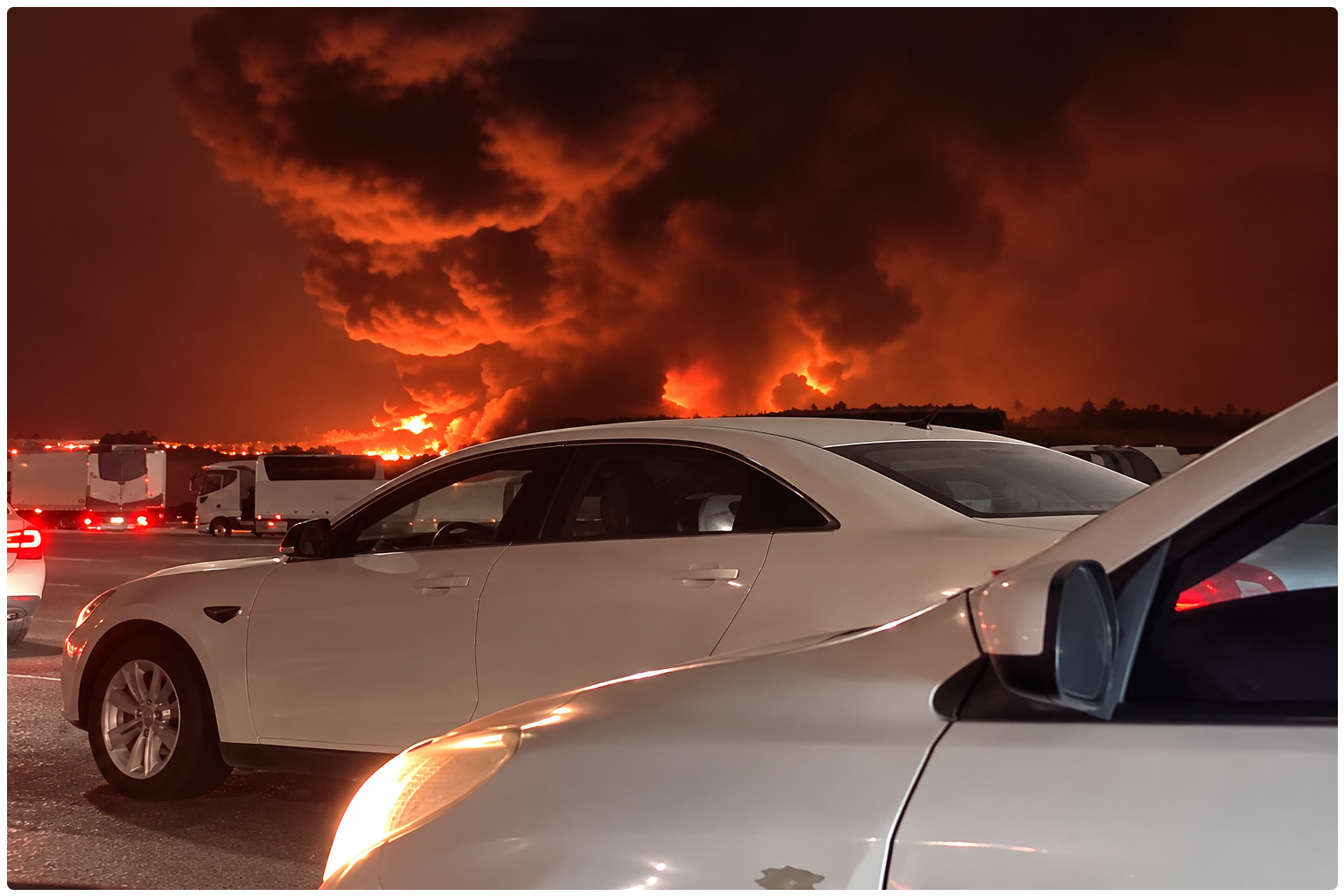
An administrative building at Saudi Aramco's headquarters in Dhahran was attacked on Tuesday evening, October 13, causing a fire at the compound from which the energy giant oversees its vast oil and gas operations. Saudi Arabia's Ministry of Energy confirmed the incident early Wednesday, saying the fire was limited and no injuries or deaths had been reported.
The attack came during a wave of Houthi missile and drone strikes against Saudi Arabia, with the kingdom's airports, residential areas and energy installations increasingly exposed to the renewed conflict in Yemen.
A source familiar with the incident told Reuters that a ballistic missile had struck an office tower within the Aramco headquarters compound, damaging its upper three floors. The ministry confirmed that an administrative building had been targeted but did not specify the weapon involved or provide a detailed assessment of structural damage.
Saudi coalition spokesman Major General Turki al-Maliki separately announced that air defences had intercepted a Houthi ballistic missile heading towards Dhahran. Fragments reportedly fell in a residential neighbourhood, leaving the precise circumstances of the damage to Aramco's building unresolved.
The location of the attack carries particular importance because Dhahran houses Aramco's central operational infrastructure. Among the facilities at its headquarters is the Oil Supply Planning and Scheduling organisation, known as OSPAS, which coordinates the movement of crude oil, natural gas and refined products across the company's production facilities, pipelines, terminals and export network.
On 13 October 2026, the Houthis launched missiles and drones toward several Saudi locations, mainly in response to the Saudi-led coalition strikes on Yemeni fuel sites earlier that day. A missile strike targeting Saudi Aramco's administrative headquarters complex in Dhahran, located in Saudi Arabia's oil-rich Eastern Province. #Dhahran #EasternProvince #الدمام #KSA #السعودية #KingKhalidInternationalAirport #Riyadh #SaudiArabia #Yemen #Houthis #Houthi #AnsarAllah #YemenWar
— WorldGeopolitics25 (@WGeopolitics25) October 14, 2026
According to Aramco's own description of its operations centre, OSPAS monitors the company's hydrocarbon supply network in real time, allowing engineers to track production and shipments to customers around the world.
There is no confirmed evidence that OSPAS was damaged or that Tuesday's attack disrupted Saudi oil production and exports. Aramco has not released a detailed public assessment establishing whether any operational systems were affected.
The attack followed an explicit warning from Yemen's Houthis that Saudi energy facilities could be targeted in retaliation for coalition military operations. Houthi military spokesman Yahya Saree had identified Aramco installations and Saudi airports as potential targets after Saudi-led airstrikes hit a fuel storage facility in Sanaa.
The warnings came as Riyadh was already dealing with repeated attacks on its aviation infrastructure. King Khalid International Airport was struck again on Sunday, killing a Pakistani national and injuring 11 people after an earlier attack had caused extensive casualties and disrupted commercial flights.
The attacks have prompted a coordinated diplomatic response. In an October 11 joint statement, Saudi Arabia, Egypt, Pakistan and Türkiye condemned the Houthi campaign, warning that attacks on civilian infrastructure threatened Saudi sovereignty and regional security.
The military confrontation has also intensified inside Yemen, where Saudi-backed government forces are attempting to recover territory from the Houthis. The United Nations warned on October 9 that the country had returned to full-scale war, with fighting spreading across several fronts and civilian infrastructure increasingly caught in the hostilities.
For Saudi Arabia, the attack on Dhahran brings the threat directly to the administrative centre of its most important energy company. The reported damage may be limited, but the ability of missiles to reach the headquarters compound adds pressure on Riyadh to protect facilities central to the kingdom's economy.
The extent of the damage and any operational consequences remain to be established by Aramco.