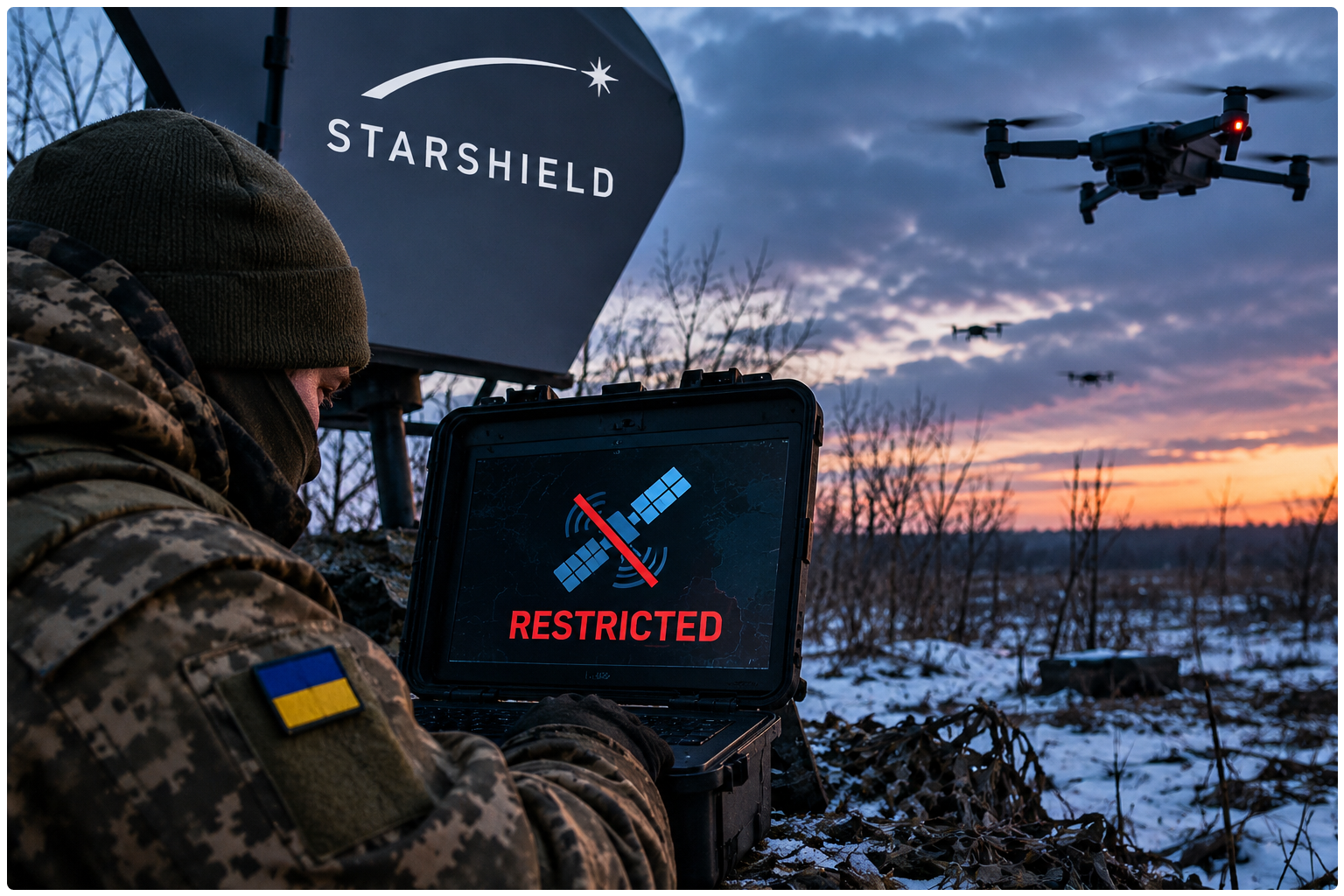
Ukraine has developed high-speed interceptor drones to catch Russian attack aircraft before they reach its cities and power stations. But some of those interceptors are losing their satellite connections when they accelerate beyond 161 kilometres per hour, leaving their operators unable to pursue faster targets.
President Volodymyr Zelenskyy says renewed restrictions on Starshield, the military satellite communications service supplied through Elon Musk's SpaceX, are allowing more Russian drones to reach Ukraine's electricity infrastructure as winter approaches.
JUST IN: ZELENSKYY BLASTS STARSHIELD, STARLINK’S MILITARY VERSION, OVER SPEED RESTRICTIONS AFFECTING UKRAINE’S DRONE INTERCEPTIONS Ukrainian President Volodymyr Zelenskyy says renewed speed restrictions on Starshield, Elon Musk’s military version of Starlink, are undermining Ukraine’s ability to intercept Russian jet-powered Shahed drones. Zelenskyy claims the 161 km/h (100 mph) limit prevents Ukrainian forces from catching drones originating in occupied territory, warning that treating Ukrainian land as non-Ukrainian signals where U.S. decisions are heading. Ht @ericldaugh Join the fight @MelissaRedpill FreedomForce dot live
— Melissa Redpill (@MelissaRedpill) November 12, 2026
The problem is particularly serious against jet-powered Geran drones, which travel considerably faster than their propeller-driven predecessors. Ukrainian interceptor aircraft rely on communications links to receive commands and target updates. When those links fail during pursuit, an interception may become impossible even if the drone itself remains airborne.
In his November 12 address to European leaders, Zelenskyy identified a connection threshold of approximately 161 km/h, or 100 mph, affecting terminals operating near the front line and over Russian controlled territory.
The disruption has continued despite Ukrainian efforts to resolve it. On November 13, Zelenskyy confirmed that speed restrictions remained in place, saying his defence and foreign ministries were seeking answers from American authorities.
The immediate military concern is the protection of electricity substations. Russian forces have repeatedly targeted Ukraine's power network, forcing emergency repairs and electricity restrictions. On November 15, a strike on energy infrastructure around Chornomorsk in Odesa region temporarily left approximately 41,000 customers without power.
Zelenskyy attributed some successful Russian strikes against substations to the Starshield restrictions. That assessment comes from Ukraine's military leadership; independently available information does not establish how many drones escaped interception specifically because their operators lost satellite connectivity.
The restrictions first emerged in mid-October. They disrupted Ukrainian operations before service was restored on October 24, according to an official Ukrainian presidential statement. New disruptions were reported in November, leaving Ukraine once again seeking an explanation.
The earlier communications failures affected reconnaissance and interceptor missions, exposing the military's dependence on satellite networks controlled outside Ukraine.
Responsibility for the restrictions remains disputed. SpaceX has denied that a new change was imposed in November, while Ukrainian officials maintain that testing across multiple operational areas confirms continuing connection limits. Washington has not publicly identified who authorised the restrictions or established their precise geographical scope.
The issue has reached the US Congress. In a November 13 letter to SpaceX, Senators Jeanne Shaheen and Chris Coons demanded preservation of communications and internal records concerning the service disruptions. They also sought information about who approved the changes and whether their consequences for Ukrainian and American personnel had been assessed.
The satellite dispute is unfolding alongside a separate shortage of air-defence missiles. During a meeting with NATO Secretary-General Mark Rutte, Zelenskyy requested additional Patriot interceptors while raising the Starshield problem.
Restoring the service would not replace the need for those missiles. It would, however, allow Ukraine to use its high-speed drone interceptors more effectively against incoming aircraft before they reach the infrastructure supplying electricity and heating to Ukrainian communities.