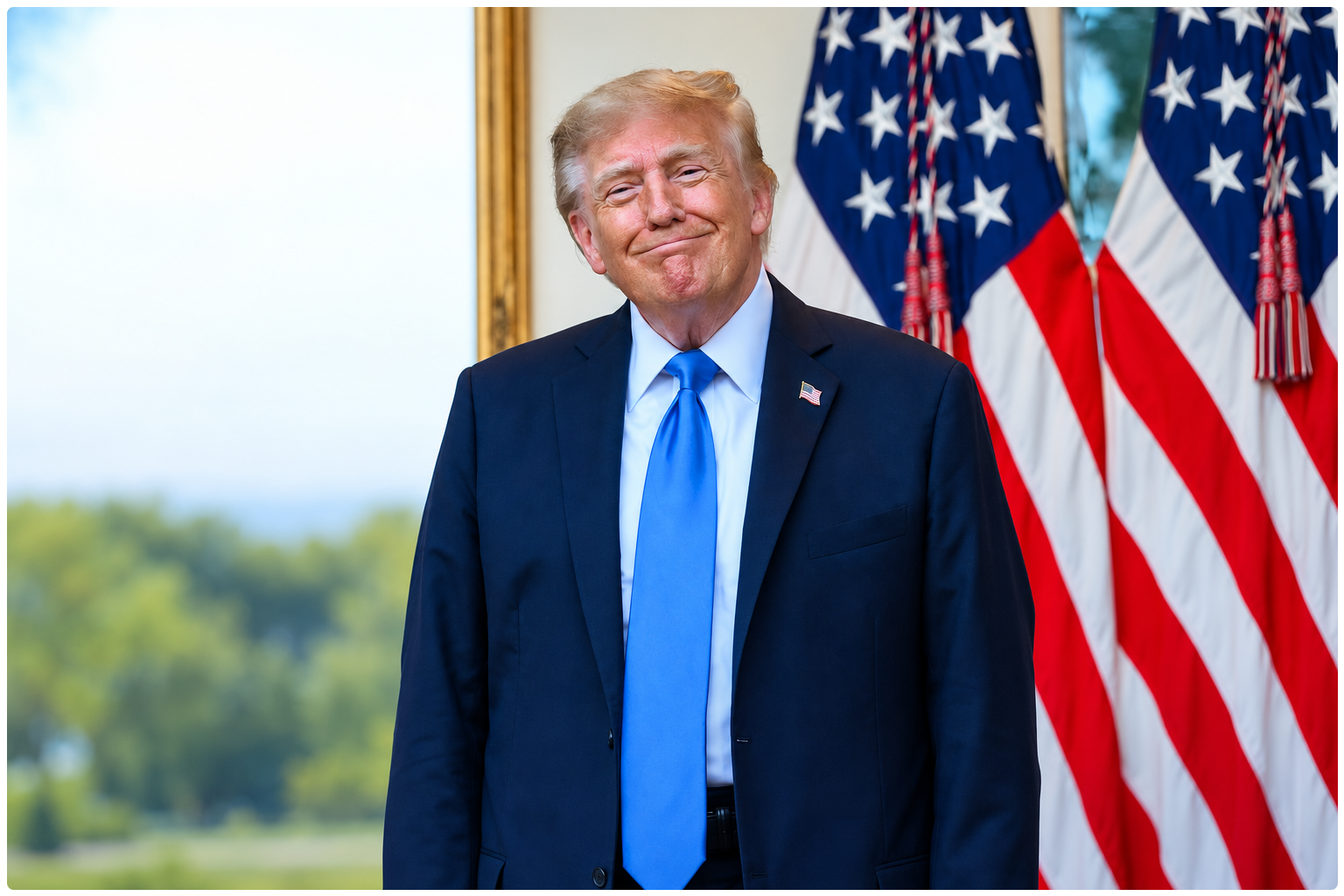
US President Donald Trump has ruled out launching fresh attacks on Iran before the November 3 midterm elections, announcing a temporary pause in military escalation while Washington and Tehran continue discussions over ending the conflict.
“We will not be attacking Iran at any time prior to the Midterm Elections to be held in the United States on November 3rd,” Trump wrote on Thursday. He said the two governments were holding “productive discussions”, but added that Iran would not be permitted to obtain a nuclear weapon.
The statement closes off the possibility of a planned US offensive during the final weeks of the congressional campaign, but it does not amount to a broader commitment to end the war. Trump placed a clear time limit on his assurance and did not rule out renewed strikes after Americans vote.
🚨 BREAKING: President Trump RULES OUT ANY AND ALL STRIKES on Iran prior to the 2026 midterm elections — says 22 MILLION BARRELS OF OIL came through Hormuz overnight WOW! "We are having productive discussions with the Islamic Republic of Iran. I want to make it clear to everybody that, while Iran is in very bad condition, both Economically and Militarily, and while the Blockade will remain in full force and effect, with Oil flowing in Record Numbers of Barrels through the Hormuz Strait (22 Million Barrels, last night alone, with not one barrel coming from, or going to, Iran!)..." "...we will not be attacking Iran at any time prior to the Midterm Elections to be held in the United States on November 3rd. IRAN WILL NOT HAVE A NUCLEAR WEAPON! President DONALD J. TRUMP" 47 knows the blockade, Bessent's sanctions and oil flows mean Iran is becoming powerless. Waiting until after the midterms COULD mean he unleashes later, or they are more likely getting close to caving 🇺🇸
— Eric Daugherty (@EricLDaugh) October 8, 2026
He also said the economic and maritime blockade against Iran would remain in force. Washington has sought to restrict Iranian oil exports while securing shipping through the Strait of Hormuz, the narrow waterway that carried roughly one-fifth of the world’s oil before the conflict severely disrupted commercial traffic.
Trump’s announcement follows several days of speculation that the United States could resume major combat operations before the election. American military planners have continued preparing options for a possible escalation, while the expanding US force presence in the Middle East preserves Washington’s ability to strike if diplomacy fails or American forces are attacked.
The decision is politically significant. Republicans are trying to defend narrow congressional majorities in an election increasingly shaped by the cost of living, fuel prices and dissatisfaction with the prolonged conflict. Renewed strikes could invite Iranian retaliation, further disrupt Gulf shipping and push energy prices higher during the closing weeks of the campaign.
The war began on February 28 when the United States and Israel launched attacks inside Iran. The Pentagon called the American campaign Operation Epic Fury and said its initial objective was to dismantle military and security capabilities that posed an immediate threat. What was presented as a concentrated operation developed into a prolonged confrontation involving missile attacks, tanker strikes, economic pressure and restrictions on shipping.
Washington and Tehran reached a short-lived interim agreement in June that was intended to create a 60-day ceasefire and a framework for a permanent settlement. It collapsed within weeks as military action resumed and the two sides remained divided over the Strait of Hormuz, sanctions and Iran’s nuclear programme.
More recent US-Iran talks have focused on a phased arrangement to reopen Hormuz and ease parts of the blockade. Tehran has resisted American demands to surrender its enriched uranium stockpile or sharply reduce its enrichment capability, while maintaining that its nuclear programme is intended for peaceful purposes. Trump has previously threatened severe military escalation if negotiations fail.
The continued blockade means the conflict’s economic pressure will not disappear during the pre-election pause. Restrictions on Iranian exports, attacks on commercial vessels and uncertainty over safe passage have already raised shipping, insurance and energy costs. Countries dependent on Gulf oil remain exposed to any renewed confrontation.
Trump’s declaration may reduce the immediate danger of a deliberate American offensive before November 3, but it leaves the central disputes unresolved. The next test is whether negotiations produce an enforceable arrangement on shipping, sanctions and nuclear activity before the election passes and military options return to the centre of US policy.