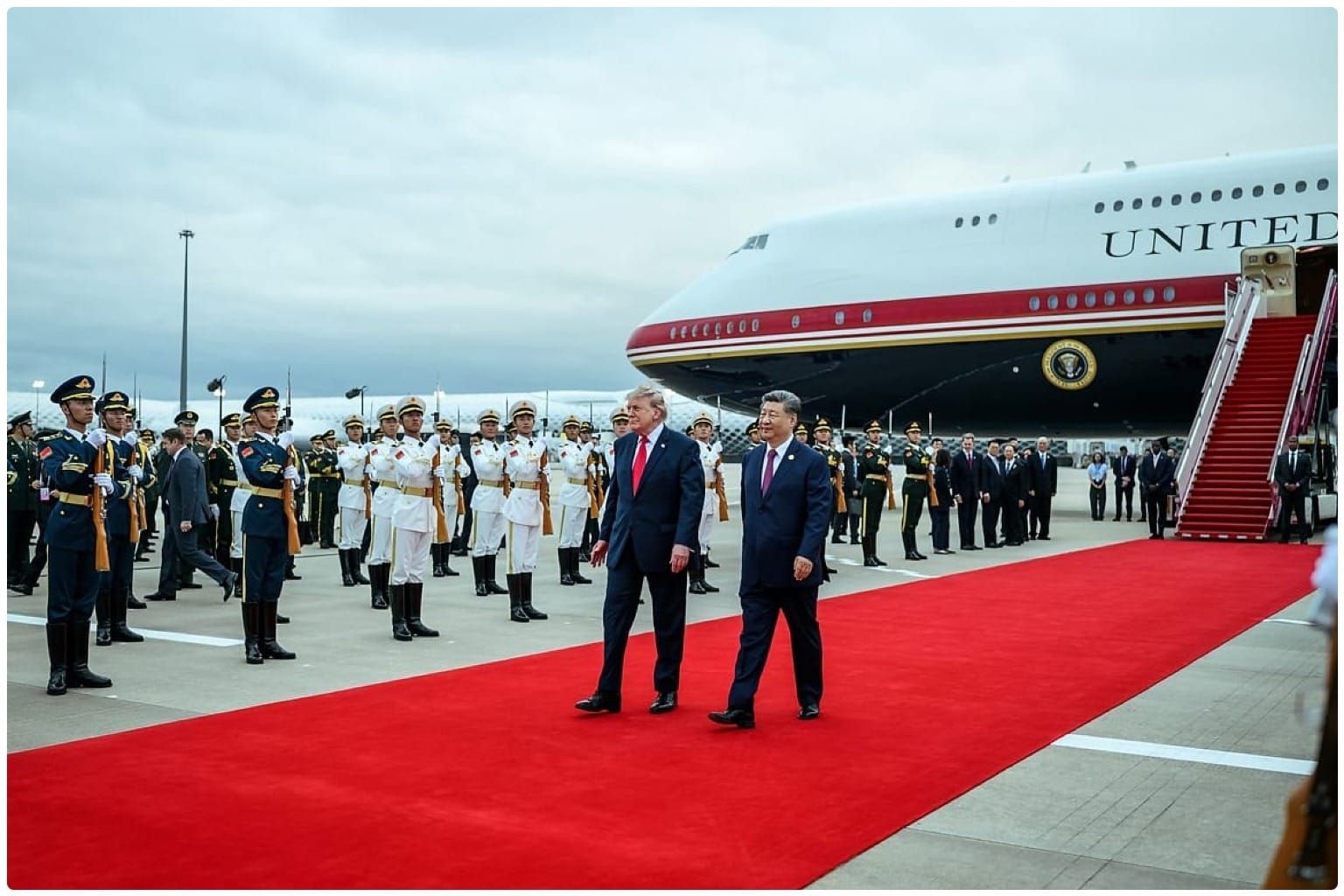
Donald Trump brought his proposal for a three-country nuclear arms agreement to China on Thursday, sitting down with Xi Jinping and Vladimir Putin for an unprecedented summit in Shenzhen. The encounter gave the American president the opportunity he had sought for months, although the leaders emerged without announcing a deal to limit their nuclear arsenals.
The meeting, held at Kylin Villa on the sidelines of the Asia-Pacific Economic Cooperation summit, lasted less than 90 minutes. The three presidents spoke of their responsibility to maintain international peace, but offered different approaches to managing relations among the world's major military powers.
The trilateral meeting between Xi Jinping, Trump and Putin has started. Putin already said that "It's our task to preserve and strengthen the system of international law" and "Our countries have numerous shared interests in the settlement of regional conflicts, including, obviously, the conflict in Ukraine."
— Anton Gerashchenko (@Gerashchenko_en) November 19, 2026
Trump pressed for negotiations to reduce nuclear weapons, while Xi called for their eventual elimination and urged the countries to respect one another's sovereignty and security concerns. Putin emphasised the responsibility shared by the three powers, invoking their cooperation during the Second World War.
Their agreement on the need for dialogue was easier to establish than agreement on the weapons themselves.
Washington wants China included in a successor to the New START treaty, which expired in February and had placed limits on deployed American and Russian strategic nuclear weapons. Beijing has resisted entering negotiations on comparable terms because its arsenal remains substantially smaller, even as it expands.
The United States and Russia would therefore have to resolve their own disagreements over strategic limits while persuading China that joining a three-way arrangement would serve its interests. Neither side announced a negotiating timetable or an agreed framework in Shenzhen.
Trump also used the gathering to discuss the wars involving Ukraine and Iran. He had met Putin separately before the trilateral session, with the conflict in Ukraine among the subjects raised during their conversation.
That discussion is politically sensitive because Ukraine was not represented at the three-way summit. Kyiv and its European partners have repeatedly insisted that any settlement must respect Ukrainian sovereignty and cannot be negotiated over its head.
Iran presents a different set of disagreements. Washington has maintained military and economic pressure on Tehran, whereas China and Russia retain diplomatic and economic ties with the Iranian government. Trump reiterated his opposition to Iran acquiring nuclear weapons, but the leaders announced no common plan for ending the conflict.
Xi's broader appeal for cooperation also came against the backdrop of continuing US-China disagreements over trade and technology. During separate talks with Trump, the Chinese president urged both countries to maintain their recent improvement in relations and address economic concerns through dialogue.
The two governments agreed to develop an action plan for managing bilateral relations, according to China's account of the meeting. That understanding emerged from their separate discussions rather than the three-country summit.
Beijing had confirmed preparations for the trilateral meeting earlier this month, and Trump subsequently travelled through Asia ahead of the Shenzhen gathering.
For Putin, the meeting provided another direct encounter with Washington's president alongside China's leader. Xi used his role as host to advocate consultation among major powers. Trump secured the three-way discussion he wanted, but left the public negotiations on nuclear limits where they began: without agreed terms or a timetable.
The leaders' next steps will depend on whether their governments establish a working process beyond Thursday's meeting.